

Maddy summaryThis bill requires the FDA to establish a standard of identity for honey within one year of enactment, ensuring honey meets specific quality and composition criteria. It mandates that honey labels clearly list country of origin in descending order of predominance (e.g., "Product of USA, Canada"), with U.S. producers allowed up to 5% foreign honey without violating labeling rules. The FDA must also report to Congress within two years on enforcement actions against misbranded or adulterated honey. These provisions directly affect honey producers, importers, and retailers who must comply with the new labeling and quality standards.
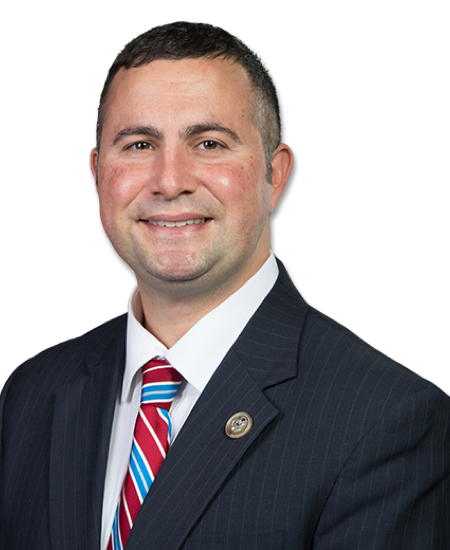
Rep. Darren Soto
Sponsored bills
Maddy summaryHR 4745, the Delivering for Rural Seniors Act of 2023, creates a pilot program to expand home delivery of food packages under the Commodity Supplemental Food Program (CSFP) for low-income seniors in rural areas. The bill authorizes $10 million annually (2024-2026) for competitive grants to state agencies, which must prioritize rural service providers to cover costs like transportation, staffing, and outreach for home delivery. It requires grantees to report on delivery metrics, costs, and effectiveness annually. The program directly affects rural CSFP participants facing transportation barriers to accessing food assistance.
Agricultural Representation for the United States Territories Act This bill increases agricultural representation for U.S. territories on the National Agricultural Research, Extension, Education, and Economics (NAREEE) Advisory Board. Specifically, the bill increases the advisory board membership to 16 members (from the current 15). The additional member must represent the agricultural interests of Puerto Rico, the U.S. Virgin Islands, American Samoa, the Northern Mariana Islands, and Guam. The bill also extends the advisory board through FY2028. (The NAREEE Advisory Board advises the Department of Agriculture, land-grant colleges and universities, and Congress on top priorities and policies for food and agricultural research, education, extension, and economics.)
This bill directs the National Institute of Food and Agriculture to establish and carry out a pilot program to use blockchain technology in food safety and food labeling. (In general, a blockchain is a digital database containing information that can be simultaneously used and shared within a large decentralized, publicly accessible network.) Specifically, the pilot program must, to the extent practicable, use blockchain technology to (1) trace food that may be adulterated and food that has been subject to a voluntary or mandatory recall; and (2) verify that food labeled as organic has been produced and handled in accordance with specific organic certification standards. The Department of Agriculture must enter into a memorandum of understanding with the Food and Drug Administration to implement the program.
Maddy summaryHR 4162, the Land Grant Research Prioritization Act of 2023, adds four new research priorities to existing agricultural funding under the Food, Agriculture, Conservation, and Trade Act of 1990. The bill directs the Secretary of Agriculture to prioritize grants for land-grant universities (as defined in 7 U.S.C. 3103) to develop: mechanized harvesting technologies for specialty crops, artificial intelligence applications in agriculture, methods to manage invasive species, and sustainable aquaculture techniques. These provisions expand funding opportunities for research projects addressing specific agricultural challenges. The bill directly affects land-grant colleges and universities by creating new, targeted grant categories for their research programs.
Maddy summaryHRES 645 is a non-binding House resolution recognizing August as "Chicano Heritage Month" to celebrate the contributions of Mexican Americans to U.S. history. It highlights historical figures like labor leaders Cesar Chavez and Dolores Huerta, landmark court cases (e.g., *Mendez v. Westminster* ending school segregation), and cultural impacts such as Selena's influence on music. The resolution does not create new laws or policies but serves as a symbolic acknowledgment by the House to honor this heritage. It encourages the public and institutions to observe the month with events celebrating Mexican American contributions.
Maddy summary# Summary of the "Protecting Our Democracy Act" This comprehensive legislation aims to strengthen democratic processes, increase government transparency, and prevent foreign interference in elections. Key provisions include: ## Ethics and Transparency - **Ethics Pledge**: Requires all appointees to sign an ethics pledge committing to: - Ban on gifts from registered lobbyists - 2-year revolving door ban (prohibiting participation in matters related to former employers) - Golden parachute ban (no special payments from former employers) - Commitment to decision-making based on public interest - **Tax Transparency**: Requires presidential and vice presidential candidates to disclose 10 years of tax returns, with sitting presidents submitting returns within 30 days of enactment ## Campaign Finance and Foreign Interference - **Foreign Contact Reporting**: Requires political committees to report any contact with "covered foreign nationals" within 1 week - **Enhanced Penalties**: Criminal penalties of up to $1 million and 5 years in prison for violations - **Online Advertising Rules** ("Honest Ads Act"): - Requires clear disclosure of who paid for political ads online - Mandates machine-readable public databases of political ads - Requires visible sponsor identification that remains when ads are shared - Defines "qualified political advertisements" to include various online formats ## Preventing Patronage Systems - Limits exceptions to competitive service for federal positions - Restricts transferring positions between competitive and excepted service - Requires employee consent for position transfers ## Use of Federal Property - Prohibits holding national political conventions on federal property - Requires publicly available visitor records at White House and other official locations (with privacy exceptions) The legislation establishes detailed definitions, reporting requirements, and enforcement mechanisms across multiple agencies, with the goal of increasing transparency, preventing foreign interference, and ensuring ethical conduct in government service.
Maddy summaryThis bill requires phone calls, texts, and chats to 9-8-8 (the national suicide prevention and mental health crisis hotline) to be routed to the nearest participating crisis center within 90 days of enactment, while protecting caller privacy by not revealing precise location. It mandates all phone carriers to transmit every 9-8-8 call or text - including those from prepaid or non-initialized handsets - and updates phone systems to allow direct 9-8-8 dialing without extra steps. The law affects crisis centers (by directing calls to their area), callers (through improved routing and privacy), and phone carriers (by requiring transmission compliance). These changes aim to make the 9-8-8 system more efficient and accessible for those seeking mental health support.
Maddy summaryHR 4884, the Mental Health for Latinos Act of 2023, directs the U.S. Department of Health and Human Services to create a culturally tailored mental health outreach strategy for Hispanic and Latino communities. The strategy must address language needs, reduce stigma, provide information on culturally appropriate treatments, and consider pandemic impacts, developed with community input. It requires annual reports to Congress on the strategy's effectiveness and authorizes $1 million for fiscal year 2024. The bill directly affects Hispanic and Latino populations by aiming to improve access to relevant mental health resources and outcomes.
Fair Access to Agriculture Disaster Programs Act This bill waives the adjusted gross income limitations for payments or benefits under specific Department of Agriculture (USDA) disaster assistance programs for a person or legal entity that derives a portion of their income from agriculture. (Currently, a person or entity is not eligible to receive certain benefits during a crop, fiscal, or program year if their average gross income exceeds $900,000.) Specifically, in the case of an excepted payment or benefit, the adjusted gross income limitation is waived if 75% or more of the average adjusted gross income for the person or entity is derived from farming, ranching, or silviculture activities. These activities include agritourism, direct-to-consumer marketing of agricultural products, and the sale of agricultural equipment owned by such person or entity. The bill applies to the USDA Livestock Indemnity Program; Livestock Forage Disaster Program; Emergency Assistance for Livestock, Honey Bees, and Farm-Raised Fish Program; Tree Assistance Program; and Noninsured Crop Disaster Assistance Program.