

Maddy summaryThis bill modifies tax credit rules to help businesses recover after disasters. It allows businesses operating in designated disaster areas to treat certain unused tax credits (carryforwards) as transferrable credits against current tax liability, rather than letting them expire. Specifically, it applies to taxpayers making eligible expenditures for business operations in areas with a major disaster declaration after December 31, 2023, or a state-declared disaster meeting specific criteria. The change affects businesses in affected zones by providing immediate tax relief for qualifying expenses incurred within two years of the disaster declaration. It does not involve energy policy or new funding, but adjusts existing tax credit rules for disaster recovery.
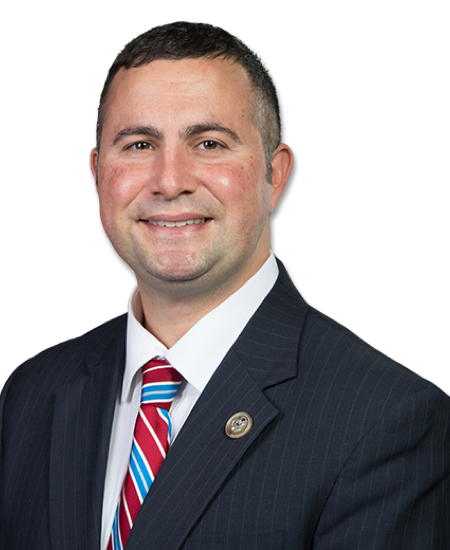
Rep. Darren Soto
Sponsored bills
Maddy summaryThis bill requires the Army Corps of Engineers to conduct a comprehensive assessment of Puerto Rico's water and wastewater infrastructure needs within 180 days of enactment. The assessment must evaluate current conditions, ongoing projects under the 1992 Water Resources Development Act, and resilience gaps related to natural disasters and system failures. The Corps must then submit a detailed report to Congress outlining vulnerabilities, project status, modernization needs, and recommendations for improving federal-local coordination. The bill directly affects Puerto Rico's water infrastructure systems and the agencies managing them, including the Puerto Rico Aqueduct and Sewer Authority. It is a procedural requirement for a study and report, not a funding or implementation measure.
Maddy summaryThis bill imposes a hiring freeze on U.S. Immigration and Customs Enforcement (ICE), prohibiting the use of federal funds to hire new employees or transfer existing federal workers to ICE. The freeze begins upon the bill's enactment and automatically ends when Congress passes a specific law overriding it. It directly affects ICE's staffing capabilities by halting new appointments and transfers using federal funding. The measure is procedural, focusing solely on restricting hiring authority without altering immigration enforcement policies.
Maddy summaryThe Save for Success Act (HR 7393) amends the tax code to allow distributions from 529 college savings plans to be used for first-time homebuyers' housing expenses, such as purchasing a principal residence, closing costs, and mortgage payments. It directly affects individuals using 529 plans who qualify as first-time homebuyers - defined as those with no ownership of a principal residence in the past three years. The key provision expands the list of qualified expenses under 529 plans beyond education costs to include home purchases, while maintaining the "first-time homebuyer" definition from existing tax law. This change takes effect for distributions made after December 31, 2026.
Maddy summaryHR 7346, the Drain ICE Act of 2026, repeals specific funding provisions (sections 90003 and 100052) from the "One Big Beautiful Bill Act" and cancels all unspent funds allocated under those sections. This bill directly affects ICE’s detention budget by removing existing financial authority for detention operations. It does not change immigration enforcement practices or directly impact individuals; it solely modifies budgetary allocations. The bill focuses on eliminating funding mechanisms, not on policy changes for migrants or enforcement. (Procedural bill; summary limited to 2 sentences as specified.)
Maddy summaryHR 7335 establishes comprehensive humanitarian standards for individuals held in U.S. Immigration and Customs Enforcement (ICE) and U.S. Customs and Border Protection (CBP) custody. The bill requires facilities to provide immediate health screenings within 12 hours (6 hours for high-risk individuals like children, pregnant people, or those with medical conditions), ensure access to adequate water, sanitation, food (with 2,000+ calories daily for adults), and age-appropriate shelter. It mandates specific facility standards including separate housing for males and females, accessible accommodations for people with disabilities, daily outdoor access for those detained over 48 hours, and proper medical equipment and personnel on-site. The bill also requires regular inspections, staff training on humanitarian protocols, and public reporting of sexual abuse complaints. These standards directly affect all individuals detained by ICE or CBP, with special protections for vulnerable groups like children, pregnant people, and those with medical needs.
Maddy summaryThis bill amends the Lacey Act to create a registration system for facilities holding certain "prohibited wildlife species" (like big cats), directly affecting zoos and animal facilities that exhibit or possess these species. Facilities must register each animal with the U.S. Fish and Wildlife Service and then stop breeding, selling, or allowing public contact with these species. The bill explicitly excludes snow leopards and clouded leopards (and their hybrids) from the "prohibited" category. It also allows compliant facilities to export/import prohibited species to foreign facilities operating legally in their home countries.
Maddy summaryHR 1458, the VETS Opportunity Act of 2025, amends VA education benefits rules to ensure veterans using these benefits for independent study courses receive meaningful instruction. It requires that such courses include regular, substantive interaction between students and instructors, and limits eligibility to programs at institutions approved for federal student aid under the Higher Education Act. This directly affects veterans pursuing online or self-paced courses using VA education benefits. The changes apply to courses starting August 1, 2025, and aim to standardize benefit access for qualifying educational programs.
Maddy summaryHRES 950 is a ceremonial resolution commemorating the 25th anniversary of the Comprehensive Everglades Restoration Plan (CERP), authorized by the 2000 Water Resources Development Act. It recognizes CERP as a landmark bipartisan effort for restoring Florida's Everglades ecosystem and protecting water resources, highlighting sustained support across multiple U.S. presidential and Florida gubernatorial administrations. The resolution does not create new policies or affect specific groups; it solely honors the anniversary and reaffirms commitment to completing authorized restoration projects.
Maddy summaryHR 7322, the True Shutdown Fairness Act, requires federal agencies to pay regular wages to most employees and contractor workers during government shutdowns in fiscal year 2026, instead of furloughing them. It applies to all standard federal employees (excluding those on emergency duty) and contractor workers whose jobs would normally halt during a funding gap. Agencies must pay covered employees within 7 days of the bill's enactment for ongoing shutdowns, and contractors receive reimbursement for costs incurred keeping workers paid. The bill also prohibits agencies from implementing layoffs or placing employees on administrative leave for more than 10 days during a shutdown.