

Maddy summaryThis bill prohibits colleges receiving federal funds from discriminating against "Dreamer students" in admissions, enrollment, or tuition rates. It requires institutions to treat eligible Dreamers (those meeting specific immigration criteria, like DACA recipients or long-term residents) the same as in-state students for tuition and admissions, and strictly protects their immigration information from disclosure. The bill also allows Dreamers to access federal financial aid for higher education, reversing a 1996 prohibition. These changes apply to all institutions of higher education receiving federal funding.
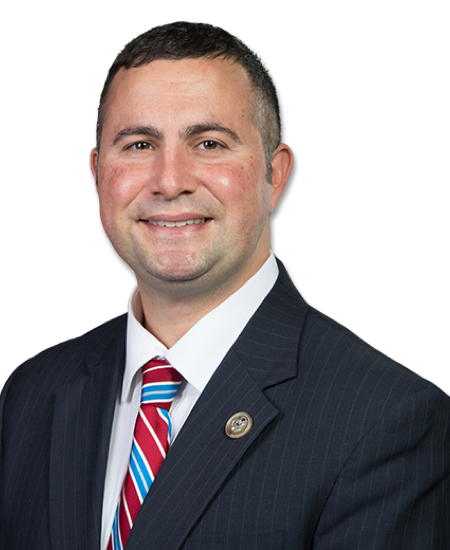
Rep. Darren Soto
Sponsored bills
American Families United Act This bill authorizes the Department of Homeland Security (DHS) or the Department of Justice (DOJ) to exercise discretion in certain immigration cases. Under this bill, DOJ or DHS may, on a case-by-case basis, exercise discretion by declining to remove a non-U.S. national ( alien under federal law) or bar an alien from entering the United States to prevent hardship for the alien's U.S. citizen spouse, parent, or child. This discretion may also be exercised if the alien is the spouse or child of a deceased U.S. citizen. For the purposes of this bill, it shall be presumed that family separation constitutes hardship. However, DOJ or DHS may not exercise this discretion if the alien is removable or inadmissible due to certain grounds, including specified crime- and security-related grounds. This exercise of discretion may be applied to an alien who was ordered removed or denied entry prior to this bill's enactment if the alien files a motion to reopen or reconsider within two years of this bill's enactment.
Maddy summaryHR 1723, the Abortion is Health Care Everywhere Act of 2023, amends the Foreign Assistance Act to remove restrictions on using U.S. foreign aid funds for abortion services. It explicitly allows U.S. foreign assistance programs to fund comprehensive reproductive health care, including abortion services, training, and equipment. This change directly affects U.S. international health programs and recipient countries, enabling them to integrate safe abortion care into broader reproductive health services. The bill aims to align U.S. policy with global health guidelines by making abortion services a standard part of reproductive health care funded through foreign assistance.
Maddy summaryHR 1443, the Florida Coastal Protection Act, prohibits the federal government from offering new oil and gas leasing, preleasing, or related activities in specific offshore areas near Florida. It directly affects oil and gas companies seeking to explore or develop resources in three defined zones: the Eastern Gulf of Mexico (as specified in the 2006 Gulf Act), the South Atlantic Planning Area south of 30°43'N latitude, and the Straits of Florida. The bill amends the Outer Continental Shelf Lands Act to block these activities, while existing leases issued before the law's enactment remain unaffected. This is a policy change focused on restricting new offshore energy development in these Florida coastal waters.
Maddy summaryThe Food Deserts Act creates a federal grant program to help establish grocery stores in underserved communities by funding state revolving funds. States receive capitalization grants (up to $150 million for FY2022) to provide low-interest loans to grocery stores that meet specific criteria, such as selling unprocessed, affordable healthy foods and matching 20% of the loan with non-federal funds. Priority is given to stores hiring local workers, offering nutrition education, sourcing from local farms, and having established supply chains. The program directly supports grocery store operators in areas with limited access to fresh food, aiming to improve community health outcomes through increased access to nutritious options.
Maddy summaryHR 1680, the Black Sea Security Act of 2023, mandates the U.S. government to develop a coordinated strategy for security and economic engagement with Black Sea states (Turkey, Romania, Bulgaria, Moldova, Ukraine, and Georgia). The bill requires an interagency strategy within 180 days, focusing on enhancing security cooperation with NATO, bolstering economic ties, supporting democratic resilience, and improving regional connectivity. Key mechanisms include assessing military presence options, diversifying energy partnerships, countering economic coercion from Russia and China, and strengthening infrastructure through initiatives like the Three Seas Initiative. The strategy aims to deepen U.S. engagement without creating new funding or altering existing authorities for affected countries.
Maddy summaryThe Dental and Optometric Care Access Act of 2023 (DOC Access Act) requires health insurance plans covering dental and vision care to allow providers (like dentists and optometrists) to charge patients the usual and customary rate for uncovered services, with a specific rule limiting dental cleanings to the network fee even if it exceeds annual coverage limits. It prohibits plans from restricting providers' choices of laboratories or suppliers for patient care. This law directly affects dental and vision care providers and the health insurance plans that offer these services. The bill establishes concrete billing and coverage standards to improve access to necessary dental and vision care.
Maddy summaryThis bill authorizes a Congressional Gold Medal to honor the "Hello Girls" - female telephone operators who served in the Army Signal Corps during World War I. They provided critical battlefield communications in France (connecting 26 million calls), wore military uniforms, and faced combat risks, but were denied veteran benefits for 60 years due to being classified as civilian contractors. The medal recognizes their pioneering service, devotion, and the decades-long struggle to gain military recognition. The award follows similar recognition for other WWII women veterans and aims to correct the historical injustice they faced.
Maddy summaryThe PHIT Act of 2023 allows individuals and families to deduct certain fitness expenses as medical costs on their federal taxes. It covers gym memberships, fitness classes, and specific equipment used exclusively for exercise (like home workout gear), with a yearly limit of $1,000 ($2,000 for joint returns). Expenses for activities like golf, hunting, or non-exercise-focused facilities (e.g., private clubs) are excluded, and equipment must be used solely for physical activity. This directly affects taxpayers who pay for qualifying fitness programs, making these costs partially tax-deductible under revised IRS rules.
Maddy summaryHR 1543 requires the U.S. Department of Labor to make its database of Fair Labor Standards Act (FLSA) investigation records publicly accessible in at least 8 of the most commonly spoken languages in the U.S., as identified by the Census Bureau. This directly affects workers, employers, and advocates seeking labor compliance information, particularly non-English speakers. The bill mandates the Secretary of Labor to implement this language accessibility standard for the database, which tracks FLSA investigations under the OPEN Government Data Act. It focuses solely on improving access to existing data, not altering labor laws or enforcement procedures.