

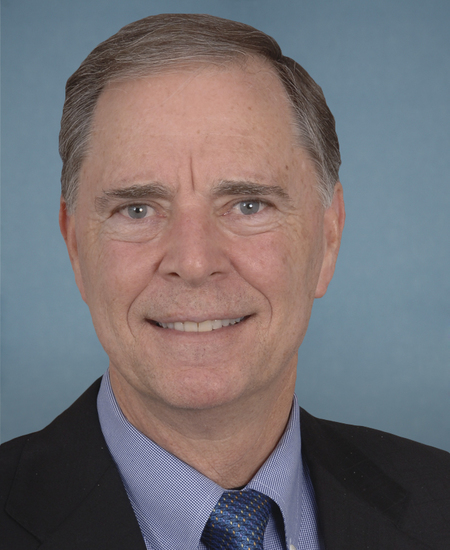
Photo of Bill Posey
R United States House · District 8 · Florida

Rep. Bill Posey

Compare
Total votes
2,168
all sessions
Attendance
96%
88 missed
Near the chamber average
With party
90%
of cast votes
Lower than 82% of chamber peers
Bipartisan score
6%
crosses aisle rarely
Higher than 81% of chamber peers
Sponsored
985
bills & resolutions
Near the chamber average
Committees
0
assignments
985 bills and resolutions

Sponsored bills

Total
985
Primary
69
Co-sponsor
916
This page
985
matching current filters
Co-sponsor HR 589
Passed · United States House · Co-sponsor
MAHSA Act

Maddy summaryHR 589, the MAHSA Act, imposes U.S. sanctions on Iran's Supreme Leader, President, and affiliated entities responsible for human rights abuses and terrorism. It targets the Supreme Leader's Office, the President's cabinet, security forces involved in the crackdown following Mahsa Amini's death, and entities financing abuses. The bill requires the President to annually determine and apply existing sanctions - like property blocking and visa bans - against these individuals and entities. This directly affects Iran's top leadership and security apparatus, aiming to hold them accountable for abuses including the Morality Police's role in Amini's detention and the subsequent violent suppression of protests.

Passed Dec 17, 2024 1 co-sponsor
Co-sponsor HR 521
In committee · United States House · Co-sponsor
Social Security Guarantee Act of 2023

Maddy summaryHR 521, the Social Security Guarantee Act of 2023, requires the Treasury Secretary to issue a legally binding certificate to every Social Security beneficiary within 90 days of the bill's enactment. This certificate guarantees the exact monthly benefit amount the recipient is entitled to under current law and ensures annual cost-of-living adjustments (COLAs) are calculated accurately based on actual inflation. The certificate creates a direct federal obligation to pay these guaranteed benefits, making them budget authority independent of future appropriations. It directly affects all current and future Social Security beneficiaries under Title II of the Social Security Act.

In committee Dec 17, 2024 1 co-sponsor
Co-sponsor HR 497
Passed · United States House · Co-sponsor
Freedom for Health Care Workers Act

Maddy summaryHR 497, the Freedom for Health Care Workers Act, eliminates a federal requirement for healthcare workers in Medicare and Medicaid programs to be vaccinated against COVID-19. The bill directly affects healthcare providers who treat patients under these federally funded programs by preventing the enforcement of the November 2021 HHS rule mandating staff vaccinations. Its key provision prohibits the Department of Health and Human Services from implementing, enforcing, or creating a similar rule regarding vaccination for these workers. This bill changes the policy by removing a specific vaccine mandate for providers in Medicare and Medicaid programs.

Passed Dec 17, 2024 1 co-sponsor
Co-sponsor HR 407
In committee · United States House · Co-sponsor
Protect the UNBORN Act

Maddy summaryHR 407, the "Protect the UNBORN Act," prohibits federal agencies from implementing or enforcing two specific executive orders issued by President Biden in 2022 (Executive Orders 14076 and 14079), which aimed to protect access to reproductive healthcare services. The bill bans the use of federal funds, including those from the 2022 Consolidated Appropriations Act, to carry out, administer, or enforce these executive orders. It directly affects federal agencies and programs that would otherwise comply with the Biden administration's policies on reproductive healthcare access. The bill does not create new healthcare rules but blocks the implementation of existing executive actions.

In committee Dec 17, 2024 1 co-sponsor
Co-sponsor HR 7
In committee · United States House · Co-sponsor
No Taxpayer Funding for Abortion and Abortion Insurance Full Disclosure Act of 2023

Maddy summaryThis bill bans federal funding for abortions in most cases, prohibiting the use of taxpayer money for abortion services or health insurance plans covering abortion. Exceptions allow funding for abortions resulting from rape, incest, or when a pregnancy endangers a woman's life. It requires health insurance plans sold through the Affordable Care Act (ACA) marketplaces to clearly disclose any separate costs for abortion coverage and prohibits ACA subsidies from being used for plans that cover abortion (except in the specified exceptions). The law directly affects federal programs like Medicaid, ACA marketplace plans, and insurers offering health coverage to individuals using federal subsidies.

In committee Dec 17, 2024 1 co-sponsor
Co-sponsor HJRES 142
In committee · United States House · Co-sponsor
Providing for congressional disapproval under chapter 8 of title 5, United States Code, of the rule submitted by the Department of Labor relating to "Retirement Security Rule: Definition of an Investment Advice Fiduciary".

Maddy summaryHJRES 142 is a congressional disapproval resolution targeting a Department of Labor rule issued on April 25, 2024. It seeks to block the "Retirement Security Rule: Definition of an Investment Advice Fiduciary" (89 Fed. Reg. 32122), which defined standards for financial advisors handling retirement accounts. If passed, this resolution would make the Labor Department's rule ineffective, directly affecting retirement plan advisors and financial institutions subject to the regulation. The bill uses a specific procedural mechanism under Title 5, U.S. Code, to nullify the rule without creating new law.

In committee Dec 16, 2024 1 co-sponsor
Co-sponsor HR 7438
Signed into law · United States House · Co-sponsor
FIFA World Cup 2026 Commemorative Coin Act

Maddy summaryHR 7438 directs the U.S. Treasury to mint commemorative coins for the 2026 FIFA World Cup, including 100,000 $5 gold coins, 500,000 $1 silver coins, and 750,000 half-dollar coins. The coins will be sold to the public at face value plus surcharges ($35, $10, and $5 per coin, respectively), with all surcharge revenue paid to FWC2026 US, Inc. for U.S. soccer programs. These funds must support soccer initiatives, particularly in underserved communities and youth development, as specified in the bill. The coins are legal tender but will only be issued during 2026, with no net cost to the U.S. government.

Signed into law Dec 11, 2024 1 co-sponsor
Co-sponsor HR 7218
Signed into law · United States House · Co-sponsor
BOLD Infrastructure for Alzheimer's Reauthorization Act of 2024

Maddy summaryThis bill extends funding for the existing Public Health Service Act program focused on raising public awareness about Alzheimer's disease and related dementias. It authorizes $33 million annually for fiscal years 2025 through 2029 to support public health education and outreach initiatives. The program directly affects public health organizations and community groups that develop and distribute educational materials about Alzheimer's prevention, diagnosis, and care. The key provision is the multi-year funding extension, ensuring continued support for nationwide awareness efforts without altering the program's core structure.

Signed into law Dec 11, 2024 1 co-sponsor
Co-sponsor HR 2672
Passed · United States House · Co-sponsor
FEMA Loan Interest Payment Relief Act

Maddy summaryThe FEMA Loan Interest Payment Relief Act requires FEMA to reimburse local governments and electric cooperatives for interest paid on qualifying disaster recovery loans. A qualifying loan must be used for FEMA-covered activities with at least 90% of proceeds dedicated to those purposes. Reimbursement covers the lesser of actual interest paid or what would have been paid at the prime interest rate, as defined by the Federal Reserve. This relief applies to interest accrued in the seven years preceding the bill's enactment.

Passed Dec 10, 2024 1 co-sponsor
Co-sponsor HR 190
In committee · United States House · Co-sponsor
Saving Gig Economy Taxpayers Act

Maddy summaryThis bill reinstates a pre-American Rescue Plan Act (ARP) tax reporting rule for gig economy platforms. It requires third-party payment platforms (like Uber or DoorDash) to report transactions to the IRS only if a gig worker earns over $20,000 in total or completes more than 200 transactions in a year. This directly affects gig workers whose income falls below these thresholds, exempting them from the reporting requirement. The provision effectively reverses a change made by the ARP, reducing administrative burden for both platforms and lower-earning gig workers. The bill amends IRS Code Section 6050W to restore these specific de minimis payment thresholds.

In committee Dec 10, 2024 1 co-sponsor
Showing 41 to 50 of 985 bills
Previous 1 … 4 5 6 … 99 Next