

Abolishing the Lottery and Immigration Enforcement Now Act of 2022 or the ALIEN Act of 2022 This bill makes various changes to immigration laws, including by (1) eliminating the diversity visa program; (2) establishing additional penalties for non-U.S. nationals ( aliens under federal law) who overstay a visa, such as criminal penalties for an overstay and permanent bans for repeat overstays; and (3) eliminating the authority of the Department of Homeland Security to waive certain grounds of inadmissibility, such as for grounds related to the simple possession of 30 grams or less of marijuana.
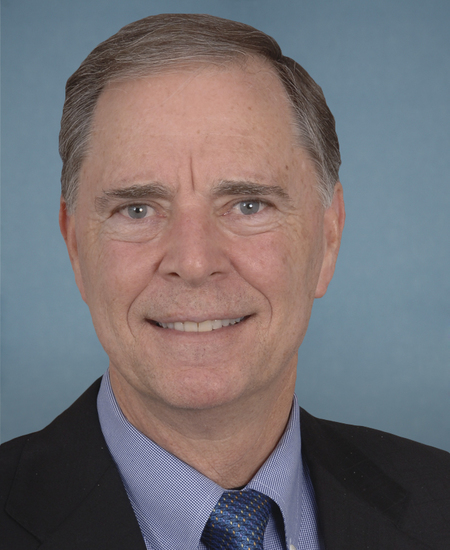
Rep. Bill Posey
Sponsored bills
No Taxpayer Funds for Illegal Immigrants Act This bill prohibits using federal funds pursuant to a federal contract, grant, loan, or cooperative agreement for any organization that provides legal representation or legal orientation for non-U.S. nationals ( aliens under federal law) who are unlawfully present in the United States and are placed in removal proceedings. The bill also prohibits using any federal funds for the Legal Access at the Border program, any successor programs, or federal solicitations for commercial products or services related to such programs.
Immigration Transparency and Transit Notification Act of 2022 This bill requires notifications to certain officials before an unaccompanied alien child or a non-U.S. national ( alien under federal law) without lawful immigration status may be placed in or transported to a state or local jurisdiction. The bill also authorizes the office of the governor of the relevant state to prohibit the placement or transportation. At least seven calendar days before taking such an action, the Department of Homeland Security (DHS) or the Department of Health and Human Services (HHS) must notify (1) the relevant state governor's office, (2) the state attorney general's office, (3) the county or municipal government, (4) local law enforcement, and (5) federal and state legislators representing the relevant jurisdiction. The action may not take place if the state governor's office objects no later than three calendar days after receiving the notification. This authority to object shall not apply if the action is to place an unaccompanied child with, or transport the child to, a family member.
Securing Enfranchisement and the Rights of Voters regardless of Inoculation Status Act or the SERVIS Act This bill prohibits requiring voters to present vaccine passports or other information regarding their COVID-19 vaccination status, and also restricts masking requirements, for voting in federal elections. Specifically, the bill makes it unlawful for any state or political subdivision to require a voter to present a vaccine passport or other information regarding the voter's COVID-19 vaccination status. Further, a state or political subdivision may require a voter to wear a mask in order to enter a polling location only under certain circumstances. In particular, the state or political subdivision must (1) make masks readily available and at no cost to the voter and to an individual who accompanies the voter, and (2) provide reasonable accommodation from such masking requirement to an individual with a disability.
Stand Your Ground Act of 2021 This bill establishes affirmative defenses for individuals who use (or threaten or attempt to use) force in the commission of certain federal criminal violations. First, an individual is justified in using (or threatening or attempting to use) non-deadly force if the individual reasonably believes it is necessary to defend against an imminent use of unlawful force. An individual who uses or threatens to use non-deadly force in accordance with this affirmative defense does not have a duty to retreat before using or threatening to use such force. Second, an individual is justified in using (or threatening or attempting to use) deadly force if the individual reasonably believes it is necessary to prevent imminent death or great bodily harm or to prevent the imminent commission of a forcible felony. An individual who uses, threatens, or attempts to use deadly force in accordance with this affirmative defense does not have a duty to retreat and has the right to stand his or her ground so long as the individual is not engaged in a criminal activity and is in a place where he or she has a right to be.
American Tech Workforce Act of 2021 This bill eliminates the Optional Practical Training Program and modifies requirements for H-1B visas (nonimmigrant workers in specialty occupations and fashion models). (The Optional Practical Training Program provides an eligible F-1 student visa holder temporary employment authorization before or after completion of the student's studies, or both.) Under this bill, the employer must pay an H-1B visa holder the greater of (1) the annual wage paid to a U.S. worker who did identical or similar work in the two years before the employer's H-1B application; or (2) $110,000, with this amount to be adjusted annually for inflation. Currently, the H-1B visa holder must be paid the greater of (1) the employer's actual wage for similarly qualified U.S. workers in the specific position, or (2) the local prevailing wage for the occupational classification. The bill also removes a requirement for the employer to provide the visa holder with working conditions such that the working conditions of similarly employed workers will not be affected. The bill imposes limits on assigning H-1B visa holders to third-party work sites, such as limiting the visa validity period to one year if the visa holder performs any part of their assignment at a third-party work site. The bill requires the H-1B applications with the highest listed compensation to be granted before those with lower listed compensation.
Restoring America's Leadership in Innovation Act of 2021 This bill revises several aspects of patent law. The bill changes the U.S. patent system back to a first-to-invent system, in which the first inventor to conceive of an invention is entitled to a patent. Currently, the first person to file an application that meets all the necessary requirements is entitled to the patent. Several types of administrative patent challenge proceedings are abolished, as well as the Patent and Trademark Office (PTO) body that decides those proceedings. The bill relaxes the standard for what constitutes patent-eligible subject matter. The only ineligible inventions shall be those that exist in nature independent or prior to human activity or that exist solely in the human mind. The bill also makes it easier for a patent owner that has won an infringement case in court to secure a permanent injunction against the infringing defendant. Specifically, there shall be a presumption that further infringement would cause irreparable harm to the prevailing patent owner, and the burden shall be on the infringer to prove otherwise. (Currently, a prevailing patent owner seeking a permanent injunction must prove, among other things, that further infringement would cause irreparable harm.) The bill limits what types of publications shall be treated as prior art that could be used to make an invention be considered to be anticipated or obvious (and therefore not patentable). The bill authorizes the PTO to keep and spend all the fees that it collects.
Keep Food Local and Affordable Act of 2021 This bill freezes the minimum wage for H-2A (temporary agricultural workers) in certain states through December 31, 2022. Specifically, the bill prohibits an increase to the adverse effect wage rate for H-2A workers in any state (1) that had an unemployment rate of not more than 5% in the Bureau of Labor Statistics' August 2021 report; or (2) where the food price index, according to bureau reports, increased by more than 3% between December 2020 and September 2021 and the governor requests a freeze to the adverse effect wage rate. (Generally, the minimum wage for an H-2A worker is the highest of the adverse effect wage rate, the prevailing hourly wage or piece rate, the federal minimum wage, or the applicable state minimum wage.)
Illegal Immigrant Payoff Prohibition Act This bill prohibits the payment of a settlement to an alien for a civil action brought against the United States in connection with the alien's inadmissibility to, or unlawful presence in, the United States.
Protect Communities from a Porous Border Act of 2021 This bill requires the Department of Homeland Security (DHS) to notify a state before placing an alien in that state and gives the state final authority to prohibit such a placement. At least 10 business days before placing (e.g., detaining or housing) such an individual in a state, DHS must provide certain information to that state, including (1) the individual's biographic and biometric information, including DNA; and (2) a certification that the biometric and biographic information has been checked in various law enforcement and counterterrorism databases. No federal court shall have jurisdiction to review (1) the requirements and procedures established under this bill, or (2) a decision by a state to prohibit the placement of such an individual in the state. The bill also prohibits any federal official from waiving any of the bill's requirements.