

Maddy summaryHR 3278, the WARRIOR Act, restricts diversity initiatives within the U.S. military. It prohibits considering race, ethnicity, gender, or national origin in military assignments, promotions, or accessions; freezes hiring for Defense Department diversity, equity, and inclusion (DEI) roles; and requires a report on DEI program costs and staffing by December 2023. The bill also mandates gender-neutral physical standards for military personnel and bans the use of critical race theory in military training. An additional provision directs the Secretary of Defense to appoint a COVID policy director to address involuntary separations over vaccination refusal. The bill directly affects all military personnel and Defense Department hiring practices.
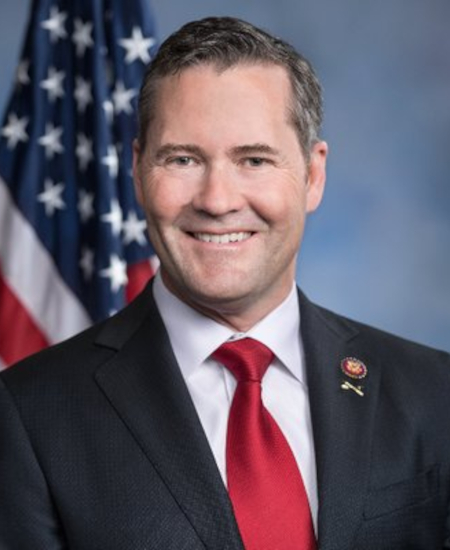
Rep. Michael Waltz
Sponsored bills
Maddy summaryThis bill, HR 3232 (Respect for Grieving Military Families Act), requires the military to automatically forgive overpayments of retired pay sent to a joint account after a service member’s death but before the end of the month of death. It directly affects military retirees’ families who have joint accounts with designated beneficiaries, preventing them from having to repay these accidental payments. The bill also adjusts Survivor Benefit Plan payments: if forgiveness doesn’t occur, the first 12 monthly annuity payments to the beneficiary will each be reduced by one-twelfth of the overpayment amount. This ensures grieving families aren’t burdened with repaying funds they weren’t meant to receive.
Maddy summaryThe HELPER Act of 2023 creates a new FHA mortgage insurance program specifically for first responders and K-12 teachers. It allows eligible first-time homebuyers in these professions to secure mortgages with 100% financing (no down payment required) for purchasing or repairing a primary residence. To qualify, applicants must be employed as law enforcement, firefighters, paramedics, or K-12 teachers, have completed housing counseling, and meet specific employment history requirements (e.g., 4 years in the role or disability-related release). The program authorizes $660,000 for fiscal year 2024 and $160,000 annually through 2030, with authority expiring after 5 years.
Maddy summaryThis bill modifies how federal clean water funds are distributed to states, Indian tribes, and U.S. territories for fiscal years 2024-2028. It sets minimum funding levels: 2% for tribes, 1.5% for territories, and 0.1% for oversight activities, with states receiving base funding from 2023 plus population-based additional amounts. Starting in 2029, funding will shift to a new formula based on the latest "clean watersheds needs survey" to reflect current infrastructure priorities. The bill ensures states receive at least 1% of funds annually and requires the Administrator to update the formula after each new survey.
Maddy summaryHR 676, the Coastal Communities Ocean Acidification Act of 2023, amends the 2009 Federal Ocean Acidification Research and Monitoring Act to improve collaboration on ocean acidification efforts. It requires the federal Advisory Board to establish ongoing input mechanisms with coastal stakeholders, fishery councils, indigenous knowledge groups, and non-Federal experts, and mandates two Indian Tribe representatives on the Board. The bill also updates definitions to specifically include "Indian Tribe" and strengthens coordination with Tribal organizations for vulnerability assessments and research planning. These changes directly affect coastal communities, fisheries, Tribal nations, and local governments managing ocean acidification impacts. The law focuses on integrating diverse stakeholder input into federal research and monitoring activities.
Maddy summaryHR 1750 sets a new minimum standard for pasteurized orange juice, requiring finished products to contain at least 10.0% orange juice soluble solids (excluding any added sweeteners) by weight. This rule directly affects manufacturers producing and selling pasteurized orange juice in the U.S. market. The bill revises existing federal regulations to enforce this minimum juice content level, ensuring a more consistent product definition. It does not change the Secretary of Health and Human Services' existing authority to further adjust these standards.
Maddy summaryHR 1690 (ORDER Act) establishes a framework for U.S. diplomatic agreements with Mexico, Honduras, El Salvador, and Guatemala to manage immigration flows in the Western Hemisphere. It requires Mexico to process asylum claims for migrants from other countries within Mexico and accept migrants waiting for U.S. asylum decisions, while also mandating Honduras, El Salvador, and Guatemala to process asylum claims for migrants in their territories. The bill commits the U.S. to accelerating asylum adjudications, supporting asylum capacity in partner countries, and conducting a feasibility study for a U.S. law enforcement center in southern Mexico to combat crime and reduce migration. These provisions directly affect migrants seeking asylum, the governments of the four partner nations, and U.S. immigration enforcement coordination.
This resolution urges transatlantic unity on a robust deterrence policy to maintain peace and stability across the Taiwan Strait. The resolution also (1) encourages NATO allies to work with their partners in the Indo-Pacific to address shared global security challenges; and (2) commends the people of Taiwan for their commitment to democracy, civil liberties, and human rights.
Maddy summaryThe College Transparency Act requires the National Center for Education Statistics to develop a secure, privacy-protected system that collects and organizes student-level data from colleges and universities. The system will track enrollment patterns, progression, completion rates, costs, financial aid, and post-graduation outcomes, with data disaggregated by characteristics like race, gender, program of study, and credential level. Colleges participating in federal financial aid programs must submit this data, while the system will provide the public with customizable summary information to help students and families make informed college decisions. The bill includes strict privacy protections, prohibiting collection of sensitive data like health information or exact addresses, and requires data minimization to only what's necessary for the system's purposes.
Maddy summaryThe Ukraine Human Rights Policy Act of 2023 requires the President to report to Congress within 60 days on whether a person meets criteria for sanctions related to human rights abuses in Ukraine and whether sanctions are imposed. It mandates the Secretary of State to include specific details in an annual report about human rights abuses by Russian forces in Ukraine and against forcibly relocated Ukrainians, including conditions in detention camps and the use of sexual violence as a weapon of war. The report must cover assessments of abuse methods, forced adoptions of Ukrainian children, efforts to renounce faith, and U.S. diplomatic efforts to address violations through sanctions. This bill establishes reporting requirements and congressional oversight for existing sanctions processes without creating new sanctions.