

Maddy summaryHR 4086 directs the U.S. government to use its influence at the United Nations to extend the mandate of the UN Human Rights Council's independent fact-finding mission on Venezuela. The bill requires the Secretary of State to support efforts to continue this mission until Venezuela holds free elections, ends authoritarian rule, restores democracy, frees political prisoners, and allows humanitarian aid. It also directs the U.S. to urge the UN to condemn Venezuela's use of political prisoners, support humanitarian aid for vulnerable Venezuelans, and assist in releasing detained individuals. The bill mandates annual reports to Congress on these diplomatic actions. This legislation directly affects the UN mission's work and U.S. diplomatic engagement regarding Venezuela's human rights situation.
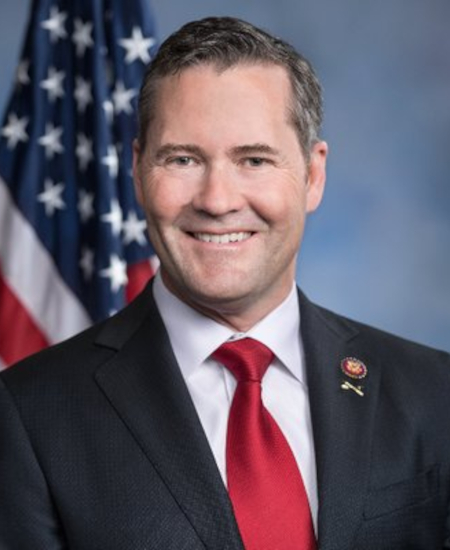
Rep. Michael Waltz
Sponsored bills
Maddy summaryHR 4021, the Fair and Open Skies Act, amends U.S. aviation law to require that the Department of Transportation consider labor standards when reviewing international air transport agreements. Specifically, it adds "preventing the undermining of labor standards" as a mandatory factor in the public interest test for approving such agreements under 49 U.S.C. § 40101. This change directly affects international airlines seeking to operate flights to or from the U.S. and the DOT, which must now evaluate whether proposed agreements could weaken U.S. labor protections. The bill updates existing provisions by replacing outdated language about "agreements with the United States Government" and explicitly including labor standards in the evaluation criteria.
Maddy summaryThis bill designates the POW/MIA Memorial and Museum under construction in Jacksonville, Florida, as the "National POW/MIA Memorial and Museum." It requires the museum to submit a detailed report to Congress within 90 days, including its five-year budget, organizational structure, bylaws, and accreditation status. The designation may be withdrawn if the museum is not operational within five years of enactment or if the required report is submitted late. The bill formalizes an existing project honoring over 224,000 service members captured or unaccounted for since World War II, without creating new policies or affecting public programs.
Maddy summaryThis bill prohibits federal funding for US colleges and universities that host Confucius Institutes - Chinese government-run cultural centers. It directly affects institutions participating in these programs by cutting their eligibility for certain federal funds under the National Defense Authorization Act. The key mechanism removes a previous waiver that allowed exceptions for such institutions, making the funding ban absolute. The policy change applies to all covered federal funding streams without exception.
Maddy summaryThis resolution (HRES 462) is a symbolic House of Representatives measure commemorating the 1989 Tiananmen Square events as described in the resolution and condemning China's government for "continued and intensifying crackdown on human rights" in mainland China and Hong Kong. It specifically calls on China to end censorship about the events, allow a UN investigation, uphold Hong Kong's autonomy under the Joint Declaration, and permit exiled activists to return safely. The resolution makes no binding policy changes but expresses support for human rights movements in China, Hong Kong, Tibet, and Xinjiang. As a non-binding resolution, it does not alter U.S. law or policy.
Maddy summaryHR 3792 extends U.S. security funding for Israel through 2028 (Section 3) and expands energy cooperation to include advanced nuclear technologies and carbon capture (Section 5). It requires annual reports on regional security partnerships involving Israel (Section 6) and ensures countries in the Abraham Accords can access U.S. development programs (Section 8). The bill also mandates reports on diplomatic efforts against ICC investigations targeting the U.S. and Israel (Section 10) and encourages people-to-people programs to strengthen the Abraham Accords (Sections 7, 9). These provisions directly affect Israel’s diplomatic engagement, security partnerships, and economic cooperation in the Middle East.
Maddy summaryThis bill adds citrus groves planted within the past decade to the Conservation Reserve Program (CRP), creating a special enrollment category for citrus land. It prioritizes enrollment for citrus groves at risk of development, affected by huanglongbing (a citrus disease), or supporting wildlife habitat. The bill requires 1-5 year contracts for enrolled citrus land and limits annual enrollment to 100,000 acres from 2024-2028. It directly affects citrus farmers in states like Florida and California who own eligible groves meeting the new criteria.
Maddy summaryH.J.Res. 65 designates November 9th each year as "Gold Star Father's Day" to honor fathers who have lost children serving in the U.S. Armed Forces. The resolution recognizes these fathers' sacrifice, aligns with existing recognition of Gold Star Mothers (since 1936), and supports efforts to honor military families. It does not create new benefits or legal requirements but formally designates a day for national recognition of fathers who lost children in military service. This symbolic resolution follows Georgia's 2017 designation of November 9 as "Georgia Gold Star Father's Day."
Maddy summaryThis bill creates a new tax credit for expenses related to "qualified access technology for the blind" under the Internal Revenue Code. It allows taxpayers to claim a credit of up to $2,000 per year (adjusted for inflation) for costs paid for hardware, software, or IT that converts visual information into formats usable by blind individuals, covering the taxpayer, their spouse, or a dependent who is blind. The credit is limited to $2,000 over any three consecutive tax years per blind individual and expires after 2028. It directly affects blind individuals and their families who purchase qualifying assistive technology. The credit cannot be claimed for expenses already covered by other tax deductions or credits.
Beautifying Federal Civic Architecture Act This bill declares U.S. policy applicable to public buildings and establishes the President's Council on Improving Federal Civic Architecture. The policy includes that applicable federal public buildings should uplift and beautify public spaces, command respect from the general public, be visually identifiable as civic buildings, respect regional architectural heritage, and meet other specified criteria; in the District of Columbia, classical architecture is the preferred and default architecture for federal public buildings absent exceptional factors; buildings that do not meet specified criteria should be considered for redesign where feasible and economical, particularly with respect to the exterior of the applicable federal building; and the General Services Administration (GSA) should seek input from future users of the applicable federal public buildings and the general public in the community where such buildings will be located before selecting an architectural firm or design style and give the general public's input substantial consideration. The GSA must adhere to the policy. If the GSA proposes to approve a design for a new applicable federal public building that diverges from the preferred architecture, it must notify the Office of the Domestic Policy Advisor and Congress not later than 30 days before the date on which the GSA could reject the design without incurring substantial expenditures and describe the reasons for proposing to approve the design.