This resolution condemns and denounces the actions of the Customs and Border Patrol agents who confronted Haitian migrants on horseback using their reins as lashes.
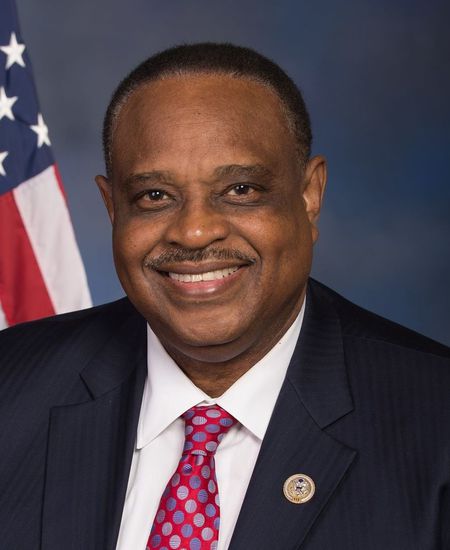
Rep. Al Lawson, Jr.
Sponsored bills
Veterans Jobs Opportunity Act This bill allows a new business-related tax credit for the start-up expenses of a veteran-owned small business in an underserved community. The allowable amount of such credit is 15% of start-up expenditures that do not exceed $50,000. To be eligible for the credit, the small business must (1) be owned and controlled by one or more veterans or their spouses, and (2) have its principal place of business in an underserved community. An underserved community is any area located within (1) a HUBZone (as defined by the Small Business Act), (2) an empowerment zone or an enterprise community, (3) an area of low income or moderate income (as recognized by the Federal Financial Institutions Examination Council), or (4) a county with persistent poverty (as classified by the Economic Research Service of the Department of Agriculture).
Tyler Clementi Higher Education Anti-Harassment Act of 2021 This bill addresses harassment at institutions of higher education (IHEs). Specifically, the bill requires each IHE to include in its annual security report a statement of policy regarding harassment on the basis of a student's actual or perceived race, color, national origin, sex (including sexual orientation, gender identity, pregnancy, childbirth, a medical condition related to pregnancy or childbirth, and a sex stereotype), disability, or religion. In addition, the Department of Education may award grants to IHEs to initiate, expand, or improve programs to (1) prevent the harassment of students; (2) provide counseling or redress services to students who have been harassed or accused of subjecting other students to harassment; or (3) educate and train students, faculty, or staff to prevent harassment or address harassment if it occurs.

Small Farm to School Act of 2021 This bill directs the Department of Agriculture (USDA) to award three-year grants to eight states or tribal organizations to provide school food authorities with an increased reimbursement for free and reduced price lunches that include at least one component that is comprised entirely of locally-produced and unprocessed foods procured directly from certain agricultural producers. USDA must select at least one state or tribal organization located in each of the following regions: (1) the Mid-Atlantic Region, (2) the Midwest Region, (3) the Mountain Plains Region, (4) the Northeast Region, (5) the Southern Region, (6) the Southwest Region, and (7) the Western Region. USDA must give the highest priority to applications that propose to carry out certain projects, including projects that (1) serve a high proportion of children from socially disadvantaged backgrounds, and (2) increase the availability of locally-produced foods to children. Additionally, priority must be given to states or tribal organizations with a high quantity and variety of growers of local fruits and vegetables on a per capita basis, and with a demonstrated commitment to farm-to-school activities. Each state or tribal organization that receives a grant must provide, from nonfederal sources, an amount equal to 100% of the awarded grant amount.
Streamlining Nutrition Assistance Paperwork Act of 2021 or the SNAP Act of 2021 This bill provides statutory authority for a Department of Agriculture (USDA) waiver that allows states to use a written record to document telephonic signatures for Supplemental Nutrition Assistance Program (SNAP) applications. Under current law, states may allow individuals to sign their SNAP applications over the telephone, but states must preserve audio recordings of those telephonic signatures. During the COVID-19 emergency, USDA waived the requirement to preserve the audio recording and allowed states to document the telephonic signatures through written records.
John R. Lewis Voting Rights Advancement Act of 2021 This bill establishes new criteria for determining which states and political subdivisions must obtain preclearance before changes to voting practices may take effect. Preclearance is the process of receiving preapproval from the Department of Justice (DOJ) or the U.S. District Court for the District of Columbia before making legal changes that would affect voting rights. A state and all of its political subdivisions shall be subject to preclearance of voting practice changes for a 10-year period if 15 or more voting rights violations occurred in the state during the previous 25 years; 10 or more violations occurred during the previous 25 years, at least 1 of which was committed by the state itself; or 3 or more violations occurred during the previous 25 years and the state administers the elections. A political subdivision as a separate unit shall also be subject to preclearance for a 10-year period if three or more voting rights violations occurred there during the previous 25 years. States and political subdivisions that meet certain thresholds regarding minority groups must preclear covered practices before implementation, such as changes to methods of election and redistricting. Further, states and political subdivisions must notify the public of changes to voting practices. Next, the bill authorizes DOJ to require states or political subdivisions to provide certain documents or answers to questions for enforcing voting rights. The bill also outlines factors courts must consider when hearing challenges to voting practices, such as the extent of any history of official voting discrimination in the state or political subdivision.
This resolution expresses support for the designation of National Prostate Cancer Awareness Month.
Panama Canal Zone Veterans Act of 2021 This bill establishes a presumption of service-connection for specified conditions associated with active duty service in or near the Panama Canal Zone (zone) from January 1, 1958, through the latter of December 31, 1999, or the date on which the last service member departed from duty in the zone. Under a presumption of service-connection, specific conditions diagnosed in certain veterans are presumed to have been caused by the circumstances of their military service. Health care benefits and disability compensation may then be awarded. The presumption of service-connection applies to illnesses listed in the bill (e.g., Hodgkin's disease) or those that (1) have a positive association with exposure to an herbicide agent that is known or presumed to be associated with service in the zone during the specified time period, and (2) become manifest in a veteran who served in the zone during the specified time period and was exposed to an herbicide agent during such service. The Department of Veterans Affairs must prescribe regulations providing for a presumption of service-connection whenever there is a determination that a positive association exists between the exposure to an herbicide agent known or presumed to be associated with service in or near the zone and the occurrence of an illness in humans.
Protecting Benefits for Disabled Veterans Act of 2021 This bill provides statutory authority for the Department of Veterans Affairs (VA) to assign, for purposes of the disability compensation program, a disability rating of total to a veteran who meets certain parameters and is unable to secure or maintain substantially gainful employment due to a service-connected disability. Specifically, the VA may make such a disability determination if a veteran has a service-connected disability rated at least 60%, or has two or more service-connected disabilities with one being at least 40% and a combined total of at least 70%. The VA may also make a determination on the disability rating in circumstances where a veteran meeting the specified parameters maintains marginal employment (income is less than the poverty threshold), or if the veteran maintains substantially gainful employment (exceeds the poverty threshold) and the VA determines that the rating is appropriate. The bill prescribes what disabilities may be considered as one disability (e.g., disabilities incurred or aggravated as a prisoner of war). The VA may not consider the age of a veteran or eligibility for retirement benefits when making any determination related to disability rating.
Veterans' Agricultural Apprenticeship Act of 2021 This bill requires the Department of Agriculture to establish a program to make direct loans to farmers and ranchers who will provide mentorship and apprenticeship opportunities for veterans who have not previously operated a farm or ranch. The Government Accountability Office must report on the effectiveness of the program in assisting veterans in becoming farmers and ranchers.