

Environmental Justice For All Act This bill establishes several environmental justice requirements, advisory bodies, and programs and modifies the scope of environmental review under the National Environmental Policy Act of 1969. The bill sets forth provisions to address the disproportionate adverse human health or environmental effects of federal laws or programs on communities of color, low-income communities, or tribal and indigenous communities. It also prohibits disparate impacts on the basis of race, color, or national origin as discrimination. Aggrieved persons may seek legal remedy when faced with such discrimination. In addition, the bill directs agencies to follow certain requirements concerning environmental justice. For example, agencies must prepare community impact reports that assess the potential impacts of their actions on environmental justice communities under certain circumstances. It also raises coal, oil, and gas royalty rates to create a funding source to support fossil fuel-dependent communities and displaced workers as they transition away from fossil fuel industries. Additionally, the bill creates a variety of advisory bodies and positions, such as the White House Environmental Justice Interagency Council. Among other things, the council must issue an environmental justice strategy. It also establishes requirements and programs concerning chemicals or toxic ingredients in certain products. For example, the bill (1) requires certain products (e.g., cosmetics) to include a list of ingredients or warnings; and (2) provides grants for research on designing safer alternatives to chemicals in certain consumer, cleaning, toy, or baby products that have an inherent toxicity or that are associated with chronic adverse health effects. Finally, it creates a variety of funding programs, such as a grant program to enhance access to park and recreational opportunities in urban areas.
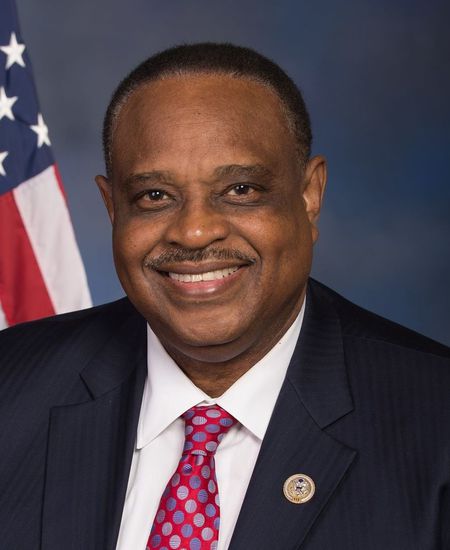
Rep. Al Lawson, Jr.
Sponsored bills
Faster Payments to Veterans' Survivors Act of 2022 This act modifies policies and procedures related to the payment of benefits under certain life insurance programs administered by the Department of Veterans Affairs (VA). If a primary beneficiary has not made a claim for payment within one year (currently two years) after the death of the insured under the National Service Life Insurance (NSLI) program or the United States Government Life Insurance (USGLI) program, the VA is authorized to make payment to another designated beneficiary as if the primary beneficiary had predeceased the insured. If no designated beneficiary makes a claim within two years (currently four years) after the death of the insured, the VA is authorized to make a payment to a person the VA deems to be equitably entitled to such benefit. The act also modifies the beneficiary designation process under NSLI and USGLI. Specifically, if a person does not designate a beneficiary for insurance, or if the designated beneficiary predeceases the insured person, the VA must determine the beneficiary in a specified order of succession. Additionally, the act requires the VA to improve its processes and procedures with respect to identifying, locating, and paying hard-to-find beneficiaries of life insurance policies, including by improving its website search tools.
This act designates the facility of the United States Postal Service located at 6000 South Florida Avenue in Lakeland, Florida, as the U.S. Marine Corporal Ronald R. Payne Jr. Post Office.
This resolution condemns the actions of a White supremacist mob that drove Black residents out of Atlanta, Georgia in 1906 and supports the designation of a national day of remembrance for the victims of forced migrations of Black Americans.
This act directs the Speaker of the House of Representatives and the President pro tempore of the Senate to arrange for the posthumous award of a Congressional Gold Medal to commemorate Glen Doherty, Tyrone Woods, J. Christopher Stevens, and Sean Smith, four Americans killed in the September 11, 2012, attack on the U.S. consulate in Benghazi, Libya. (Stevens was the U.S. Ambassador to Libya at the time, Smith was an officer in the Foreign Service, and Doherty and Woods were both government contractors and former Navy SEALs.) After the medal has been awarded, it shall be given to the Central Intelligence Agency Museum.
Fair and Open Skies Act This bill prohibits the Department of Transportation (DOT) from issuing a foreign air carrier permit or an exemption from certain air carrier certificate requirements under the United States-European Union Air Transport Agreement of April 2007, unless DOT finds that issuing the permit or exemption would be consistent with Article 17 bis of the agreement, which provides that opportunities created by the agreement do not undermine labor standards or the labor-related rights and principles contained in the laws of the respective parties to the agreement; and imposes conditions on the permit or exemption necessary to ensure compliance with Article 17 bis . The bill modifies policy considerations relating to air carrier certificates to require DOT to consider preventing entry into U.S. markets by flag of convenience carriers (i.e., foreign air carriers established in a country other the home country of their majority owner in order to avoid regulations of the home country) and preventing the undermining of labor standards. In carrying out such air carrier certificate requirements, DOT must consider preventing entry of flag of convenience carriers into U.S. markets as being in the public interest and consistent with public convenience and necessity for safety in air transportation and air commerce. In formulating U.S. international air transportation policy relating to the elimination of discrimination and unfair competition, the Department of State and DOT must include in their considerations the undermining of labor standards.
Big Cat Public Safety Act This act revises requirements governing the trade of big cats (i.e., species of lion, tiger, leopard, cheetah, jaguar, or cougar or any hybrid of such species) under the Lacey Act to limit the possession, breeding, and exhibition of big cats. The Lacey Act prohibits any person from importing, exporting, buying, selling, transporting, receiving, or acquiring big cats across state lines or the U.S. border. However, some exemptions are provided for certain entities, such as universities and wildlife sanctuaries. (Sec. 3) The act expands the Lacey Act prohibitions to include a prohibition on possessing or breeding big cats. Breeding means facilitating propagation or reproduction (whether intentionally or negligently), or failing to prevent propagation or reproduction. Owners of big cats that were born before this act's enactment may keep their big cats, but the owners must register them with the U.S. Fish and Wildlife Service. The act modifies the list of entities that are exempt from prohibitions to export, buy, sell, transport, receive, acquire, possess, or breed big cats. The modified list includes exemptions for entities or facilities exhibiting animals to the public if they (1) hold a Class C license in good standing under the Animal Welfare Act, and (2) do not allow individuals to come into direct physical contact with big cats. However, direct contact is allowed if the individual is a trained professional, a veterinarian, or directly supporting conservation programs that do not involve commercial activities and meet other specified restrictions. (Sec. 4) A person who knowingly violates the act must be fined not more than $20,000, or imprisoned for no more than five years, or both. The act considers each violation to be a separate offense. The offense must be deemed to have been committed not only in the district where the violation first occurred, but also in any district in which the defendant may have taken or been in possession of the prohibited wildlife species. (Sec. 5) The act extends forfeiture provisions to fish, wildlife, or plants that are bred or possessed; thus, big cats bred or possessed in violation of the act are subject to forfeiture. (Sec. 6) The Department of the Interior must issue regulations to implement this act.
Rebuild America's Schools Act of 2022 This bill provides support for long-term improvements to public elementary and secondary school facilities. First, the bill sets forth allocations to states and establishes a need-based grant program for local educational agencies (LEAs) to improve school facilities. Further, the bill specifies allowable uses of grant funds, including carrying out major repairs, improving indoor air quality, and making facilities accessible to disabled individuals. Additionally, the bill requires LEAs that receive funds for new construction, modernization, or renovation projects to comply with hazard-resistance building codes and performance criteria under the WaterSense program of the Environmental Protection Agency. Further, the bill requires such LEAs to adopt certain green practices (environmental standards) and requires the use of iron, steel, and manufactured products that are made in the United States (Buy America). The bill restores school infrastructure tax credit bonds. The bill also sets forth reporting requirements, including annual reports on grant program projects and a report by the Government Accountability Office that requires a study of the geographic distribution of projects, the impact of selected projects on student and staff health and safety, and the accessibility of projects to high-poverty schools. The bill also establishes the Office of School Infrastructure and Sustainability within the Department of Education. Next, the bill extends through FY2027 the Impact Aid Construction program. Finally, the bill establishes a grant program to assist LEAs with repairing or replacing concrete foundations affected by pyrrhotite (an iron sulfide material linked to crumbling foundations).
VA Employee Fairness Act of 2021 This bill repeals provisions excluding any matter or question concerning professional conduct or competence; peer review; or the establishment, determination, or adjustment of employee compensation from the applicability of collective bargaining rights for Veterans Health Administration employees.
Restoring Resilient Reefs Act of 2021 This bill addresses the conservation and sustainability of coral reef ecosystems. Among other things, the bill reauthorizes through FY2024 and revises the Coral Reef Conservation Program; directs the National Oceanic and Atmospheric Administration (NOAA) to provide block grants to states to support state coral reef management and restoration; requires NOAA to establish standards for the formation of partnerships among government and community members for the stewardship of coral reefs; provides statutory authority for the U.S. Coral Reef Task Force to lead, coordinate, and strengthen federal government actions to preserve, conserve, and restore coral reef ecosystems; requires the Department of the Interior to provide grants upon the declaration of a coral reef emergency to implement emergency plans; authorizes Interior to provide scientific expertise, technical assistance, and financial assistance for the conservation and restoration of coral reefs; and establishes a National Coral Reef Management Fellowship Program.