

Maximum Pressure Act This bill expands sanctions and economic penalties on Iran. It also restricts the President from unilaterally lifting or waiving the sanctions or penalties and increases congressional oversight of them. Specifically, the bill requires the President to impose visa- and asset-blocking sanctions. Additionally, it modifies existing sanctions, including by (1) providing statutory authority for executive orders imposing sanctions; (2) applying sanctions to additional sectors of Iran's economy; and (3) broadening sanctionable conduct to cover, for example, assisting Iran with the acquisition of ballistic missiles and the complicity of Iranian officials in human rights violations in specified countries. The bill also requires reporting on licenses that authorize activities subject to sanctions. The bill prohibits U.S. representatives at the International Monetary Fund from voting to allow Iran's access to special drawing rights (a currency support tool) and places restrictions on financial transactions with Iran. The restrictions include requiring domestic financial institutions to implement special measures with respect to foreign financial institutions that conduct significant transactions connected to the Instrument in Support of Trade Exchanges (a European mechanism that bypasses U.S. sanctions when carrying out trade with Iran). The Department of State must maintain the Islamic Revolutionary Guard Corps' designation as a terrorist organization and must designate Ansharallah (or Houthis), which operates in Syria, as a foreign terrorist organization. The bill also requires reports on U.S. sanctions concerning Iran, the status of Iran's nuclear weapons program, and other matters.
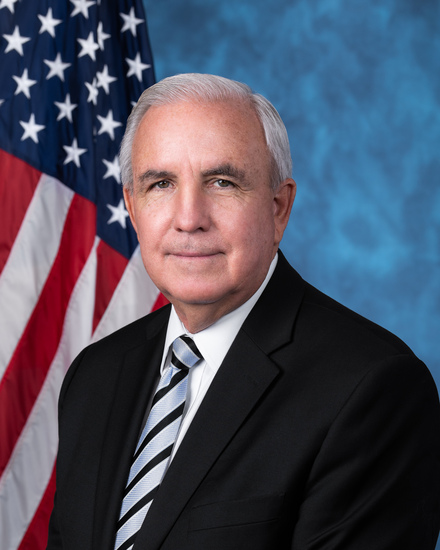
Rep. Carlos A. Gimenez
Sponsored bills
Cuban Family Reunification Modernization Act of 2021 or the CFRM Act of 2021 This bill establishes a program to provide immigration parole to eligible Cuban nationals for family reunification purposes. (Parole is official permission to enter and temporarily remain in the United States.) To be eligible for parole under this bill, a Cuban national must be a beneficiary of a petition for a family-sponsored immigration visa. A sponsor may apply for parole for the beneficiary before the beneficiary receives an immigration visa. An eligible beneficiary must meet certain criteria, such as passing a medical examination and background check. An individual who has committed a gross violation of internationally recognized human rights shall not be eligible for parole under this bill. Parole provided under this bill shall be for two years. An individual who receives parole may apply for work authorization. The Department of Homeland Security (DHS) shall take reasonable measures to prioritize the parole applications where the beneficiary is (1) an individual with a terminal illness, or (2) a qualifying minor child (generally a child with a parent with a soon-to-expire immigration visa). DHS may operate an immigration processing facility at the U.S. Naval Station in Guantanamo Bay, Cuba, if the Department of Defense certifies that such a facility would not hinder the station's operations or pose a threat to national security.
Camp Lejeune Justice Act of 2021 This bill allows certain individuals to sue and recover damages for harm from exposure to contaminated water at Camp Lejeune in North Carolina between August 1, 1953, and December 31, 1987. This action is available only to individuals who were exposed to contaminated water for at least 30 days. The bill prohibits the U.S. government from asserting specified immunity from litigation in response to such a lawsuit. The bill also prohibits an individual who brings such an action from bringing a separate tort action against the United States based on the same harm.
Jaime Zapata and Victor Avila Federal Law Enforcement Protection Act This bill explicitly grants extraterritorial jurisdiction over criminal conduct involving the killing (or attempted killing) of a federal officer or employee. The United States may prosecute such conduct that occurs outside the United States.
COVID-19 Border Protection (CBP) Act This bill requires the Department of Homeland Security (DHS) to devise and implement a strategy to ensure that no alien with COVID-19 (i.e., coronavirus disease 2019) in DHS or Department of Health and Human Services custody may be released into the community during a public health emergency related to COVID-19. Funds previously provided to the Department of State for supporting international efforts to help migrants and refugees respond to COVID-19 shall be transferred to DHS to implement this strategy.
Accountability in Foreign Animal Research Act This bill prohibits the National Institutes of Health from conducting or supporting research that involves testing on vertebrate animals in China, Cuba, Iran, North Korea, Russia, or other countries determined to be a foreign adversary.
This resolution requests the President and directs the Department of State to transmit to the House of Representatives, not later than 14 days after the adoption of this resolution, copies of both classified and unclassified documents that refer or relate to certain information on the withdrawal of the United States from Afghanistan, including reactions, concerns, or objections expressed by certain allies and partners; any agreement reached with the Taliban related to the evacuation of specified individuals; and numbers of specified individuals in contact with the State Department to request evacuation assistance from Afghanistan, from July 30, 2021, to the present.
Animal Freedom from Testing, Experiments, and Research Act of 2021 or the AFTER Act of 2021 This bill requires federal research facilities to facilitate the adoption or nonlaboratory placement of certain warm-blooded animals (e.g., dogs, cats, monkeys, guinea pigs, hamsters, and rabbits) with animal rescue organizations, animal sanctuaries, animal shelters, or individuals. In order to be adopted or placed, the animals must (1) no longer be needed for research; (2) be suitable for release; (3) not be birds, rats, or mice.
Protecting Financial Privacy Act of 2021 This bill prohibits a federal agency from creating, implementing, or administering a program that requires financial institutions or individuals to report on the balances of, transactions involving, or transfers into and out of financial accounts. This prohibition does not apply to laws or regulations in effect on September 1, 2021, or to the Bank Secrecy Act (laws that require financial institutions and other entities to report on certain financial transactions to prevent money laundering, the financing of terrorism, and other criminal activity). This prohibition does apply, however, to regulations issued under the Bank Secrecy Act after September 1, 2021.
Protecting Rural Telehealth Access Act This bill expands coverage of telehealth services under Medicare. Specifically, the bill permanently (1) removes geographic restrictions on originating sites (i.e., the location of the beneficiary), (2) allows the home of the beneficiary to serve as the originating site for all services, (3) allows federally qualified health centers and rural health clinics to serve as the distant site (i.e., the location of the health care practitioner), and (4) expands coverage to include audio-only services for evaluation and management and behavioral health services.