

National Flood Insurance Program Reauthorization and Reform Act of 2021 This bill generally revises the National Flood Insurance Program (NFIP) and reauthorizes the program through FY2026. The bill addresses NFIP coverage, cost, and availability, including by generally prohibiting the Federal Emergency Management Agency (FEMA) from raising certain premiums, surcharges, and fees more than 9% a year for five years; revising flood insurance coverage limits; establishing a means-tested program to provide financial assistance to low income households through policy discounts; and revising standards and certification requirements for flood insurance rate maps. The bill also revises administrative provisions of the NFIP, including by allowing for the continuous operation of the NFIP during a lapse in appropriations, and prohibiting the Department of the Treasury from charging FEMA interest for NFIP debt for five years. The bill sets forth requirements for Write Your Own companies related to reimbursements, agent commissions, and penalties for underpayment of claims. (A Write Your Own company writes and services federal standard flood insurance policies in its own name.) The bill establishes state or tribal government revolving funds for flood mitigation activities and also provides for loans, grants, and other incentives regarding mitigation.
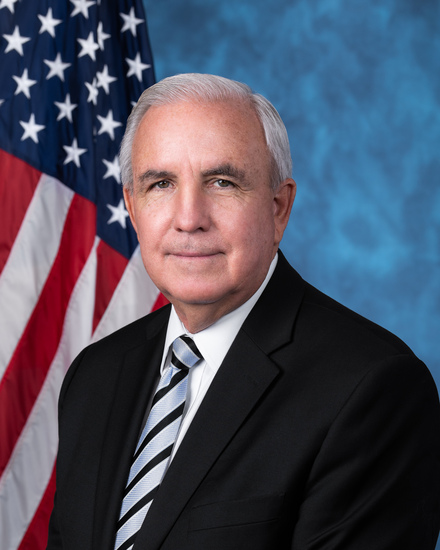
Rep. Carlos A. Gimenez
Sponsored bills
NFIP Risk Rating 2.0 Delay Act of 2021 This bill freezes premium rates for flood insurance provided through the National Flood Insurance Program through September 30, 2022.
This bill prohibits the use of federal funds to require a member of the Armed Forces to receive a COVID-19 vaccination. The bill also prohibits adverse action (e.g., punishment) being taken against a member of the Armed Forces because the member refuses to receive a COVID-19 vaccination.
Preserving Recreation, Oceans, Tourism, Environment, and Coastal Towns in Florida Act or the PROTECT Florida Act This bill prohibits oil and gas exploration and leasing on the Outer Continental Shelf in certain areas off the coast of the Gulf of Mexico and Florida. Specifically, the bill extends the moratorium until June 30, 2032, on oil and gas exploration, preleasing or leasing in certain areas of the Gulf of Mexico. Additionally, the bill establishes a moratorium until June 30, 2029, on oil and gas exploration, preleasing or leasing, or any related activity (including seismic testing) in the (1)Straits of Florida Planning Area, and (2) the area in the South Atlantic Planning Area that is south of the northernmost lateral seaward administrative boundary of Florida.
This resolution honors the life and legacy of General Colin L. Powell and expresses sympathy to his family. Additionally, the resolution commends General Colin L. Powell for his accomplishments in the government and Armed Forces.
This bill designates the the Federal Building and United States Courthouse located at 111 North Adams Street in Tallahassee, Florida, as the Joseph Woodrow Hatchett United States Courthouse and Federal Building.
Original National Domestic Violence Awareness Month Resolution of 2021 This resolution supports the goals and ideals of National Domestic Violence Awareness Month. Further, it expresses the sense of the House of Representatives that Congress should continue to raise awareness of and support programs to end domestic violence.
State, Local, Tribal, and Territorial Fiscal Recovery, Infrastructure, and Disaster Relief Flexibility Act This bill allows states, tribes, territories, and localities to use certain COVID-19 relief funds for new categories of spending, including for natural disasters and infrastructure projects. It also makes changes to expenditure deadlines and other aspects of this funding. Specifically, recipients may use funds for emergency relief from natural disasters and associated negative economic impacts of natural disasters. In addition, recipients may use a portion of their COVID-19 relief funds for designated infrastructure projects, such as nationally significant freight and highway projects. Furthermore, the bill allows recipients to expend COVID-19 relief funds on these types of infrastructure projects until September 30, 2026. Under current law, recipients must expend the funds by December 31, 2024. Other changes in the bill include (1) modifying eligibility and allocation requirements for funding set aside for counties and Indian tribes that are near public lands, (2) allowing Indian tribes an additional year to expend their COVID-19 relief funds, and (3) establishing a process for government entities to decline COVID-19 relief funds and requiring any declined funds to be used to reduce the federal deficit.
Clean Water Allotment Modernization Act of 2021 This bill revises the formula the Environmental Protection Agency (EPA) uses to determine how to distribute funds from the Clean Water State Revolving Fund (SRF) program. Under the program, the EPA allocates funding to states for water quality infrastructure projects, such as wastewater systems and stormwater management projects. In FY2022-FY2026, the EPA must provide an initial allotment to each state that is equal to the amount the state received in FY2023. The EPA must also provide an additional allotment to each state that is based on its share of the U.S. population. In FY2027 and each subsequent fiscal year, the EPA must use an updated allotment formula, which is based on the needs of states as identified in the most recently available clean watersheds needs survey. Beginning in FY2022, the formula must also provide allotments for Indian tribes and territories. In addition, the formula must provide an allotment for EPA's oversight of SRF projects to ensure they use American iron and steel.
This resolution recognizes and appreciates the dedication and devotion demonstrated by the men and women of law enforcement. It also condemns calls to defund, disband, dismantle, or abolish the police.