

Advanced Aviation Infrastructure Modernization Act or the AAIM Act This bill establishes a pilot grant program to support advanced air mobility (AAM) infrastructure. AAM infrastructure refers to an air transportation system that transports individuals and property between points in the United States in both controlled and uncontrolled airspace using certain aircraft, including remotely piloted, autonomous, or vertical take-off and landing aircraft. The Department of Transportation (DOT) must award planning grants for AAM infrastructure to (1) state, local, or tribal governments; (2) airport sponsors; (3) transit agencies; (4) port authorities; (5) metropolitan planning organizations; or (6) consortia of such entities. Entities that receive these grants must develop a comprehensive plan for AAM infrastructure, including vertiports (sites that support the landing, takeoff, loading, and other operations of vertical take-off and landing aircraft). Topics covered in the plan must address matters such as identifying locations for AAM infrastructure and available sources of funding. DOT must brief Congress about the plans it receives. The briefing must include an evaluation of the planned or proposed locations for vertiports and a description of best practices or lessons learned through the review of comprehensive plans. If the Federal Aviation Administration issues type certificates for at least two aircraft models designed to provide AAM transportation and other requirements are met, DOT may award construction grants to entities that submitted comprehensive plans. Recipients may use grant funds for design, environmental studies, and other capital costs related to the construction of a public-use vertiport or associated infrastructure. Grants may not be awarded after September 30, 2023.
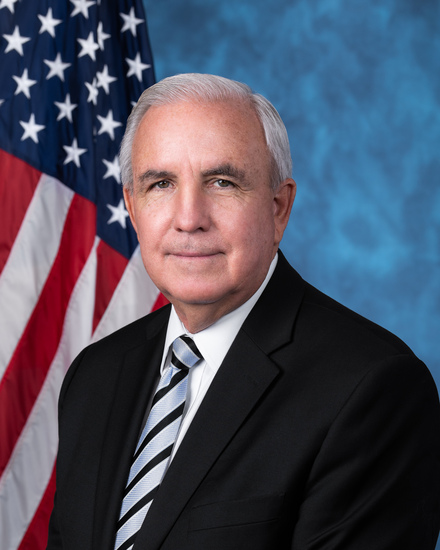
Rep. Carlos A. Gimenez
Sponsored bills
Military Spouse Hiring Act This bill expands the Work Opportunity Tax Credit (WOTC) to include the hiring of a qualified military spouse. (The WOTC permits employers who hire individuals who are members of a targeted group such as qualified veterans, ex-felons, or long-term unemployment recipients to claim a tax credit equal to a portion of the wages paid to those individuals.) A qualified military spouse is any individual who is certified by the designated local agency as being (as of the hiring date) a spouse of a member of the Armed Forces.
Securing Our Students Act This bill authorizes local educational agencies and nonpublic schools to use certain COVID-19 emergency relief funds, services, or assistance for school safety uses, that is improving school conditions for student learning by planning and designing school buildings and facilities, installing infrastructure, providing safety education, and implementing technology or other measures that strengthen security on school premises.
This resolution recognizes domestically produced natural gas as affordable, green , and necessary for energy independence while asserting that the United States should take a broad approach to meet energy needs.
Protecting American Sovereignty Act This bill prohibits the federal government from implementing any obligations upon the United States that may be contained in a draft report by a World Health Organization (WHO) working group on strengthening the WHO's preparedness and response to health emergencies. This prohibition shall also apply to any related or successor reports and recommendations regarding pandemics.
Securing the Checkpoint Property Screening System (S-CPSS) Act of 2022 This bill establishes requirements related to the Checkpoint Property Screening System program, through which the Transportation Security Administration (TSA) procures and deploys computed tomography equipment for screening carry-on baggage at airport checkpoints. Specifically, the TSA must support small businesses with respect to research and development of technologies under consideration for the program. Additionally, the TSA must brief the appropriate congressional committees at specified intervals regarding planned procurement and deployment efforts of such equipment. If the TSA intends to make an award to a system that does not satisfy the program's key performance parameters, it shall brief such committees at least two weeks prior to any such award regarding why such award is necessary and in the best interest of national security and good government.
This bill requires institutions of higher education (IHEs) to disclose information regarding gifts from and contracts with China-affiliated organizations. China-affiliated organization refers to any entity that receives support directly or indirectly from the Chinese government, including certain educational institutes or programs, think tanks, and business entities. Under current law, an IHE must disclose to the Department of Education (ED) a gift or contract from a foreign source that is valued at $250,000 or more, considered alone or in combination with all other gifts from or contracts with that foreign source in a calendar year. This bill establishes a special disclosure rule relating to China-affiliated organizations. Specifically, the bill requires an IHE to disclose a gift from or contract with a China-affiliated organization that is valued at $5,000 or more, considered alone or in combination with all other gifts from or contracts with that organization in a calendar year. Additionally, the bill requires an IHE that receives federal grants to annually file a report with ED that identifies any activities conducted pursuant to a contract or other agreement between the IHE and a China-affiliated organization, including any joint research or academic exchanges. Such a contract or other agreement must be made available on a publicly accessible website of the IHE.
Stiltsville Restoration Act This bill directs the Department of the Interior to approve, in writing, the repair of the Stiltsville structure in Biscayne National Park in Florida known as the LeShaw House, which was damaged by a fire on January 11, 2021.
Urgently Feeding America's Babies Act of 2022 This bill addresses a shortage in the domestic supply of infant formula. Specifically, the bill directs the President to immediately use existing authorities under the Defense Production Act of 1950 to ensure the supply of infant formula. That act confers upon the President a broad set of authorities to influence domestic industry in order to provide essential materials and goods needed for the national defense. In addition, the Food and Drug Administration must (1) establish, within 15 days, a process to allow importation of infant formula from the European Union; and (2) publish safety guidelines for imported infant formula.
This resolution supports the goal of increasing Latino individuals in science, technology, engineering, and mathematics (STEM) as a way to promote economic empowerment and sustainability, not only in their community, but in the overall U.S. economy. The resolution also encourages increased federal support for initiatives aimed at boosting the number of Latino students who pursue STEM education and career paths, particularly engineering. Finally, the resolution recognizes the important role that Hispanic-serving institutions and all institutions of higher education must play in order to achieve the goal of increasing Latino individuals in STEM.