

Maddy summaryThis House resolution (HRES 701) symbolically supports expanding the Abraham Accords on their third anniversary by urging the U.S. government to encourage more countries to normalize relations with Israel and deepen economic cooperation among existing signatories. It recommends promoting regional collaboration in areas like clean energy, security, and trade, while linking expanded ties to progress on Israeli-Palestinian peace efforts. The resolution has no legal effect - it expresses congressional support but does not create new laws or obligations. It directly affects U.S. diplomatic strategy toward Middle East relations, emphasizing symbolic endorsement over concrete policy changes.
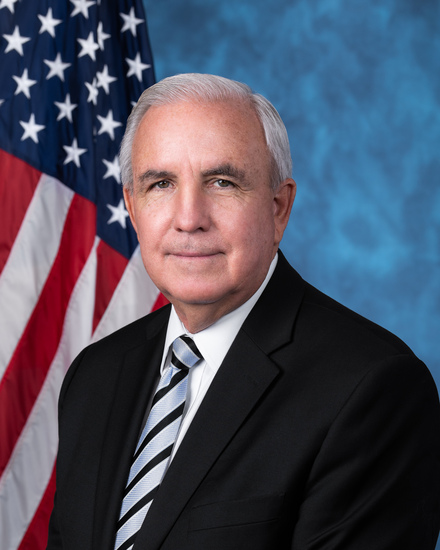
Rep. Carlos A. Gimenez
Sponsored bills
Maddy summaryHR 5537, the Miccosukee Reserved Area Amendments Act, expands the designated Miccosukee Reserved Area (MRA) to include Osceola Camp within Everglades National Park, as shown on a specific 2023 map. The bill requires the National Park Service Secretary, working with the Miccosukee Tribe, to implement flood protection measures for structures in Osceola Camp within two years of enactment. It authorizes up to $14 million in annual funding (starting fiscal year 2024) specifically for these flood protection actions. The bill directly affects the Miccosukee Tribe's reserved land and Everglades National Park management.
Maddy summaryHR 4831, the Fair Pay for Federal Firefighters Act, increases pay for wildland firefighters employed by the Forest Service or Department of the Interior during fiscal years 2024-2025. It establishes special pay rates (ranging from 1.5% to 42% above standard General Schedule rates, depending on grade) that replace regular pay for these workers. The bill also creates a new "incident response premium pay" provision, entitling eligible firefighters to 450% of their hourly rate for each day deployed on qualifying wildfires or fire-related incidents, capped at $9,000 annually per employee. This premium pay is excluded from calculations for benefits like leave accruals, overtime, or retirement. The bill directly affects federal wildland firefighters whose duties focus on forest, range, or wildland fires (not structural fires).
Maddy summaryHRES 697 is a non-binding resolution expressing the U.S. House of Representatives' concerns about China's "Made in China 2025" (MIC2025) industrial plan and associated actions. The resolution cites alleged Chinese practices - including state-backed intellectual property theft, forced labor, unfair subsidies, and cyber espionage - as undermining U.S. competitiveness in key technology sectors like semiconductors, AI, and clean energy. It directly affects U.S. businesses, researchers, and government entities operating in these MIC2025 priority areas, urging them to strengthen security measures against foreign interference. The resolution calls for coordinated U.S. public-private efforts to protect innovation but does not impose new legal requirements.
Maddy summaryThe Humane Cosmetics Act of 2023 bans cosmetic animal testing in the United States, prohibiting companies from conducting or contracting such testing after its enactment (effective 1 year later). It also bans selling or transporting cosmetics developed using animal testing conducted after that date within U.S. interstate commerce. The law directly affects cosmetic manufacturers, retailers, and suppliers operating in the U.S. market, requiring them to use non-animal testing methods for safety evaluations. Exceptions exist for foreign regulatory requirements or when no alternative testing methods are available for specific ingredients.
Maddy summaryHR 3152, the "Fight CRIME Act," aims to maintain international restrictions on Iran's missile-related activities by requiring diplomatic efforts to extend these restrictions before they expire in October 2023. The bill mandates annual reports detailing U.S. diplomatic strategies, potential impacts of expiration, and measures to deter missile technology transfers to Iran. It establishes sanctions against foreign individuals or entities that knowingly support Iran's missile or drone programs, including asset freezes and visa restrictions. These sanctions apply regardless of whether UN restrictions remain in effect after their expiration, directly affecting foreign entities involved in these activities.
Maddy summaryHR 1501, the UAS Act, bans the Department of Homeland Security (DHS) from operating, procuring, or renewing contracts for unmanned aircraft systems (UAS/drones) or related components (like flight controllers, software, or detection systems) manufactured in or using technology from "covered foreign countries" (nations identified as foreign adversaries by U.S. intelligence). DHS can request a waiver for national security reasons, but must notify Congress within 14 days. The bill requires DHS to submit a security report to Congress within 180 days detailing existing UAS systems, threat assessments, and potential security risks from foreign-made UAS. This applies solely to DHS operations, not general public drone use.
Maddy summaryThis bill requires the Bureau of Prisons to develop and implement a strategy for scanning all incoming mail at federal prisons to stop fentanyl and other synthetic drugs from entering facilities. It directs the Bureau to evaluate existing scanning technology within 180 days and submit a detailed plan to Congress within 90 days, including how to provide digital copies of mail to inmates within 24 hours and physical copies within 30 days (if safe). The strategy must achieve 100% mail scanning capacity at all federal prisons, prioritize high-security facilities, and include a budget proposal for fiscal years 2024-2026. This directly affects federal prisons, inmates, and Bureau employees by changing mail processing procedures to enhance safety and reduce staffing burdens from manual mail checks.
Maddy summaryHR 4949, the Don Young Veterans Advancing Conservation Act, establishes a Department of Commerce grant program to fund nonprofit organizations that train or employ veterans for underwater marine and coastal conservation work. The program, authorized for $1 million in fiscal year 2024 and increasing to $1.8 million by 2028, supports specific activities like coral restoration, invasive species removal, marine debris cleanup, and hurricane recovery. Nonprofits must be 501(c)(3) organizations and use funds to employ veterans in these conservation roles, with coordination required with the Department of the Interior. This directly affects veterans seeking meaningful employment and conservation-focused nonprofits receiving federal grants.
Maddy summaryHR 4162, the Land Grant Research Prioritization Act of 2023, adds four new research priorities to existing agricultural funding under the Food, Agriculture, Conservation, and Trade Act of 1990. The bill directs the Secretary of Agriculture to prioritize grants for land-grant universities (as defined in 7 U.S.C. 3103) to develop: mechanized harvesting technologies for specialty crops, artificial intelligence applications in agriculture, methods to manage invasive species, and sustainable aquaculture techniques. These provisions expand funding opportunities for research projects addressing specific agricultural challenges. The bill directly affects land-grant colleges and universities by creating new, targeted grant categories for their research programs.