

Maddy summaryThis bill ensures Coast Guard personnel continue receiving pay during budget gaps specific to the Coast Guard. It mandates automatic funding for military members (including reserves), qualified civilian employees, and contract workers providing essential support during a "Coast Guard-specific funding lapse" - defined as when no Coast Guard funding bill passes before the fiscal year begins. The bill covers pay and benefits for these groups until a formal funding bill is enacted or a budget resolution without Coast Guard funding passes. It does not apply to general government shutdowns but targets only Coast Guard operations. The measure aims to prevent disruptions to critical Coast Guard missions during funding delays.
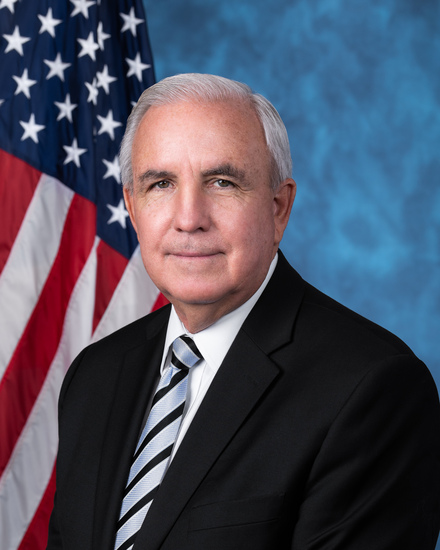
Rep. Carlos A. Gimenez
Sponsored bills
Maddy summaryThis resolution designates the week of September 25-29, 2023, as "National Clean Energy Week" to recognize the growing role of clean energy in the U.S. economy. It expresses support for clean energy jobs and innovation, noting the sector employed about 8.1 million people in 2022. The resolution encourages federal, state, and local investment in affordable clean energy technologies and promotes "commonsense solutions" for energy needs. As a symbolic gesture, it has no legal force or funding implications - it simply urges recognition of clean energy's economic and environmental contributions.
Maddy summaryThis bill requires the Department of Homeland Security (DHS) to conduct a comprehensive assessment of technology needs for securing U.S. maritime borders within two years of enactment, with biannual updates for four years. The analysis must evaluate current and emerging technologies to address threats like drug trafficking, human smuggling, cybersecurity risks, and gaps in surveillance, while considering operational impacts and coordination with agencies. DHS must report findings to Congress, focusing on how technology can enhance border security, improve resource deployment, and support legal trade without mandating specific technology purchases or funding.
Maddy summaryThis bill ensures continued pay for certain U.S. Customs and Border Protection (CBP) and Immigration and Customs Enforcement (ICE) employees during a government funding gap in fiscal year 2024. It specifically covers CBP agents at Southwest, Northern, and maritime border ports of entry, and ICE officers conducting immigration enforcement (including detainment/removal) and investigations into criminal operations like drug trafficking and human smuggling. The funding, drawn from general Treasury funds, would apply if a budget lapse begins on October 1, 2023, and would last until January 1, 2024, or until new funding is enacted. It directly affects these frontline enforcement personnel by guaranteeing their salaries during a potential government shutdown.
Maddy summarySammy's Law of 2023 requires large social media platforms (defined as those with over 100 million monthly users or $1 billion in annual revenue) to create and maintain application programming interfaces that allow parents or legal guardians to delegate account management for children aged 13 or older to third-party safety software providers. These providers must register with the Federal Trade Commission, agree to use data solely for child safety, and follow strict rules about data disclosure. The law establishes a national standard that prevents states from creating their own requirements for this feature while including FTC enforcement mechanisms and data security provisions. The legislation aims to give parents more tools to monitor and protect children from specific online harms like cyberbullying, trafficking, and violence on major social media platforms.
Maddy summaryHRES 739 is a House resolution disapproving of a September 11, 2023, sanctions waiver that would release $6 billion in Iranian assets held in South Korea. The resolution states this waiver weakens U.S. policy by allowing Iran access to funds that could support its nuclear program and terrorism, and criticizes the delayed notification to Congress. It specifically condemns the administration's nonenforcement of mandatory sanctions and the release of assets without proper congressional review. The resolution demands the administration submit any Iran nuclear agreement to Congress before further sanctions relief. This is a procedural disapproval, not a law altering sanctions.
Maddy summaryHR 5641, the Pay Our Troops Act, ensures military personnel and their support staff continue receiving pay during fiscal year 2024 if Congress fails to pass regular budget appropriations. It appropriates existing Treasury funds to cover pay and allowances for active-duty troops, reserve components, and civilian employees or contractors supporting military operations. The bill automatically terminates on January 1, 2025, or earlier if Congress enacts a regular budget or continuing resolution. This provision directly affects service members, Department of Defense staff, and Coast Guard personnel (when not under the Navy) during budget implementation gaps.
Maddy summaryHRES 714 is a formal recognition resolution celebrating Hispanic Restaurant Week (September 22-October 3, 2023) and acknowledging the economic contributions of Hispanic restaurant owners and employees to the U.S. restaurant industry. It highlights statistics showing Hispanic individuals own a significant share of restaurants and workforce participation in the sector, but does not create new policies, funding, or regulations. This resolution is purely ceremonial, expressing congressional appreciation without any legislative impact.
Venezuelans Overcoming Interference and Corruption in Elections Act or the VOICE Act This bill requires the President to impose sanctions on any foreign persons who prevent opposition candidates from participating in the 2024 Venezuelan presidential election. Specifically, the President must impose sanctions on any foreign persons (including Venezuelan officials) who prevent opposition candidates from participating in, or who materially assist in preventing opposition candidates from participating in, the 2024 Venezuelan presidential elections. Sanctions include asset blocking, inadmissibility into the United States, and visa revocation. The President may waive sanctions based on a determination that such a waiver is in the national interest of the United States.
Maddy summaryThis bill creates a new exemption from U.S. passport application fees for first responders participating in disaster relief. Specifically, it allows the Secretary of State to waive both passport issuance and execution fees for volunteers working under U.S. government contracts, grants, or agreements to conduct search, rescue, or disaster relief operations within seven days of a natural disaster in a foreign country. The bill does not change existing fee exemptions for military personnel, seamen, or families of fallen service members. It also requires the Secretary of State to report annually on the number of such fee waivers granted to first responders.