

Maddy summaryHRES 74 is a symbolic House resolution supporting Catholic schools and celebrating the 51st annual National Catholic Schools Week (January 26-February 1, 2025). It recognizes Catholic schools’ contributions, citing their role in educating 1.7 million students, serving diverse communities (including 20.5% racial minorities and 15.5% Hispanic students), and maintaining a 98.9% high school graduation rate. The resolution specifically applauds the National Catholic Educational Association and U.S. Conference of Catholic Bishops for their work in promoting Catholic education and the 2025 theme, "United in Faith and Community." As a procedural resolution, it has no legal effect but formally acknowledges these schools’ academic and community impact.
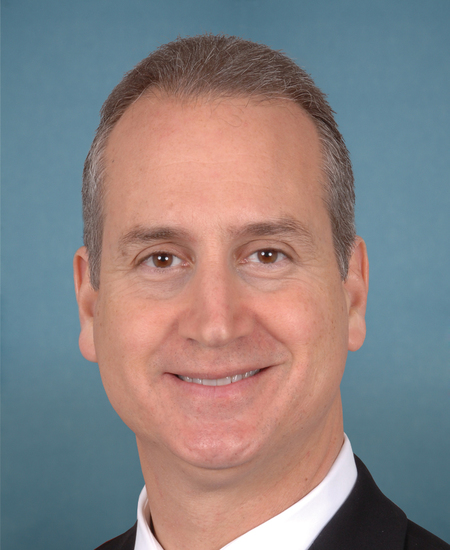
Rep. Mario Diaz-Balart
Sponsored bills
Maddy summaryHR 21, the Born-Alive Abortion Survivors Protection Act, requires medical staff at abortion facilities to provide the same immediate care and hospital admission to any infant born alive during an abortion as they would for any newborn. It mandates reporting failures to provide this care to law enforcement and imposes penalties of up to 5 years in prison for violations, with harsher penalties for intentional killing. The bill also allows women who undergo abortions to sue for civil damages, including triple the abortion cost, and provides for attorney fees. It defines "abortion" to exclude procedures performed after viability to preserve a live birth. This law directly affects healthcare providers at abortion facilities and creates new federal legal obligations for them.
Maddy summaryThe Restoring Trade Fairness Act (HR 694) would suspend the United States' normal trade relations (NTR) status with China, ending the "permanent normal trade relations" (PNTR) status China has held since 2001. The bill requires the President to revise tariff rates for Chinese imports to apply minimum duties of 35% for most goods and 100% for specific listed items, with these increases phased in over five years. It also establishes a trust fund to compensate U.S. producers for revenue losses resulting from Chinese retaliation against U.S. exports, while modifying the U.S. Schedule of Concessions to the World Trade Organization.
Maddy summaryHR 7 prohibits federal funds from being used for abortions or health insurance plans covering abortion, with exceptions for pregnancies resulting from rape, incest, or when a woman's life is endangered. It blocks federal premium tax credits under the Affordable Care Act for health plans covering abortion (except in specified cases) and requires clear disclosure of abortion coverage and related surcharges in plan materials. The bill allows individuals or employers to purchase separate abortion coverage using non-federal funds, such as out-of-pocket payments, without affecting federal subsidies. It directly affects federal health programs, ACA marketplace plans, and health insurance issuers offering coverage that includes abortion services.
This bill increases the annual limit on the tax credit for qualified railroad track maintenance expenses (also referred to as the short line railroad tax credit) and expands eligibility for claiming the credit. Under current law, the tax credit is limited each tax year to $3,500 multiplied by the sum of the number of miles of railroad track owned or leased by the taxpayer (miles owned or leased) and the number of railroad track miles assigned to the taxpayer by a Class II or III railroad (miles assigned). This bill increases the annual limit to $6,100 multiplied by the sum of miles owned or leased and miles assigned. The $6,100 amount used in the calculation of the tax credit limit is adjusted for inflation for tax years beginning after 2025. The bill also expands eligibility for the tax credit to include gross expenses for maintaining railroad tracks owned or leased as of January 1, 2024. Under current law, the tax credit is limited to gross expenses for maintaining railroad tracks owned or leased as of January 1, 2015.
Maddy summaryHR 470, the Red Snapper Act of 2025, blocks the U.S. Secretary of Commerce from implementing area or bottom closures in the South Atlantic for snapper-grouper fisheries until two conditions are met: the completion of the South Atlantic Great Red Snapper Count survey and integration of its data into the next official stock assessment. This directly affects recreational and commercial fishermen in the South Atlantic region, particularly in Florida, where red snapper fishing supports significant economic activity ($14 billion annually). The bill aims to delay management changes pending new scientific data to avoid potential economic harm during a period of record fish stock abundance. It does not alter fishing seasons or quotas but specifically targets the timing of area closure decisions.
Maddy summaryHR 450, the FORCE Act, prevents the U.S. government from removing Cuba from the State Sponsors of Terrorism list. It requires the President to make a specific determination under the 1996 LIBERTAD Act before Cuba can be removed. The bill directly affects Cuba's international designation status and U.S. foreign policy actions toward the country. It does not change existing law but blocks any removal until the specified determination is made. The provision applies to both the President and the Secretary of State.
Maddy summaryHR 378, the Thin Blue Line Act, adds a new aggravating factor for the death penalty in federal cases where a defendant kills or targets a law enforcement officer, firefighter, or other first responder. It specifically applies when the victim was killed or targeted while performing official duties, because of those duties, or due to their status as a public official. This amendment to federal death penalty law would make the death penalty a potential sentencing option for such crimes, as the killing would be considered an aggravating factor. The bill directly affects defendants convicted of homicides meeting these specific circumstances involving public safety personnel.
Maddy summaryThis bill designates the U.S. Postal Service facility at 290 NW Peacock Boulevard in Port St. Lucie, Florida, as the "Trooper Zachary Fink Post Office Building." It updates all official U.S. government references (including laws, maps, and documents) to use this new name for the facility. The bill directly affects the postal facility and any federal records mentioning its location. As a naming resolution, it has no policy or funding provisions beyond the official designation.
Maddy summaryHR 268, the STOP MADURO Act, increases the maximum reward for information leading to the arrest and conviction of Venezuela's President Nicolás Maduro Moros from $5 million to $100 million under the State Department's rewards program. The bill authorizes this reward using assets already frozen from Maduro and his regime under existing U.S. sanctions, including those from the Foreign Narcotics Kingpin Designation Act and multiple executive orders. It directly affects Maduro and his regime officials by offering a significantly larger financial incentive for their arrest. The key mechanism is redirecting funds from previously seized assets to fund the enhanced reward, with no new appropriations required. This is a procedural change to the rewards program, not a new sanction.