

Maddy summaryHR 5867, the Plant-Powered School Meals Pilot Act, creates a federal grant program to help schools serve 100% plant-based meal options. It authorizes $10 million for grants to school food authorities (specifically those serving 50%+ students eligible for free/reduced-price meals) over three years to cover staff training, meal preparation, community partnerships, and procurement from underserved farmers. The bill also establishes a separate $2 million pilot to reimburse schools for nondairy beverage substitutions for students with dietary needs, prioritizing schools with high lactose intolerance rates. Both pilots require annual reporting on participation, meal counts, and fund usage, with final reports submitted to Congress.
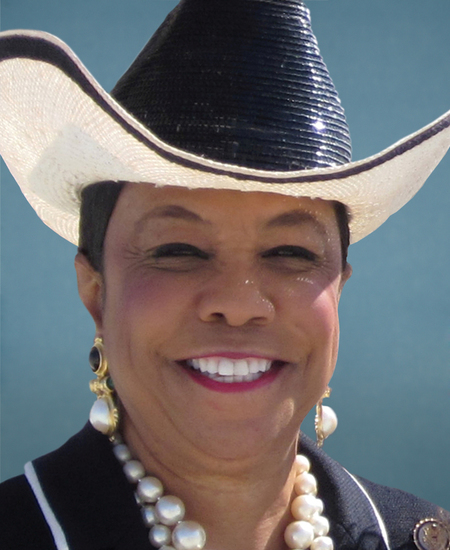
Rep. Frederica S. Wilson
Sponsored bills
Maddy summaryThis bill amends the tax code to allow businesses to claim charitable tax deductions for donating specific food-related equipment to hunger-relief organizations. It creates a new category called "qualified property," covering fully functional food storage equipment (like industrial freezers), transportation vehicles (delivery trucks), and meal preparation tools (industrial ovens, packing machinery). Donors can deduct up to 25% of the equipment's fair market value, with annual limits of $500 for transport equipment and $15,000 for preparation equipment. The changes apply to tax years beginning after December 31, 2025, and only affect donations to organizations whose primary mission is distributing food to people in need.
Maddy summaryThis bill amends the Federal Water Pollution Control Act to improve access to wastewater treatment services for low-income households. It changes how states can use funds in water pollution control revolving loan programs by requiring states to dedicate at least 20% of their annual federal capitalization grants to additional subsidies for ratepayers (water customers). The bill also revises subsidy calculations, allowing states to use up to 50% of their annual grants or the 10-year average of state deposits, whichever is greater, to help households maintain access to wastewater and stormwater treatment. These changes directly affect states managing water funds and the households relying on subsidized wastewater services.
Maddy summaryThis bill amends the Federal Water Pollution Control Act to create permanent federal grants for alternative water source projects, directly affecting communities facing water scarcity or drought risks. It redefines "critical water supply needs" to include publicly engaged plans for comprehensive water supply or drought resiliency, replacing the previous "pilot program" structure. The legislation requires the Administrator to annually report to Congress on funded projects, detailing how each addresses identified water supply needs. These changes shift the program from a temporary pilot to a sustained grant mechanism with specific eligibility criteria and transparency requirements.
Maddy summaryHR 5816, the HELP FEDs Act, protects federal employees from student loan penalties during government shutdowns. It prevents late fees, additional interest, and credit damage on qualified education loans (like federal student loans) when employees miss payments due to a funding lapse causing government operations to halt. The law requires the Department of Education to coordinate with loan servicers and credit agencies to remove any inaccurate negative credit reports from these missed payments, applying retroactively to shutdowns after October 1, 2025. The bill does not eliminate the need to repay loans but pauses penalties and credit impacts during covered disruptions.
Maddy summaryHR 5792, the Government Shutdown Salary Suspension Act, requires that salaries for Members of Congress, the President, and Vice President be placed in escrow during government shutdowns. Specifically, during any pay period when a shutdown occurs (defined as a lapse in appropriations), the payroll administrator must withhold daily pay amounts based on the number of shutdown days in that period. These withheld funds remain in escrow until either the shutdown ends or the end of the current congressional term (for Congress) or presidential term (for the President/Vice President), whichever comes first. The bill ensures these suspensions align with constitutional compensation rules and applies to all relevant federal leadership during shutdowns.
Head Start Shutdown Protection Act of 2025 This bill requires the Department of Health and Human Services to reimburse a state, local government, or school district that uses its funds to maintain participation in the Head Start program or the Early Head Start program during a government shutdown in which there is a lapse in federal appropriations for the programs. The Head Start programs provide comprehensive early childhood education and development services to low-income children. The programs seek to promote school readiness through the provision of educational, health, nutritional, social, and other services.
Keep Air Travel Safe Act This bill provides continuing appropriations for the Transportation Security Administration (TSA) during any period in which there is a lapse in appropriations for TSA. It also requires the continuing appropriations to be funded using certain unobligated funds that were provided to U.S. Immigration and Customs Enforcement by the One Big Beautiful Bill Act. The bill provides the appropriations for TSA to continue all programs, projects, or activities (including the costs of direct loans and loan guarantees) that were funded in the preceding fiscal year. The appropriations provided by this bill are available from the first day of a lapse in appropriations for TSA until the earlier of the date on which the applicable regular appropriations bill for the fiscal year becomes law or a joint resolution making continuing appropriations becomes law, or the date that is 180 days after the first day of a lapse in appropriations.
Maddy summaryThis resolution requires the House of Representatives to hold daily meetings and recorded attendance checks during government shutdowns. Members must electronically confirm their presence each day via a "quorum call," with fines of $500 for a first offense and $2,500 for repeat failures. Fines cannot be paid using campaign or official funds, and the rules apply to all House members, including delegates and the Resident Commissioner. The bill aims to ensure continuous House operations during shutdowns but does not alter the cause or duration of shutdowns.
Maddy summaryThis bill makes federal funding for the WIC program mandatory by requiring Congress to appropriate necessary funds annually for fiscal year 2026 and each subsequent year. It removes discretionary language from WIC funding requirements and clarifies that eligible participants must be served without participation limits. The bill directly affects low-income pregnant women, new mothers, and young children who rely on WIC for nutrition assistance, ensuring continued access to critical food, health, and education services.