

Gun Trafficking Prohibition Act This bill establishes stand-alone criminal offenses for trafficking in firearms and straw purchasing of firearms. The bill expands the categories of prohibited persons (i.e., persons barred from receiving or possessing a firearm or ammunition) to include persons who intend (1) to sell or transfer a firearm or ammunition to a prohibited person, (2) to sell or transfer a firearm to further a crime of violence or drug trafficking offense, or (3) to unlawfully export. It increases the maximum prison term for the (1) sale or transfer of a firearm to a prohibited person, or (2) receipt or possession of a firearm by a prohibited person. The bill revises the existing prohibition on transferring a firearm knowing that it will be used to commit a crime of violence or drug trafficking offense. Specifically, it broadens the scope of unlawful conduct covered by the prohibition and increases the maximum prison term for a violator. Similarly, the bill revises the existing prohibition on smuggling a firearm into the United States with the intent to unlawfully import or to promote a crime of violence or drug trafficking offense. It broadens the scope of unlawful conduct and increases the maximum prison term for a violator. Finally, the bill makes it a crime to smuggle a firearm or ammunition out of the United States, or conspire or attempt to do so, with the intent to unlawfully export or to promote a crime of violence or drug trafficking offense.
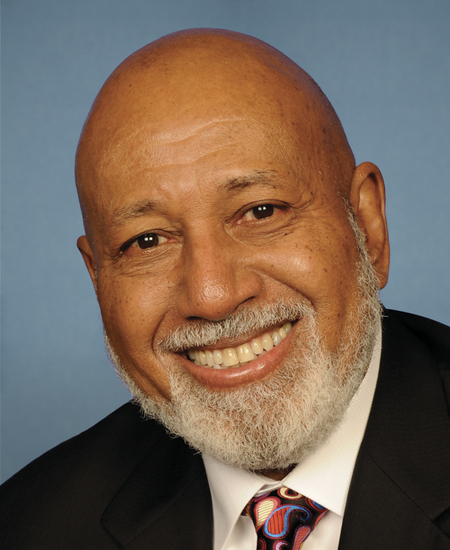
Rep. Alcee L. Hastings
Sponsored bills
Federal Death Penalty Abolition Act of 2021 This bill prohibits the imposition of a death penalty sentence for a violation of federal law. It eliminates statutory authority for the death penalty as a sentencing option for federal offenses. It also requires a person who was sentenced to death before enactment of this bill to be resentenced.
This resolution supports the designation of National Tribal Colleges and Universities Week.
Original Black History Month Resolution of 2021 This resolution recognizes the importance of commemorating Black History Month to acknowledge the achievements of African Americans throughout history.
This resolution recognizes Black History Month as an important time to celebrate the unique contributions of all LGBTQ+ Black Americans in U.S. history.
Muhammad Ali Congressional Gold Medal Act This bill provides for the posthumous award of a Congressional Gold Medal to Muhammad Ali.
Black History is American History Act This bill requires entities (e.g., institutions of higher education, libraries, and museums), in order to be eligible for certain grants administered by the Department of Education (ED), to include Black history in their teaching of American history. It also requires Black history to be included in tests administered by the National Assessment of Educational Progress (NAEP). Specifically, the bill mandates the inclusion of Black history as a required component of American history for such entities to be eligible for American History and Civics Academies' competitive grants. These grants support the establishment of (1) Presidential Academies for Teachers of American History and Civics, which offer workshops to teachers of American history and civics to strengthen their knowledge and prepare them to teach in these subjects; and (2) Congressional Academies for Students of American History and Civics, which support high school students in developing an understanding of these subjects. (Currently, Black history is not a required component of American history for either academy.) In addition, ED must give priority to grant applicants that align their activities with programs and resources of the Smithsonian Institution's National Museum of African American History and Culture. The bill also requires the inclusion of Black history in tests administered by the NAEP, which measures student academic achievement in various subjects.
Susan Harwood Training Grant Program Authorization Act This bill provides statutory authority for the Susan Harwood Training Grant Program, which awards grants to employer associations, labor unions, and other organizations to provide education and training to employees and employers on workplace safety and health. This training must include information on employee rights and employer responsibilities under the Occupational Safety and Health Act.
Coronavirus Medicaid Response Act This bill increases the Medicaid federal matching rate, also known as the Federal Medical Assistance Percentage (FMAP), for states and U.S. territories that experience economic downturns (i.e., high unemployment) beginning on or after January 1, 2020, in accordance with specified requirements and limitations. The bill's increase is in addition to previously enacted FMAP increases relating to COVID-19 (i.e., coronavirus disease 2019) but may not result in an FMAP greater than 95%.
Children's Health Insurance Program Pandemic Enhancement and Relief Act or the CHIPPER Act This bill extends through FY2022 the 11.5% increase to the enhanced federal matching rate, also known as the enhanced Federal Medical Assistance Percentage (FMAP), that is otherwise applicable under the Children's Health Insurance Program (CHIP), subject to specified conditions. For example, in order to receive the increased FMAP in FY2021 and FY2022, a state must cover, without cost-sharing, testing and treatment for COVID-19 (i.e., coronavirus disease 2019), including vaccines, specialized equipment, and therapies.