

Maddy summaryHR 564 redirects unspent funds from the American Rescue Plan Act of 2021 (ARP) to reduce the federal deficit. It requires all unobligated ARP funds - money allocated but not yet spent - to be sent to the Treasury's general fund upon the bill's enactment. This action directly affects federal budget accounting by canceling unused appropriations rather than creating new programs or aiding specific groups. The bill does not alter existing laws or services but focuses solely on reallocating existing, unspent federal funds. It is a procedural budget measure with no direct impact on taxpayers or beneficiaries of the ARP.
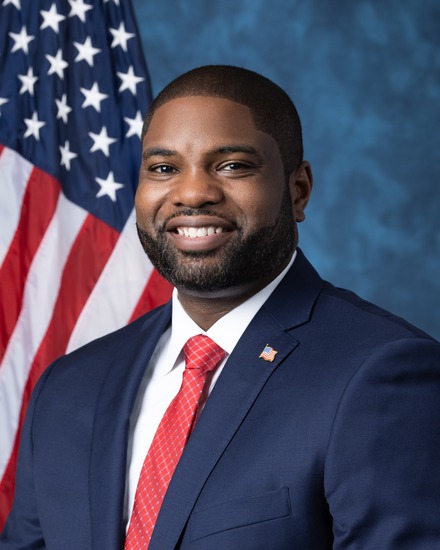
Rep. Byron Donalds
Sponsored bills
No Taxpayer Funding for the Chinese Communist Party Act of 2023 This bill requires the Department of Justice to report to Congress on the extent to which China has benefited from U.S. taxpayer-funded research. The report shall also contain information including (1) a list of U.S. government-funded entities that have hired Chinese nationals; and (2) a list of U.S. government programs in the science, technology, engineering, and math fields that have cooperated or affiliated with research institutions in China or Chinese Communist Party entities.
No Tax Dollars for the United Nation's Immigration Invasion Act This bill prohibits the federal government from making contributions to the United Nations (U.N.) International Organization for Migration, the U.N. High Commissioner for Refugees, or the U.N. Relief and Works Agency for Palestine Refugees in the Near East. The bill also requires the Government Accountability Office to report to Congress on federal funds provided to these U.N. agencies, including the amounts provided during FY2021 and FY2022 and any restrictions attached to such funding.
Maddy summaryHR 556, the 21st Century Dollar Act, requires the U.S. Treasury Secretary to develop and report to Congress on a strategy to maintain the dollar's role as the primary global reserve currency. The bill mandates a detailed report within 180 days of enactment, covering implementation measures, legislative recommendations, assessments of foreign digital currencies (especially China's renminbi), and risks to U.S. interests from international currency trends. The Treasury must also submit annual updates on this strategy and provide an assessment of China's currency policies and cross-border payment systems. The requirement expires 7 years after the bill becomes law. This bill directly affects the Treasury Department and Congress, focusing on concrete reporting obligations rather than new spending or regulations.
Maddy summaryThe Educational Choice for Children Act creates tax credits for individuals and corporations that contribute to scholarship granting organizations providing education scholarships. Individuals can claim a credit up to $5,000 or 10% of their income, while corporations can claim up to 5% of taxable income. The scholarships are available to students from households with income up to 300% of the area median income, and can be used for private school tuition, tutoring, and other educational expenses at elementary and secondary schools. The bill includes strict requirements for scholarship organizations to verify income, conduct audits, and prevent misuse of funds, while also prohibiting government control over these organizations and protecting private and religious schools from discrimination in the program. It establishes a $10 billion annual cap on the total tax credits available.
This concurrent resolution calls on the President to abandon the One China policy in favor of one that recognizes Taiwan as an independent country that is not a part of China. The resolution also urges the President to bolster diplomatic and economic relations between the United States and Taiwan through specified means.
Maddy summaryHRES 58 would amend House rules to require committee and subcommittee chairs to recognize members in the exact order they request to speak during meetings. This change would standardize speaking order, replacing the chair's current discretion with a fixed sequence. It directly affects all members of House committees and subcommittees, as well as chairs who must follow this new rule in every meeting. The resolution applies uniformly across all House committees and subcommittees without altering substantive policy.
Maddy summaryHR 528, the Put Trafficking Victims First Act of 2023, directs existing federal funds to improve how law enforcement and service providers handle human trafficking cases. It requires training to ensure officers identify victims before arrest, promotes trauma-informed victim services, and encourages states to adopt victim-centered policies like avoiding criminalization of child victims and providing comprehensive support (housing, mental health, legal aid). The bill also mandates a working group to develop better data collection methods on trafficking prevalence and requires reports on restitution efforts for victims. These provisions directly affect trafficking victims (including U.S. citizens and foreign nationals), law enforcement, prosecutors, and state service providers, all using existing resources without new funding.
One Citizen One Vote Act This bill prohibits the Election Assistance Commission from making payments to any state or jurisdiction unless the state or jurisdiction certifies that it meets certain election standards. Specifically, the state or jurisdiction must certify that it requires a photo identification for voting, restricts the delivery of ballots by third parties (i.e., prohibits ballot harvesting), prohibits the use of a drop box for collecting a voted ballot unless it is located at the office of an election official, does not deliver an absentee or other mail-in ballot to any individual who does not request the delivery of such a ballot, and does not allow noncitizens to vote in any election.
Maddy summaryHR 509, the Debt Cancellation Accountability Act of 2023, prohibits the federal government from canceling student loan debt for groups of borrowers (e.g., all teachers or all borrowers in a specific state) without explicit congressional approval. It directly affects borrowers with federal student loans under parts B, D, or E of the Higher Education Act by requiring the Education Secretary to submit detailed requests to Congress before any "class-based" cancellation exceeding $1 million total. The bill mandates that Congress must specifically appropriate funds for such programs, and the Secretary must justify the need, legal authority, and why group cancellation is used instead of individual reviews. Existing targeted programs (like those for specific professions) remain exempt if they assess eligibility on a case-by-case basis.