

Maddy summaryHR 4677, the LOAN Act, extends eligibility for federal loan guarantees to advanced nuclear reactor demonstration projects under the Energy Policy Act of 2005's Section 959A(b) for 15 years from its enactment. This change modifies existing provisions in the Department of Energy Loan Programs Office, the Omnibus Appropriations Act of 2009, and the Department of Defense Appropriations Act of 2011 to include these projects under the same loan guarantee rules as other energy infrastructure. It directly affects developers of advanced nuclear reactor demonstration projects seeking federal financial support through the Energy Policy Act's established program. The bill makes no new funding commitments but adjusts eligibility criteria for existing loan guarantee programs.
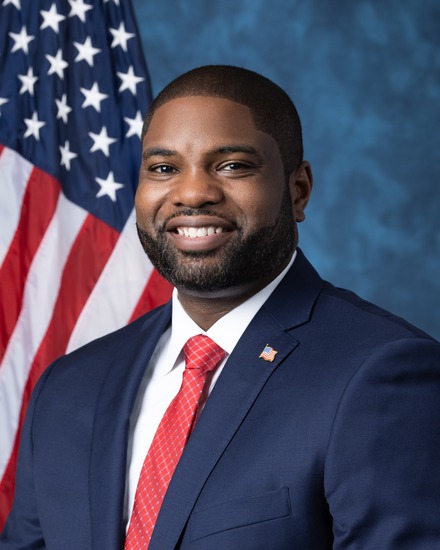
Rep. Byron Donalds
Sponsored bills
Maddy summaryHR 4793, the SEARCH Act of 2023, requires all federal executive agencies (except national security systems) to improve their website search functions using modern technology. Within one year of enactment, the Office of Management and Budget (OMB) must issue guidance encouraging agencies to adopt the latest search technology, followed by agencies submitting implementation plans within 180 days and annual progress reports to Congress. The bill aims to make government websites faster and more accurate for the public to access information and services, without changing the content available. It exempts national security systems and takes effect 90 days after enactment.
Stop China’s Continuous Purchase of Land Act or the Stop CCP Land Act This bill requires states that receive certain federal program funds to restrict the purchase of agricultural land by a covered foreign country. Covered foreign country means a country included in Department of State regulations as subject to certain prohibitions (i.e., Belarus, Burma, China, Cuba, Iran, North Korea, Syria, and Venezuela), as well as Russia. Specifically, a state may not receive funds for certain programs funded by the Inflation Reduction Act of 2022 (e.g., certain energy efficiency and conservation programs) unless that state has a law prohibiting a covered foreign country (or persons acting on behalf of the country) from purchasing agricultural land in the state. Further, a state must require that a person from a covered foreign country that holds agricultural land in the state prior to the state law's enactment submit an annual report to the state on the agricultural holdings. The Department of Agriculture must submit a report to Congress on how the Agricultural Foreign Investment Disclosure Act of 1978 should be updated to ensure accurate documentation and monitoring of foreign investment in agricultural land. The Government Accountability Office must submit a report to Congress that includes (1) an assessment of this bill's impact on national security, and (2) any measures that can be taken to better secure U.S. real estate from foreign manipulation.
Maddy summaryThis bill cancels a 2016 rule requiring new truck drivers to complete specific training programs. It removes the Federal Motor Carrier Safety Administration's mandate for minimum training standards for entry-level commercial drivers. The repeal directly affects trucking companies and new drivers who would no longer need to follow these training requirements. The change eliminates a specific regulatory obligation without creating new policies or funding.
No Taxpayer Funding For Climate Zealots Advancing Radical Schemes Act or the No Taxpayer Funding For CZARS Act This bill prohibits the use of federal funds for any activity of the Special Presidential Envoy for Climate.
Maddy summaryHR 4721, the Main Street Tax Certainty Act, makes a permanent the 20% tax deduction for eligible small business owners under Section 199A of the tax code. This provision directly affects pass-through business owners (like S-corps, partnerships, and sole proprietorships) who qualify for the deduction. The bill achieves this by removing the temporary expiration language (subsection (i)) from the existing tax code provision. The key change is ending the need for annual congressional extensions of this deduction, providing long-term tax certainty for small businesses.
Maddy summaryThis bill, the Veteran Care Improvement Act of 2023, establishes new standards for when veterans can receive care from private providers instead of the Department of Veterans Affairs (VA). It requires the VA to allow veterans to seek community care if they cannot get an in-person appointment within 30 days for primary care or 60 days for specialty care at a VA facility within a 30 or 60-minute drive, respectively. The legislation also mandates that the VA notify veterans of their eligibility for community care within two business days, provide information about telehealth options, and explain reasons for denied care requests along with appeal instructions. Additional provisions include requiring the VA to conduct outreach to inform veterans about community care options, mandate the use of value-based reimbursement models for community care, and establish a pilot program to improve care administration through scheduling improvements and provider incentives. The bill also extends the deadline for health care entities to submit claims under the prompt payment standard from 180 days to one year, and requires the VA Inspector General to assess VA medical center performance in implementing community care programs within three years of enactment.
Maddy summaryThis bill creates a 30-day grace period for flood insurance policyholders under the National Flood Insurance Program (NFIP) who choose to pay premiums monthly. During this period, policyholders won't lose coverage for nonpayment, but they must later pay back unpaid premiums plus an extra fee. The bill also prohibits charging extra fees for choosing monthly payments compared to annual payments, directly affecting NFIP policyholders who select the monthly payment option.
Maddy summaryThis bill prohibits entities controlled by Iran, North Korea, China, or Russia from purchasing or leasing agricultural land in the United States, including both public land managed by federal agencies and private land. It also bars such entities from participating in most U.S. Department of Agriculture programs (with exceptions for food safety, health, and labor safety initiatives). The bill expands reporting requirements to include leases and security interests in foreign land ownership, mandates public online disclosure of foreign ownership data with specific details, and imposes penalties like liens on land for violations. Additionally, it requires annual reports to Congress on risks of foreign ownership, enforcement effectiveness, and foreign investment motives.
Maddy summaryHR 4640 would allow public companies to exclude shareholder proposals about environmental, social, or political issues from voting materials sent to shareholders. This applies to proposals submitted under existing SEC rules (17 CFR § 240.14a-8) if they address topics like climate change, diversity initiatives, or political advocacy. Companies could block these proposals from appearing in proxy statements or consent solicitations without needing to justify the exclusion. The bill directly affects public companies' governance processes and shareholders seeking to vote on ESG-related issues. It changes how companies handle certain shareholder proposals but does not create new voting requirements.