

Build the Wall and Fight Fentanyl Act of 2023 This bill establishes accounts to fund the construction of physical barriers along the U.S. southern border and to provide grants to address fentanyl abuse. These accounts shall be funded from the sale of assets belonging to cartels that have been seized by the Drug Enforcement Administration, U.S. Immigration and Customs Enforcement, or U.S. Customs and Border Protection. The bill defines cartel as (1) an organization with operations in Mexico and the United States designated as a significant transnational criminal organization; (2) certain named organizations, such as the Sinaloa Cartel and the Juarez Cartel; and (3) other organizations as designated by the President.
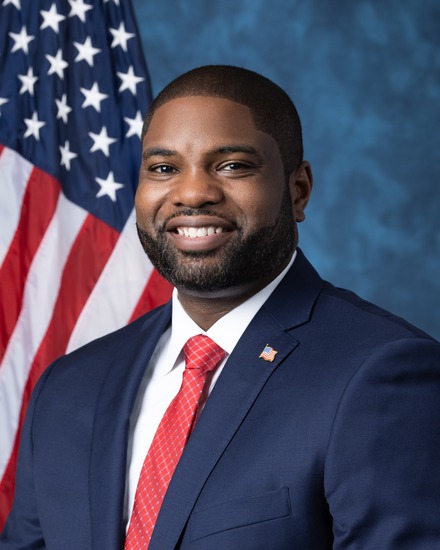
Rep. Byron Donalds
Sponsored bills
Maddy summaryHR 4922, the Lacey Act Amendments of 2023, establishes a new rule that generally prohibits importing non-native wildlife species (including mammals, birds, fish, amphibians, and reptiles) into the U.S. unless they were imported in "more than minimal quantities" during the year before the law passed or the Secretary of the Interior determines they pose no significant invasion risk. This directly affects importers and businesses handling non-native wildlife, requiring them to meet specific criteria to legally import such species. The bill also grants the Secretary emergency authority to immediately ban imports of a species deemed an imminent threat to humans, agriculture, or wildlife, with a 3-year limit on such bans. The new rules take effect one year after enactment, with the Secretary required to define "minimal quantities" within that timeframe.
Maddy summaryThis bill directs the U.S. Treasury to mint commemorative coins marking the Marine Corps' 250th anniversary in 2025. It authorizes three coin types: $5 gold coins (max 50,000), $1 silver coins (max 400,000), and half-dollar coins (max 750,000), with surcharges of $35, $10, and $5 respectively. The surcharge proceeds will fund the Marine Corps Heritage Center's educational programs, with no net cost to taxpayers as the Treasury must recover all minting costs through the surcharges. The coins can only be issued during 2025, and the Treasury must ensure all costs are covered before distributing funds to the Heritage Foundation.
Maddy summaryThis bill amends the Wilderness Act to explicitly permit U.S. Customs and Border Protection (CBP) to access wilderness areas for border security purposes. It allows CBP to conduct specific activities including building roads and barriers, using motor vehicles and aircraft, conducting patrols, and deploying technology within designated wilderness areas. The bill requires CBP to carry out these activities "to the extent possible" in a way that protects the wilderness character of the land. The direct effect is on wilderness areas (such as national parks and protected lands) and CBP's operational authority within them.
Maddy summaryHR 4726 terminates the requirement that aliens (non-citizens) must be vaccinated against COVID-19 to obtain visas, adjust to permanent residency, or naturalize as U.S. citizens. The bill immediately ends this mandate upon enactment and prohibits federal funding for any administration or enforcement of the vaccination rule. It specifically targets requirements set by the CDC and DHS under existing public health laws. This change directly affects non-citizens applying for visas, green cards, or U.S. citizenship who previously faced this vaccination condition. The policy shift removes a specific health-related barrier from three key immigration processes.
Maddy summaryHR 4701 designates all fentanyl-related substances - including their isomers, salts, and structurally similar compounds - as Schedule I controlled substances under the Controlled Substances Act. This means any substance meeting the bill's broad chemical definition (like modifications to fentanyl's molecular structure) is automatically illegal without approval, directly affecting drug manufacturers, pharmacies, and law enforcement. The key mechanism is expanding the legal definition to cover a wide range of chemical variations that could otherwise evade current drug scheduling. This policy change aims to close loopholes used to traffic fentanyl analogs by making their legal status clear without requiring individual case-by-case scheduling.
Maddy summaryHR 4678, the PLANE Act, requires federal agencies to develop procedures for deploying small nuclear microreactors (under 20 megawatts) as backup power at airports during natural disasters, replacing current diesel generators. The bill mandates that the Nuclear Regulatory Commission, FAA, FEMA, and Energy Secretary collaborate within 270 days to create deployment plans, considering factors like transportation, grid integration, and maintenance. This directly affects FAA-certified airports by requiring updates to emergency plans and airport operational regulations (14 CFR §139.325) to include microreactors as a backup power option. The law aims to address the 72-hour fuel limit of diesel generators by enabling reliable, clean energy during power disruptions, with agencies required to submit reports and update guidance within 120-180 days of finalizing procedures.
Maddy summaryHR 4675, the Advisory Committee on Reactor Safeguards Reform Act, reforms the Nuclear Regulatory Commission's (NRC) Advisory Committee on Reactor Safeguards (ACRS) to modernize its role. The bill requires the ACRS to limit reviews to "novel or safety-significant" reactor issues (not routine topics), changes how the ACRS chairman is selected (by NRC Commission majority), and prohibits the committee from forming subcommittees. It also exempts ACRS-related costs (like meeting preparation) from fee recovery requirements. This directly affects the ACRS, NRC staff, and nuclear reactor licensing applicants by streamlining the review process for safety-critical applications.
Maddy summaryHR 4676, the Nuclear Red Tape Reduction Act, streamlines nuclear licensing by requiring the Nuclear Regulatory Commission (NRC) to use risk-informed, performance-based techniques "to the maximum extent practicable" when reviewing applications. It shortens deadlines for certain hearings (from 60 to 45 days for combined licenses) and clarifies when hearings are mandatory for construction permits. The bill also mandates the NRC to submit a report within 120 days detailing how it determines license renewal terms and "adequacy of licensee programs" under existing rules. These changes directly affect nuclear power companies seeking licenses and the NRC, aiming to reduce regulatory delays without altering substantive safety standards.
Maddy summaryHR 4674, the Advanced Nuclear Feasibility Act, provides federal grants to fund feasibility studies for siting, constructing, and operating advanced nuclear reactors. Eligible applicants include universities, private companies (like airport or hospital owners), and state/local governments in states with approved nuclear deployment plans. The studies must analyze electricity demand, grid capacity, environmental impacts, licensing, workforce needs, and economic feasibility, with applicants covering 60% of costs (reducible under specific conditions). The program requires competitive grants and mandates reports on study details for congressional review.