

Maddy summaryThis bill codifies Executive Order 14172 into law, making its provisions permanently binding. It requires federal agencies to rename properties (like buildings or parks) previously designated under the order to honor figures or events deemed to reflect "American greatness." The law directly affects federal property designations across the U.S. and ensures the renaming process has legal force without requiring new executive action. The key mechanism is converting an existing executive order into statutory law.
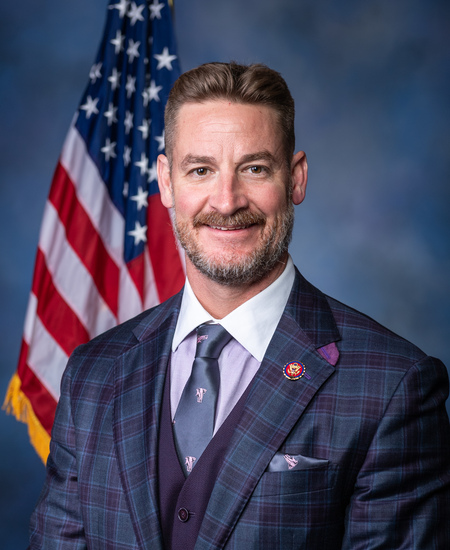
Rep. W. Gregory Steube
Sponsored bills
Maddy summaryHR 1919, the "Anti-CBDC Surveillance State Act," prohibits the Federal Reserve from developing, testing, or issuing any central bank digital currency (CBDC) or similar digital assets. It specifically bans the Fed from offering direct financial products to individuals, maintaining individual accounts, or issuing CBDCs directly or indirectly through intermediaries like banks. The bill also blocks the Fed from using any digital asset for monetary policy and clarifies that physical currency's privacy protections remain intact. This policy directly affects the Federal Reserve System's ability to create or manage digital monetary tools.
Maddy summaryThis resolution (HRES 583) condemns the July 7, 2025, attack on a U.S. Border Patrol facility in McAllen, Texas, where Ryan Louis Mosqueda injured agents and police. It expresses support for the affected personnel, wishes them a full recovery, and reaffirms the House’s backing of Border Patrol officers in their border security mission. The resolution directly addresses the McAllen community and Border Patrol staff impacted by the violence, serving as a symbolic statement of solidarity without creating new laws or policies.
Maddy summaryHR 4384, the "Excluding Illegal Aliens from Medicaid Act," accelerates the effective date for excluding undocumented immigrants (who are not qualified aliens and not children or pregnant women lawfully residing in the U.S.) from Medicaid eligibility from October 1, 2026, to July 4, 2025. The bill also establishes a higher federal funding rate for states that choose to provide health coverage to such individuals through state-funded programs, increasing federal support for these specific services. This change directly affects undocumented immigrants who do not qualify as "qualified aliens" under federal law and are not children or pregnant women, removing their Medicaid eligibility starting in 2025. States continuing to cover these individuals can do so via state programs with enhanced federal matching funds for that coverage.
Maddy summaryHRES 571 is a symbolic resolution passed by the U.S. House of Representatives to commemorate the one-year anniversary of the July 13, 2024, attempted assassination of President Donald J. Trump in Butler, Pennsylvania. It condemns two assassination attempts against the President (in Butler and West Palm Beach), honors victims Corey D. Comperatore (who died shielding his family), David Dutch, and James Copenhaver (who were critically injured), and expresses gratitude to first responders. The resolution also condemns incitement of violence against political officials and calls for unity against political violence. As a non-binding resolution, it does not create new laws or policies but formally states the House’s position on these events.
Maddy summaryThis bill requires the Office of Refugee Resettlement (ORR) to track unaccompanied alien children (UACs) who are in the U.S. and in ongoing immigration proceedings after being released from Homeland Security custody. It also mandates ORR to work with states to find placements for these children. The bill amends federal regulations by removing a specific paragraph (45 CFR §410.1201(a)(6)) related to UAC processing. It directly affects UACs in immigration cases and the federal/state agencies managing their care. The key change is creating a formal tracking system and placement coordination requirement for this vulnerable population.
Maddy summaryHRES 554 is a non-binding resolution expressing the House of Representatives' support for President Trump's June 2025 airstrike on Iranian nuclear facilities and affirming unwavering backing for Israel's right to self-defense. It describes the strike as a "proportionate and lawful act of national defense" that disrupted Iran's nuclear infrastructure and calls for continued U.S. efforts to prevent Iran from obtaining nuclear weapons. The resolution reaffirms support for Israel's missile defense systems (like Iron Dome), urges European allies to pressure Iran toward negotiations, and states the U.S. seeks to end Iran's nuclear pursuit without targeting the Iranian people. As a symbolic resolution, it has no legal effect but formally endorses the described military action and policy stance.
Maddy summaryThis bill clarifies that Russian-origin americium-241 (Am-241) sealed sources - which have similar properties to eligible materials - can be disposed of at the Waste Isolation Pilot Plant (WIPP) once they meet safety standards. It directly affects the National Nuclear Security Administration (NNSA), which recovers these materials globally, and international facilities supplying them. The key provision amends a 2005 law to explicitly include foreign-origin radiological materials meeting WIPP criteria under disposal pathways for defense-related waste. This change aims to accelerate the removal of materials that could potentially be misused in radiological threats, reducing security risks without altering WIPP operations.
Maddy summaryThe CONNECT for Health Act of 2025 expands Medicare telehealth coverage by removing geographic restrictions that limited where patients could receive care, expanding the types of health care providers who can offer telehealth services, and eliminating the requirement for an in-person visit before receiving telemental health services. The bill includes specific provisions to support telehealth use for Native American health facilities, rural health clinics, and Federally Qualified Health Centers. It requires the Centers for Medicare & Medicaid Services to collect and publish data on telehealth usage and impacts, and to develop resources to improve accessibility for people with disabilities and limited English proficiency. Program integrity measures are added to monitor telehealth billing practices and prevent fraud while maintaining coverage for telehealth services during public health emergencies.
Maddy summaryHR 4172, the OCED Elimination Act, abolishes the Office of Clean Energy Demonstrations (OCED) within the U.S. Department of Energy. It repeals Section 41201 of the Infrastructure Investment and Jobs Act (42 U.S.C. 18861), which previously authorized the OCED's operations. This bill directly affects the Department of Energy by eliminating a specific office and its associated funding mechanisms for clean energy demonstration projects. The change removes a dedicated structure for advancing clean energy demonstrations but does not alter broader clean energy funding programs. As a procedural bill, it focuses solely on the elimination of the office and its related statutory provision.