

Maddy summaryHR 3238, the Affordable Housing Credit Improvement Act of 2023, updates the Low-Income Housing Tax Credit (LIHTC) program to increase the availability of affordable housing across the United States. The bill makes several key changes including increasing state funding formulas, modifying tenant eligibility rules to better serve vulnerable populations (such as domestic violence victims and students), and expanding credit eligibility for projects in rural and Native American communities. Specific provisions raise the credit for properties serving extremely low-income households, clarify rules around tenant income increases, and require housing providers to protect victims of domestic violence. The bill also updates terminology from "low-income" to "affordable" throughout the tax code and enhances program transparency through data sharing requirements. These changes aim to make the LIHTC program more effective at creating and preserving affordable housing units for low-income households nationwide.
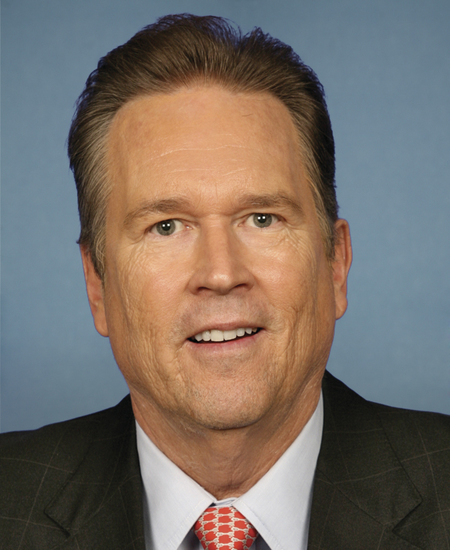
Rep. Vern Buchanan
Sponsored bills
Maddy summaryThe Protecting Taxpayers and Victims of Unemployment Fraud Act allows states to retain 25% of funds recovered from fraudulent unemployment claims (for pandemic-related benefits) to improve fraud prevention systems. States can use these retained funds to modernize unemployment systems, hire fraud investigators, reimburse administrative costs, or conduct other fraud prevention activities. The bill requires states to use specific data matching systems like the National Directory of New Hires to detect fraud more effectively. It modifies federal rules to ensure states can use recovered funds without violating deposit requirements. This legislation aims to reduce unemployment fraud while protecting taxpayers and victims of fraud.
Maddy summaryHR 801, the Securing the Border for Public Health Act of 2023, gives the Secretary of Health and Human Services authority to temporarily ban people and goods from specific countries. This can be done if the Secretary determines a serious risk of introducing communicable diseases or certain controlled substances (like fentanyl, narcotics, or opiates) into the U.S. The ban would apply to persons and property from designated countries for a time deemed necessary to protect public health. It directly affects travelers and importers from countries identified under this provision.
Maddy summaryThis bill designates a U.S. Postal Service facility at 1900 West Oakland Park Boulevard in Oakland Park, Florida, as the "Alcee Lamar Hastings Post Office Building." It updates all federal references in laws, documents, and records to use the new name for the building. The change applies solely to the facility's official designation and does not alter postal services, funding, or operations.
Maddy summaryThis bill modifies how federal clean water funds are distributed to states, Indian tribes, and U.S. territories for fiscal years 2024-2028. It sets minimum funding levels: 2% for tribes, 1.5% for territories, and 0.1% for oversight activities, with states receiving base funding from 2023 plus population-based additional amounts. Starting in 2029, funding will shift to a new formula based on the latest "clean watersheds needs survey" to reflect current infrastructure priorities. The bill ensures states receive at least 1% of funds annually and requires the Administrator to update the formula after each new survey.
Maddy summaryHR 1750 sets a new minimum standard for pasteurized orange juice, requiring finished products to contain at least 10.0% orange juice soluble solids (excluding any added sweeteners) by weight. This rule directly affects manufacturers producing and selling pasteurized orange juice in the U.S. market. The bill revises existing federal regulations to enforce this minimum juice content level, ensuring a more consistent product definition. It does not change the Secretary of Health and Human Services' existing authority to further adjust these standards.
Maddy summaryHR 3124 removes a prohibition in the tax code that previously prevented certain tax-exempt bond proceeds from being used for private or commercial golf courses and country clubs. The bill amends Section 144 of the Internal Revenue Code by deleting the specific language barring these facilities from using such funds. This change directly affects private golf courses and country clubs by allowing them to access tax-exempt bond financing they were previously excluded from. The key mechanism is the straightforward deletion of the restriction from the tax code, with effective dates applying to new bond issuances and specific tax credit provisions after enactment.
Maddy summaryThis bill adjusts veterans' disability and survivor benefits to match the annual cost-of-living increase for Social Security. It requires the Veterans Affairs Secretary to raise specific payments - such as disability compensation for veterans, dependency payments for spouses and children, and clothing allowances - effective December 1, 2023, by the same percentage as the Social Security COLA for that year. The adjustment directly affects veterans receiving disability compensation under 38 U.S.C. § 1114, surviving spouses under § 1311, and children under §§ 1313-1314, as well as those receiving clothing allowances. The change ensures these benefits keep pace with inflation, using the Social Security Act’s established adjustment formula.
Performing Artist Tax Parity Act of 2023 This bill modifies the above-the-line tax deduction for the expenses of performing artists (including commissions paid to managers or agents) to provide for a phaseout of such deduction for taxpayers whose adjusted gross income exceeds $100,000 ($200,000 for joint return filers). The $100,000 phaseout threshold is adjusted for inflation annually for taxable years beginning after 2023.
Curbing Realistic Exploitative Electronic Pedophilic Robots Act 2.0 or the CREEPER Act 2.0 This bill establishes new federal criminal offenses for conduct involving child sex dolls. Specifically, it makes it a crime to import, transport, buy, sell, distribute, or possess a child sex doll. A violator is subject to criminal penalties—a fine, a prison term, or both.