

Maddy summaryThis bill amends the Social Security Act to require states to establish child support obligations for the biological father of an unborn child when the mother requests it. Key provisions include allowing support to begin from the month of conception (as determined by a physician), permitting retroactive payments even if paternity is established after birth, and requiring court determination of payment amounts based on the mother's and child's best interests. It prohibits forced paternity testing for unborn children if it risks harm and explicitly bans any experimental programs from modifying these provisions. The bill directly affects mothers of unborn children and biological fathers, expanding child support enforcement to cover pregnancy.
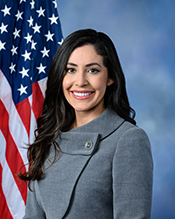
Rep. Anna Paulina Luna
Sponsored bills
Maddy summaryThe SAFE Home Act (HR 6658) prohibits federal-funded adoption and foster care agencies from delaying or denying placements for children based on a parent’s choices related to gender identity. Specifically, it bans discrimination if a parent: (1) raises a child consistent with their biological sex, (2) declines medical treatments to alter a child’s appearance or validate gender identity, or (3) refuses to change official documents (like birth certificates) to reflect gender identity inconsistent with biological sex. The bill defines "sex" biologically as male or female based on reproductive systems, and requires states to comply with these rules for federal foster care and adoption assistance programs starting in the first fiscal quarter after enactment. This directly affects state agencies and organizations receiving federal funds for child welfare services.
Maddy summaryThis bill repeals the tax on Social Security benefits for seniors, making those benefits fully tax-free. It directly affects seniors who receive Social Security benefits and are currently subject to income tax on a portion of those payments. The key provision removes Section 86 of the tax code that previously included benefits in gross income, while a separate funding mechanism appropriates money to Social Security trust funds to replace the lost revenue. The bill ensures Social Security trust funds remain fully funded without requiring new tax increases.
Maddy summaryHR 1399, the "Protect Children's Innocence Act," prohibits medical gender-affirming care for minors under 18 by making it a class C felony for providers to perform such care. The bill defines gender-affirming care broadly to include surgical procedures, hormone treatments, and certain cosmetic procedures, with exceptions for medical conditions like reproductive cancers or intersex conditions. It prohibits federal funding for gender-affirming care through programs like Medicaid, Medicare, and the Affordable Care Act, and bans such care in federal health facilities. The bill also prevents institutions of higher education from teaching gender-affirming care and adds immigration consequences for individuals who provide such care to minors.
Maddy summaryHR 497, the Freedom for Health Care Workers Act, eliminates a federal requirement for healthcare workers in Medicare and Medicaid programs to be vaccinated against COVID-19. The bill directly affects healthcare providers who treat patients under these federally funded programs by preventing the enforcement of the November 2021 HHS rule mandating staff vaccinations. Its key provision prohibits the Department of Health and Human Services from implementing, enforcing, or creating a similar rule regarding vaccination for these workers. This bill changes the policy by removing a specific vaccine mandate for providers in Medicare and Medicaid programs.
Maddy summaryThis bill bans federal funding for abortions in most cases, prohibiting the use of taxpayer money for abortion services or health insurance plans covering abortion. Exceptions allow funding for abortions resulting from rape, incest, or when a pregnancy endangers a woman's life. It requires health insurance plans sold through the Affordable Care Act (ACA) marketplaces to clearly disclose any separate costs for abortion coverage and prohibits ACA subsidies from being used for plans that cover abortion (except in the specified exceptions). The law directly affects federal programs like Medicaid, ACA marketplace plans, and insurers offering health coverage to individuals using federal subsidies.
Maddy summaryHR 152, titled the "Hearing Protection Act," actually addresses firearm silencers (suppressors), not hearing protection. The bill removes federal registration requirements for silencers by directing the Attorney General to destroy all existing silencer records within 365 days. It also preempts state laws that tax, register, or impose recordkeeping requirements on silencers, making such state rules unenforceable. Additionally, the bill updates tax codes to include silencers as taxable items and clarifies their definition in firearm laws.
Maddy summaryThe MERIT Act of 2024 modifies federal personnel procedures by repealing Chapter 43 performance-based actions, shortening timelines for adverse actions (requiring decisions within 15 business days), and extending probationary periods to 2 years for Senior Executive Service and competitive service employees. It establishes new rules for recouping bonuses from employees who commit misconduct, modifies furlough procedures with specific requirements for emergency furloughs, and creates a process to reduce retirement benefits for employees convicted of felonies related to their official duties. These changes primarily affect federal employees, supervisors, and senior executives in the civil service, with the goal of streamlining personnel management while providing clearer standards for disciplinary actions.
Maddy summaryHR 10398, the Safe Shelters Act of 2024, prohibits sex offenders required to register under federal law from using emergency shelters not specifically designated for them. Covered sex offenders must immediately notify shelter staff of their registration status if entering an undesignated shelter, and shelter operators must then provide information about designated shelters and the prohibition. The bill directs FEMA to designate specific federal buildings or prisons as emergency shelters exclusively for these offenders during disasters, with lists of available facilities to be provided by GSA and the Bureau of Prisons within 180 days. Violating the notification or shelter use rules carries penalties of fines, up to 5 years in prison, or both.
Maddy summaryHR 2892, the WARN Act, directs the Comptroller General to study how local alert systems deliver weather emergency information during events like storms or power outages. The study will evaluate different alert methods - including social media - and develop best practices for clearer, faster public notifications. It requires a report to Congress within one year, but the bill itself creates no new laws or directly affects any group. This is a procedural study bill focused on improving future emergency communication systems.