

Maddy summaryThis bill requires Congress to approve major federal regulations before they take effect. It would mandate that agencies submit detailed reports including cost-benefit analyses, economic impact assessments, and other information to Congress before implementing significant regulations. Major rules - defined as those with at least $100 million annual economic impact or significant effects on costs, competition, or employment - would need a joint resolution of approval from Congress within 70 session days. Nonmajor rules would follow a less stringent disapproval process. The bill aims to increase legislative oversight of the regulatory process, requiring Congress to formally review and approve rules that significantly impact the economy or public regulations.
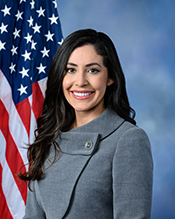
Rep. Anna Paulina Luna
Sponsored bills
Maddy summaryThe KAMALA Act (HR 50) prohibits federal housing and community development funds from assisting undocumented immigrants. Specifically, it amends the Housing and Community Development Act of 1974 to block the use of 2024 and future grants for "persons not lawfully present" (undocumented immigrants) and to deny funding to states or local governments that provide such assistance through their own programs. This directly affects municipalities, tribes, and state agencies receiving HUD grants, requiring them to exclude undocumented immigrants from housing and community aid funded by these grants. The law changes how federal housing funds are distributed by adding explicit eligibility restrictions tied to immigration status.
Maddy summaryThis bill renames a U.S. Postal Service facility at 518 North Ridgewood Drive in Sebring, Florida, as the "U.S. Army Air Corps Major Thomas B. McGuire Post Office Building." It updates all official federal references to this specific location to reflect the new name. The bill has no policy impact - it does not change postal services, funding, or operations, and only affects the building's official designation.
Maddy summaryThis bill (HR 6633) renames a U.S. Postal Service facility at 9355 113th Street in Seminole, Florida, as the "Army SSG Ryan Christian Knauss Memorial Post Office Building." It directly affects the postal service location and all official federal references to it. The bill requires all government documents, maps, and records to use the new name moving forward. As a commemorative resolution, it has no policy or funding impact - it solely honors Army Specialist Ryan Christian Knauss through the building name.
Maddy summaryThis bill designates the U.S. Postal Service facility at 14280 South Military Trail in Delray Beach, Florida, as the "Benjamin Berell Ferencz Post Office Building." It is a ceremonial naming resolution with no substantive policy changes or impacts on residents, services, or regulations. The bill simply updates official references (such as maps or documents) to use the new name for this specific post office location. It was enacted on January 2, 2025, following passage by both House and Senate in December 2024.
Maddy summaryThis bill designates the U.S. Postal Service facility at 109 Live Oaks Boulevard in Casselberry, Florida, as the "Colonel Joseph William Kittinger II Post Office Building." It directly affects the postal facility and all official U.S. government references to it. The key provision changes the building's official name in all federal laws, documents, maps, and records to reflect this designation. The bill does not create new policies or funding; it is purely a ceremonial naming action.
Maddy summaryThis bill (HR 1823) officially renames the U.S. Postal Service facility at 207 East Fort Dade Avenue in Brooksville, Florida, as the "Specialist Justin Dean Coleman Memorial Post Office Building." It directly affects the building's official name and all future references to it in government documents, maps, or records. The key provision is a simple name change to honor Specialist Justin Dean Coleman, a U.S. Army veteran. This is a procedural bill with no new policies or funding, solely commemorating an individual through the building's designation.
Maddy summaryHR 4864 would amend U.S. immigration law to redefine automatic birthright citizenship under the 14th Amendment. It specifies that children born in the U.S. automatically gain citizenship only if born to a parent who is a U.S. citizen, a refugee, a lawful permanent resident, or an active-duty military member. This would deny automatic citizenship to children born to parents who are undocumented immigrants, temporary visitors, or otherwise not meeting these specific categories. The change would apply only to births occurring on or after the bill's enactment date.
Maddy summaryHR 9269, the IVF Access and Affordability Act, creates a non-refundable federal tax credit for individuals paying out-of-pocket costs for fertility treatments like IVF. It allows a $20,000 credit per person ($40,000 for joint filers) for "assisted reproductive technology" expenses, subject to income limits ($200,000 AGI for singles, $400,000 for joint filers). The credit cannot be claimed for expenses covered by insurance or previously deducted, and unused credit can be carried forward for up to five years. This directly affects individuals or families undergoing fertility treatments who pay costs not covered by insurance and meet income thresholds.
Maddy summaryThe IVF with HSAs Act of 2024 would amend federal tax law to allow individuals with any health insurance coverage (not just high deductible health plans) to contribute to a Health Savings Account (HSA). This change would expand access to HSAs, enabling more people to use these accounts for qualified medical expenses like in vitro fertilization (IVF) treatments. The bill also increases annual HSA contribution limits to $8,600 for individuals and $17,100 for families. These provisions would take effect for tax years beginning after December 31, 2024.