

Maddy summaryHR 4663, the Federal Mechanical Insulation Act, defines "mechanical insulation" (insulation around pipes and equipment in federal buildings) as an eligible energy efficiency measure. It requires federal agencies to include mechanical insulation in their required energy and water evaluations, specifically mandating that evaluations identify this insulation as a potential efficiency measure. The bill specifies that such insulation must meet minimum standards under Reference Standard 90.1 to qualify. This change directly affects federal building managers and contractors by formally recognizing mechanical insulation as a standard efficiency option in compliance with existing energy conservation laws.
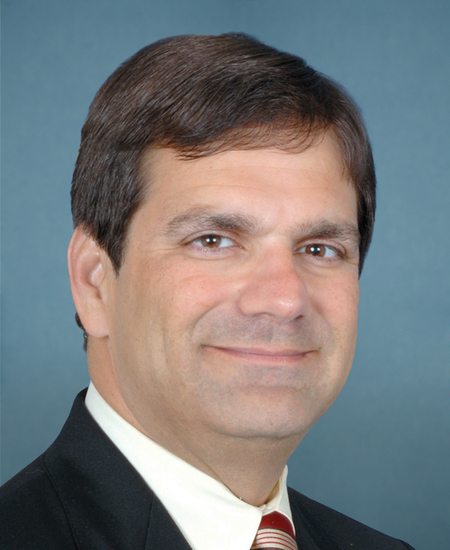
Rep. Gus M. Bilirakis
Sponsored bills
Strengthening Efforts to End Violence Against Children Act of 2023 This bill modifies the framework for providing foreign aid to programs that support vulnerable children by expanding the goals of these programs and requiring additional reports. Specifically, aid may be provided to programs that (1) support family care for vulnerable children and extend protective services to children living outside of family care; (2) promote the protection of children from violence, exploitation, abuse, and neglect through preventative and responsive programming; and (3) provide lifesaving protection and interventions for vulnerable children in emergency settings. The bill also requires the President, among other reporting requirements, to develop and submit to Congress a strategy for coordinating, implementing, and monitoring assistance programs for children in adversity, submitting a review to Congress every 4 years afterwards.
Stop China’s Continuous Purchase of Land Act or the Stop CCP Land Act This bill requires states that receive certain federal program funds to restrict the purchase of agricultural land by a covered foreign country. Covered foreign country means a country included in Department of State regulations as subject to certain prohibitions (i.e., Belarus, Burma, China, Cuba, Iran, North Korea, Syria, and Venezuela), as well as Russia. Specifically, a state may not receive funds for certain programs funded by the Inflation Reduction Act of 2022 (e.g., certain energy efficiency and conservation programs) unless that state has a law prohibiting a covered foreign country (or persons acting on behalf of the country) from purchasing agricultural land in the state. Further, a state must require that a person from a covered foreign country that holds agricultural land in the state prior to the state law's enactment submit an annual report to the state on the agricultural holdings. The Department of Agriculture must submit a report to Congress on how the Agricultural Foreign Investment Disclosure Act of 1978 should be updated to ensure accurate documentation and monitoring of foreign investment in agricultural land. The Government Accountability Office must submit a report to Congress that includes (1) an assessment of this bill's impact on national security, and (2) any measures that can be taken to better secure U.S. real estate from foreign manipulation.
Maddy summaryThis bill creates two tax credits to support local media and small businesses. It provides a credit for small businesses (under 50 full-time employees) that advertise in qualifying local newspapers or broadcast stations, covering 80% of first-year ad costs up to $5,000 and 50% of subsequent-year costs up to $2,500. It also establishes a payroll tax credit for employers hiring local news journalists, covering 50% of wages for the first four quarters (capped at $12,500 per journalist) and 30% thereafter, with a maximum of 1,500 journalists per employer. Both credits expire after five years and require strict definitions of "local media" (e.g., publishers with local journalists and community focus) to prevent misuse.
Maddy summaryHR 4721, the Main Street Tax Certainty Act, makes a permanent the 20% tax deduction for eligible small business owners under Section 199A of the tax code. This provision directly affects pass-through business owners (like S-corps, partnerships, and sole proprietorships) who qualify for the deduction. The bill achieves this by removing the temporary expiration language (subsection (i)) from the existing tax code provision. The key change is ending the need for annual congressional extensions of this deduction, providing long-term tax certainty for small businesses.
Maddy summaryThis bill increases funding for home modifications for disabled veterans using VA home health services. It raises the maximum annual amount veterans can receive for home improvements from $6,800 to $10,000 and for structural alterations from $2,000 to $5,000. The bill also requires annual adjustments to these amounts based on inflation, using the Consumer Price Index, to maintain their real value over time. These changes apply only to veterans who first apply for these benefits after the bill's enactment date.
Maddy summaryHR 1774, the VA Emergency Transportation Act, expands VA benefits to cover emergency transportation for veterans. It amends existing law to replace "emergency treatment" with "emergency services" throughout, explicitly including ambulance or air ambulance transport as covered services. This means veterans needing emergency transport to or from a medical facility (to receive treatment) can now have those costs reimbursed by the VA. The bill directly affects veterans who require urgent medical transport, clarifying that such transportation is part of their covered VA benefits.
Maddy summaryThis bill, HR 1282 (Major Richard Star Act), expands benefits for certain military retirees by allowing them to receive both veterans' disability compensation and military retirement pay simultaneously. It specifically affects combat-related disabled retirees under Chapter 61 of the military retirement system who have fewer than 20 years of service. The key change removes the automatic reduction of military retirement pay when these retirees also receive disability compensation, as amended in Section 1413a(b)(3) of Title 10. Technical updates to the law’s structure and effective date (starting after enactment) complete the provisions.
Maddy summaryThis bill creates a 30-day grace period for flood insurance policyholders under the National Flood Insurance Program (NFIP) who choose to pay premiums monthly. During this period, policyholders won't lose coverage for nonpayment, but they must later pay back unpaid premiums plus an extra fee. The bill also prohibits charging extra fees for choosing monthly payments compared to annual payments, directly affecting NFIP policyholders who select the monthly payment option.
Maddy summaryThis House Resolution condemns the April 2023 conflict in Sudan between the Sudanese Armed Forces (SAF) and Rapid Support Forces (RSF), calling for an immediate ceasefire and adherence to prior cease-fire agreements. It urges the U.S. government to scale up humanitarian aid, prioritize support for displaced civilians and children, and apply sanctions against those obstructing Sudan’s democratic transition or violating international law. The resolution directs U.S. agencies to coordinate with local actors, ensure aid reaches civilians, and develop strategies for civilian-led negotiations. As a non-binding statement, it expresses congressional support for Sudanese civilians and democratic transition without creating new legal requirements or funding.