

Veteran Education Empowerment Act This bill reauthorizes through FY2029 and otherwise revises a Department of Education (ED) grant program for student veteran centers. Specifically, ED must make grants to institutions of higher education (IHEs) or consortia of IHEs to establish, maintain, improve, or operate a student veteran center. A student veteran center is a dedicated space on a campus that provides students who are veterans or members of the Armed Forces with (1) a lounge or meeting space for themselves, their spouses or partners, their children, and veterans in the community; and (2) a centralized office for student veteran services that serves as a single point of contact to coordinate comprehensive support services for student veterans.
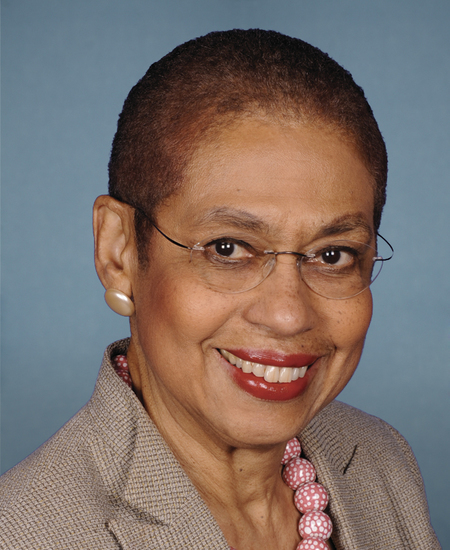
Rep. Eleanor Holmes Norton
Sponsored bills
Reproductive Rights are Human Rights Act of 2021 This bill directs the Department of State to include in its annual reports on human rights in countries receiving U.S. development and security assistance a discussion of the status of reproductive rights in each country. This must include whether a country has adopted and enforced policies to (1) promote access to contraception and accurate, nondiscriminatory family planning and sexual health information; (2) provide services to ensure safe and healthy pregnancy and childbirth; (3) expand or restrict access to safe abortion services; and (4) prevent and treat sexually transmitted diseases. For each country, the reports shall also contain (1) data concerning pregnancy-related injuries and deaths; and (2) a description of the nature and extent of discrimination and violence against women, girls, and LGBTQI+ individuals in health care settings and the relevant government's response to such actions.
Global Pandemic Prevention and Biosecurity Act This bill establishes a task force and requires the Department of State and the U.S. Agency for International Development (USAID) to take specified measures to respond to and prevent zoonotic (animal-to-human) disease outbreaks. Specifically, the bill establishes the Global Zoonotic Disease Task Force to ensure an integrated approach to preventing, detecting, preparing for, and responding to zoonotic spillover and zoonotic disease outbreaks that may pose a threat to global health security. The bill directs the State Department and the USAID to work with international stakeholders on measures that include (1) preventing zoonotic spillover events, (2) preventing degradation and fragmentation of forests and other ecosystems to minimize interactions between wildlife and human populations, and (3) strengthening global capacity for detection of zoonotic diseases with pandemic potential. Further, the USAID must develop and publish a strategy for food security, global health, and biodiversity protection, including information about zoonotic disease surveillance. To help implement and finance the strategy, the USAID must establish a Conservation Corps to provide Americans eligible for service abroad to deliver technical and strategic assistance. The bill also authorizes a program within the USAID to prevent spillover events, epidemics, and pandemics through specified activities.
Washington Channel Public Access Act This bill prohibits the U.S. Army Corps of Engineers (USACE) from finalizing, implementing, or enforcing the proposed rule titled Washington Channel, Fort McNair, Washington, DC; Restricted Area , published on December 29, 2020. The proposed rule establishes a permanent restricted area in the Washington Channel adjacent to Fort McNair in the District of Columbia. The bill also prohibits the USACE from implementing any other rule that restricts public access to the Washington Channel in the District.
This resolution supports the designation of ALS Awareness Month. Amyotrophic lateral sclerosis (ALS) is a progressive neurodegenerative disease, also known as Lou Gehrig's disease, that affects nerve cells in the brain and spinal cord.
This resolution expresses support for policies and other efforts to prevent childhood sunburns, such as exempting sunscreen from over-the-counter medication bans in schools.
Stamp Out Lyme Disease Act This bill directs the U.S. Postal Service to issue a Lyme Disease Research Semipostal Stamp, with all proceeds being transferred to the National Institute of Allergy and Infectious Diseases.
Trees for Residential Energy and Economic Savings Act of 2021 or the TREES Act of 2021 This bill directs the Department of Energy (DOE) to establish a grant program for states, local governments, Indian tribes, and other entities to facilitate tree planting projects that reduce residential energy consumption. Under the program, DOE may award grants to facilitate the planting of at least 300,000 trees annually in residential neighborhoods.
Safe Gun Storage Act of 20 21 This bill requires safety standards for firearm locks and safes. Under such standards, firearm locks must be reasonably designed to (1) prevent the firearm from discharging while the lock is activated, and (2) prevent unauthorized access to the firearm. Further, firearm safes must be reasonably designed to (1) secure firearms, and (2) prevent unauthorized access to the safe through physical manipulation or damage.
John Lewis Every Child Deserves a Family Act This bill prohibits discrimination on the basis of sexual orientation, gender identity, marital status, or religion in the provision of child welfare programs and services by entities receiving federal funding. The Department of Health and Human Services (HHS) must provide technical assistance to help states follow this requirement, including (1) guidance for bringing state laws into compliance, (2) developing training to increase cultural competency related to social identity, and (3) training for judges and attorneys involved in child welfare cases, among other supports. Additionally, HHS must establish the National Resource Center on Safety, Well-Being, Placement Stability, and Permanency for LGBTQ Children and Youth Involved with Child Welfare Services to provide training, technical assistance, and guidance to applicable state and local agencies and service providers. Further, the Religious Freedom Restoration Act may not be the basis for challenging the application or enforcement of this bill. The Government Accountability Office must study and report on states' compliance with the requirements of the bill no later than three years after enactment.