

Maddy summaryHR 5537, the Toxic-Free Beauty Act of 2021, bans specific chemicals in cosmetics under federal law. It prohibits the use of substances like certain PFAS (water-repellent chemicals), phthalates (e.g., dibutyl phthalate), formaldehyde, mercury, and specific parabens in cosmetic products. The ban directly affects cosmetic manufacturers, requiring them to reformulate products, and benefits consumers by removing these chemicals from beauty items. The law takes effect on January 1, 2025, with the ban applying to products bearing or containing the listed substances.
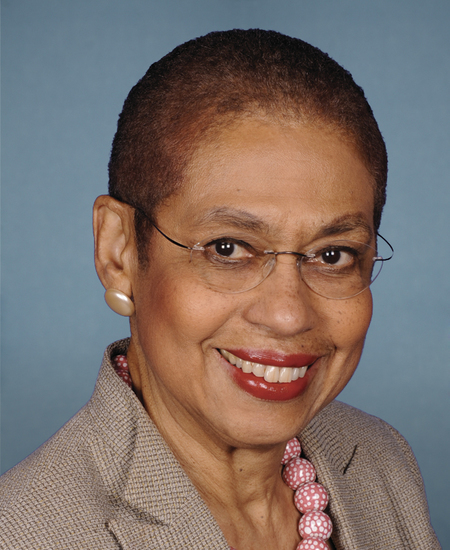
Rep. Eleanor Holmes Norton
Sponsored bills
Cosmetic Fragrance and Flavor Ingredient Right to Know Act of 2021 This bill imposes disclosure and labeling requirements on cosmetics products that contain certain ingredients. A cosmetics product that fails to meet such requirements may not be sold. Within two years of this bill's enactment, a cosmetics product's labeling or packaging must indicate the use of any ingredient that (1) is identified on specified lists of harmful or potentially harmful chemicals, such as chemicals identified as carcinogenic to humans by the Environmental Protection Agency or toxic air contaminants under California regulations; or (2) must be disclosed under certain European Union laws and is present in a product above specified concentrations. The Food and Drug Administration must publish and periodically update on its website a list of the ingredients subject to this requirement. Within one year of this bill's enactment, a brand owner (i.e., the entity bringing a cosmetics product to market) must disclose certain information on its website if a cosmetics product contains any fragrance or flavor ingredient that is (1) present in the product above a certain concentration, or (2) subject to this bill's labeling or packaging requirement. The website must disclose the use of the ingredient in question and other information, such as the ingredient's functional purpose. The use of an ingredient subject to this bill's requirements shall not be treated as a confidential trade secret, but the concentration of such an ingredient shall be treated as confidential commercial information.
Cosmetic Safety for Communities of Color and Professional Salon Workers Act of 2021 This bill imposes labeling requirements on cosmetics intended for professional use, requires research on health issues relating to cosmetics, and addresses related issues. The Food and Drug Administration (FDA) must require (1) the labeling for cosmetics intended for professional use to include the name of each ingredient in descending order of predominance; and (2) the manufacturer, distributor, or seller of such a cosmetic to provide this information on its website. The Occupational Safety and Health Administration must issue a standard requiring each manufacturer or importer selling a cosmetic intended for professional use to (1) obtain or develop a safety data sheet for the cosmetic in various languages; and (2) make the data sheet available to relevant distributors and employers, such as hair salon owners. The standard must also require employers to make the data sheet available to employees exposed to the product and provide to employees versions of the sheet in languages other than English upon request. The FDA must conduct (or award grants for) research into chemicals linked to adverse health effects and most commonly found in cosmetics that are (1) marketed to women and girls of color; or (2) used by professional nail, hair, and beauty salon workers. The FDA must also award grants to support research focused on designing safer cosmetic chemicals, such as those with no inherent toxicity. The FDA must take actions to ensure that cosmetics marketed to women and girls of color are in full compliance with FDA requirements.
Choose Home Care Act of 2021 This bill provides for coverage of home-based extended care services under Medicare. Specifically, the bill provides for coverage of services that are furnished to Medicare beneficiaries in their homes by home health agencies, including nursing care, meals and nutritional support, home medical supplies, nonemergency medical transportation, and care coordination. Coverage includes 30 days of post-hospital care and other periods of extended illness, as determined by the Centers for Medicare & Medicaid Services (CMS). Home health agencies that provide such services may receive additional payments in accordance with a specified methodology. The CMS may make payments for covered services furnished before 2022 during any period in which there is a public health emergency.
This resolution honors the legacy of Indigenous peoples who inhabited the land before the establishment of the United States. It also calls on state and local governments to encourage formal land acknowledgements before public or ceremonial events.
This resolution recognizes sexual violence against girls as a serious global issue. The resolution encourages the implementation of certain measures to protect girls from abuse, including (1) increased international efforts to eliminate female genital mutilation and cutting, and (2) the widespread dissemination of surveys that measure levels of sexual violence.
This resolution expresses support for the recognition of U.S. Territories Day. The resolution further encourages educators to set aside time on this day to teach students about the U.S. territories, encourages specified actions by the President and the Senate, and requests the Smithsonian Institution to make certain educational materials publicly available for educators.
This resolution recognizes (1) the celebration of Hispanic Heritage Month; and (2) the integral role of Latinos and their manifold heritage in the economy, culture, and identity of the United States.
Improving Mental Health and Wellness in Schools Act This bill requires local educational agencies (LEAs) participating in the school lunch or breakfast programs to include in their local school wellness policies (1) goals for mental health promotion and education, and (2) nutrition guidelines for reducing childhood eating disorders. Such LEAs must also include registered dietitians and school-based mental health services providers in the development, implementation, and periodic review of such policies. The bill also requires the Department of Agriculture to provide information and technical assistance to school health professionals (including school-based mental health services providers) for use in establishing healthy school environments. Such technical assistance must promote mental health, encourage mental health assessments, and establish resilient school environments.
Supporting Older Workers Act This bill allows states to use allocated Workforce Innovation and Opportunity Act (WIOA) funds for statewide training activities to support older workers. Specifically, the bill authorizes training activities that coordinate with existing programs for older workers, support the development of activities that enhance the skills of older individuals, or enhance economic choices available to older individuals. The bill also requires the Department of Labor to award grants to states and local areas to hire WIOA coordinators for older worker and establishes the Older Workers Bureau. The Government Accountability Office must study how well existing state and local performance accountability measures under WIOA measure the success of older individuals.