EITC Modernization Act This bill extends the earned income tax credit to taxpayers with certain dependents, including children and aged dependents, and to qualifying students. It also establishes a matching grant program for tax return preparation assistance for low-income taxpayers.
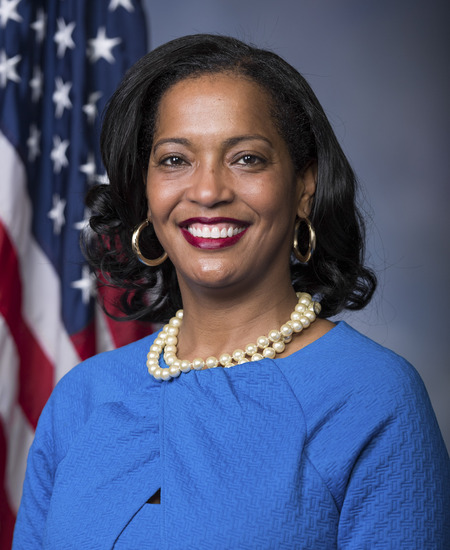
Rep. Jahana Hayes
Sponsored bills
Maddy summaryHR 5369, the Tipped Worker Protection Act, requires employers to pay tipped workers the full federal minimum wage (currently $7.25/hour) instead of the current lower "tip credit" rate ($2.13/hour). It phases in this change over time, starting with a $3.60/hour cash wage in the first year, increasing by $1.50 annually until matching the standard minimum wage. The bill prohibits employers from keeping or using customer tips for any purpose (including covering costs like credit card fees) and mandates that all tips go directly to employees, with new rules governing voluntary tip pools. It directly affects restaurant, bar, and similar service workers who rely on tips for income.
Maddy summaryThis bill increases the annual tax deduction for out-of-pocket classroom supply expenses from $250 to $1,000 for eligible educators, including K-12 teachers in public and private schools. It updates the Internal Revenue Code to replace the term "elementary and secondary school teachers" with "eligible educators" and adjusts related references to years and amounts. The change applies to taxable years beginning after December 31, 2022, meaning educators can claim the higher deduction starting with 2023 tax filings. The bill directly affects teachers and school staff who typically cover classroom costs personally.
Maddy summaryHR 5383, the GIVE MILK Act, amends the Child Nutrition Act to allow WIC participants with young children to choose their preferred milk type (whole, low-fat, or nonfat) instead of receiving a default option. This change directly affects WIC participants caring for children aged 12 months to 4 years, aligning with dietary guidelines for that age group. The key provision requires the Secretary of Agriculture to issue the milk type elected by the participant or their guardian, updating WIC program regulations under Section 17(f) of the Child Nutrition Act. The bill focuses on enabling participant choice based on established nutritional recommendations for childhood development.
Maddy summaryThis bill expands SNAP eligibility for college students by modifying existing rules. It allows students attending higher education institutions (as defined by the Higher Education Act) to qualify for SNAP benefits if they have a zero expected family contribution (EFC) from FAFSA or meet specific criteria for independent student status under the Higher Education Act. The changes replace outdated language about "employment" with "attending school or working" and remove barriers that previously excluded many low-income students. This directly affects low-income undergraduate and graduate students who may face food insecurity while enrolled in college. The policy change takes effect 180 days after enactment.
Voters on the Move Registration Act of 2023 This bill requires the Consumer Financial Protection Bureau to develop, and specified agencies to distribute, a statement providing individuals with information on how to register to vote and their voting rights. This information must be provided to individuals upon their participation in certain rental assistance programs or application for certain residential mortgages.
Maddy summaryThe People Over Long Lines Act (POLL Act) requires states to develop public plans ensuring voting wait times don't exceed 30 minutes at polling places for federal elections, particularly addressing documented disparities where voters in communities of color wait significantly longer than others. It establishes standards for minimum voting systems, poll workers, and resources based on factors like population demographics, voter turnout, and needs of disabled or limited English proficiency voters. The bill provides $500 million annually in federal funding to help states implement these changes, creates a private right of action allowing voters to sue states for violations with penalties including $50 per hour of wait time, and mandates remedial plans for states with excessive wait times. The law applies to federal elections starting in 2025, with states required to comply by January 1, 2025.

Maddy summaryHR 5293, the Youth Voting Rights Act, would improve voting access for young people aged 18-29 through several concrete changes. The bill requires public colleges and universities to serve as voter registration agencies, establishes pre-registration for 16-year-olds, mandates on-campus polling locations for all institutions of higher education, and prohibits age-based restrictions on voting by mail. It also requires states to accept student ID cards as valid voter identification and provides grants to states for youth voter engagement programs. The bill would collect data on voting trends by age to help identify barriers to youth participation. These changes aim to address systemic barriers that have led to lower youth voter turnout and higher ballot rejection rates among young voters.
Maddy summaryThe Sustaining Our Democracy Act creates a federal program to provide states with annual funding to improve election administration and increase voting access. It allocates $2 billion each year from 2024-2033 through the State Election Assistance and Innovation Trust Fund to support activities like upgrading voting equipment, training election workers, and expanding voting access for underserved communities, people with disabilities, and voters on Indian lands. States must submit detailed plans for using funds, which cannot be used for activities that restrict voting access or target election officials. The Act establishes an Office of Democracy Advancement and Innovation to administer the program, monitor fund usage, and oversee compliance with its requirements.
Maddy summaryThe Unhoused Voter Opportunity Through Elections Act (HR 5294) protects voting rights for people experiencing homelessness by prohibiting states from denying voting access based on living in a "nontraditional abode" like shelters, public spaces, or locations where someone is considered homeless under federal law. Key provisions require election officials to make ballot drop boxes accessible to unhoused individuals, accept written attestations of residence instead of traditional proof, allow homeless shelters to be used as voting addresses, and mandate outreach to shelters about registration deadlines and election dates. The bill also creates a grant program to fund mobile voting centers and direct outreach services specifically for unhoused individuals. These changes would directly affect homeless individuals and election officials across all states, implementing concrete policy changes to improve voting access for a population often excluded from the electoral process.