

Commission on Youth Homelessness Act This bill requires the Department of Housing and Urban Development to establish a commission on youth homelessness comprised of representatives from specified federal agencies and nonprofit organizations. The commission must submit a report to Congress that includes (1) how federal, state, tribal, and local laws, regulations, and policies have harmed or otherwise impacted youth and young adults who are homeless or at risk of homelessness; (2) a list of laws, regulations, and policies that unnecessarily target youth and young adults who identify as Black, Indigenous, people of color, or LGBTQIA+; and (3) legislative recommendations to prevent and end youth and young-adult homelessness.
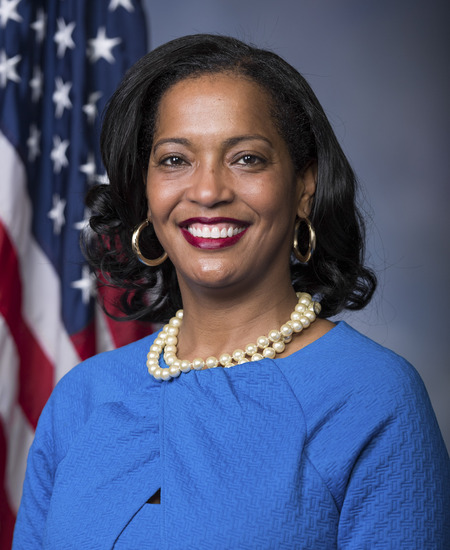
Rep. Jahana Hayes
Sponsored bills
Maddy summaryThis bill protects licensed amateur radio operators' ability to install antennas for emergency communications by preventing homeowners' associations and private land use restrictions from blocking such installations. It requires communities to allow antennas that don’t impair emergency use, with exceptions only for safety, structural requirements, or minimal visual impact (e.g., screened enclosures). Small antennas (under 1 meter diameter), flagpoles (under 43 feet), and wire/vertical antennas don’t require prior approval, and communities must approve applications within 45 days. The law directly affects over 770,000 licensed amateur operators who rely on these antennas for life-saving emergency communications during disasters.
Maddy summaryHR 7862 directs federal agencies to annually report on converting unused government-owned buildings into affordable housing. It establishes two grant programs: a $1.75 million annual grant for exploring office-to-residential conversions, and a $250 million annual program for states and local governments to convert underutilized public buildings into rental housing. The state/local program requires converted housing to maintain affordability for 30 years, with at least 20% of units reserved for households earning ≤50% of local median income, or 40% for households ≤60% of median income. This bill directly affects federal agencies (through reporting) and state/local governments (through grant funding), focusing on repurposing vacant public property to expand affordable housing options.
Maddy summaryHCONRES 102 is a non-binding symbolic resolution supporting International Transgender Day of Visibility, introduced by multiple House members. It formally encourages the U.S. to observe the day with ceremonies and programs, celebrates transgender community achievements, and recognizes their ongoing fight for equality amid documented discrimination in employment, healthcare, housing, and public spaces. The resolution highlights transgender representation in politics (including 21 state legislators) and historical context, while acknowledging rising anti-transgender legislation. It directly affirms the transgender community's visibility and rights without creating new policies or funding.
Maddy summaryHCONRES 101 is a symbolic resolution introduced in the U.S. House of Representatives on March 22, 2024, by multiple cosponsors. It recognizes that people with disabilities face daily barriers accessing federally funded facilities and reaffirms support for the existing Americans with Disabilities Act (ADA) and Architectural Barriers Act of 1968. The resolution pledges to prioritize "universal and inclusive design" in future federal infrastructure projects but does not create new legal requirements or alter current accessibility standards. As a concurrent resolution, it has no binding effect and serves only to express congressional support for accessibility goals.
Maddy summaryHRES 1110 is a symbolic resolution passed by the U.S. House of Representatives in March 2024 to commemorate March 2024 as National Women’s History Month. It formally supports the month’s goals, recognizes women and organizations advancing women’s history education, and highlights the intersectional contributions of Black, Hispanic, Asian, Native American, Pacific Islander, LGBTQ+, and disabled women throughout U.S. history. The resolution has no legal effect or policy changes - it serves solely as a ceremonial acknowledgment of historical milestones and ongoing advocacy for gender equality. It directly affects all Americans by affirming the significance of women’s historical contributions through official congressional recognition.
Maddy summaryThis bill, the BIKE Act of 2024, directs federal funding toward school-based bicycle safety education for elementary and secondary students. It amends existing law to require grant funds for on-bicycle education programs and mandates the Secretary of Transportation to revise safety guidelines within one year. The revised guidelines must specifically encourage skills training, roadway navigation, traffic rule awareness, safety precautions, and helmet use for students. These updated materials will be shared with state education agencies, and the Secretary must report to Congress within three years on implementation efforts and outcomes. The bill directly affects public school systems by integrating structured bike safety education into curricula.
Maddy summaryThe Pink Tax Repeal Act prohibits businesses from charging different prices for substantially similar consumer products or services based on the gender of the intended users. It defines "substantially similar" as having no meaningful differences in materials, use, or design - meaning color alone (e.g., pink vs. blue packaging) cannot justify price differences. The Federal Trade Commission would enforce this under existing laws, and state attorneys general could also sue companies for violations on behalf of residents. This directly affects consumers who pay higher prices for identical or nearly identical items marketed to a specific gender, such as women’s razors or clothing.
Maddy summaryHR 7825, the Shrinkflation Prevention Act of 2024, would ban manufacturers from reducing product sizes (like smaller cereal boxes or thinner soap bars) without lowering the price proportionally or clearly disclosing the change. It directly affects consumer goods manufacturers by requiring the Federal Trade Commission (FTC) to create regulations prohibiting this practice within 18 months of the bill becoming law. The bill treats shrinkflation as an unfair or deceptive act under existing FTC law, allowing the FTC and state attorneys general to enforce the ban through fines, injunctions, or restitution for affected consumers. This focuses on making product size changes transparent and preventing companies from profiting from misleading downsizing without altering the price.
Maddy summaryHRES 1105 designates March 21, 2024, as "National Women in Agriculture Day" to recognize the contributions of women in the agricultural sector. It specifically highlights women as producers, educators, mentors, and leaders who drive economic impact (accounting for 36% of U.S. agricultural sales in 2022) and support workforce development. The resolution encourages all citizens to acknowledge these women’s roles in food production, agricultural innovation, and mentoring through programs like 4-H and FFA. As a symbolic resolution, it does not create new laws or funding but formally celebrates their ongoing contributions to U.S. agriculture.