

Maddy summaryHR 10099 would establish the first national domestic violence prevention action plan for the United States, creating a federal steering committee of agency officials to coordinate prevention efforts across government levels. The plan must include specific goals for primary, secondary, and tertiary prevention strategies, a $25 million public awareness media campaign, and requirements for data collection and evaluation. It would directly affect federal agencies, state domestic violence coalitions, and community organizations working on prevention, addressing the current lack of a coordinated national plan which the U.S. lacks compared to other countries like Canada and the UK. The bill requires the plan to address disproportionate impacts on marginalized communities and be based on evidence-based prevention strategies.
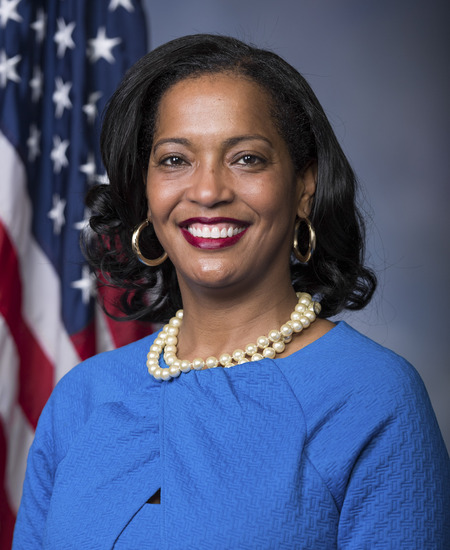
Rep. Jahana Hayes
Sponsored bills
Maddy summaryThis bill modifies how disability benefits are treated for homeless disabled veterans seeking housing assistance. It excludes certain disability payments (under Chapter 11 or 15 of Title 38, U.S. Code) from income calculations when determining eligibility for HUD-assisted housing programs, including the supported housing program under Section 8(o)(19) and housing on Department property. Specifically, it ensures these benefits are not counted toward income for housing eligibility, though they still count for "adjusted income" definitions. The bill directly affects disabled veterans applying for HUD housing assistance who receive these specific disability benefits. It makes a concrete change to income calculation rules without altering benefit amounts or creating new funding.
Maddy summaryThe COACH Act requires the Small Business Administration to create and regularly update a multilingual resource guide for small childcare businesses. This guide provides practical help on operations, finances, safety, compliance, and quality standards - covering topics like marketing, payroll, and eligibility for federal childcare funding. The guide must be published in English and 10 major U.S. languages (including Mandarin, Cantonese, Japanese, and Korean) and distributed through SBA offices, women’s business centers, and other partner organizations. It directly affects small childcare providers, sole proprietors, and organizations with limited administrative capacity.
Maddy summaryHR 10041, the LITTLE Act of 2024, creates two new tax credits to reduce childcare costs. It provides childcare providers with a 30% tax credit for startup expenses (up to $10,000 total lifetime) to support new businesses. For families, it increases the dependent care credit to 50% of eligible expenses (capped at $7,500 for one child or $15,000 for two+ children) and makes the credit refundable, meaning families can receive money back even if they owe no tax. The credit percentage decreases for higher-income households, with adjustments for inflation starting in 2025.
Maddy summaryThis bill expands Medicaid coverage for low-income individuals diagnosed with breast or cervical cancer. It requires Medicaid programs to cover breast reconstruction surgery after a medically necessary mastectomy, adding this as a mandatory benefit under existing Medicaid rules. The bill also modifies eligibility criteria to ensure coverage for these specific cancer patients, aligning with prior Medicaid provisions. These changes apply to all states administering Medicaid, directly affecting eligible patients seeking cancer treatment and recovery services.
Maddy summaryThe Victims of Agent Orange Relief Act of 2024 would provide medical care, environmental remediation, and support services for people affected by Agent Orange exposure during the Vietnam War. The bill directly affects Vietnamese residents exposed to Agent Orange (including those living near contaminated areas), their children and descendants, Vietnamese Americans, and American veterans' families, particularly expanding VA benefits to cover birth defects for children of male veterans (previously limited to children of female veterans). Key provisions include creating new USAID programs for medical care, housing repairs, and environmental cleanup at Agent Orange hotspots, requiring health assessments for Vietnamese Americans, and mandating research into intergenerational effects. The bill sets implementation deadlines for federal agencies (180 days for plans, 18 months for full implementation) and expands VA benefits to address gaps in current support. This legislation aims to address longstanding gaps in assistance for victims across Vietnam, Laos, Cambodia, and the United States affected by Agent Orange exposure.
Maddy summaryThe VA Employee Fairness Act of 2024 modifies collective bargaining rules for employees of the Veterans Health Administration (VHA). It removes existing subsections (b), (c), and (d) from the law governing VHA employee bargaining and renumbers the remaining provision. This change streamlines the collective bargaining framework but does not alter the Secretary of Veterans Affairs' existing authorities over incentive pay and expedited hiring. The bill directly affects VHA employees by changing how their collective bargaining rights are structured under federal law. The law remains neutral, focusing solely on procedural adjustments to the existing bargaining framework.
Maddy summaryThe REDUCE Food Prices Act (HR 9993) provides tax incentives for small food retail businesses in low-competition areas to reduce their operating costs. Key provisions include raising the rehabilitation tax credit from 20% to 25%, increasing work opportunity tax credit limits, boosting bonus depreciation rates (up to 70% for new property), and raising the qualified business income deduction from 20% to 25%. To qualify, businesses must have at least 70% of revenue from food sales, operate in a USDA-defined low-competition area (county with a retail food sector index ≥1,400), and meet size thresholds. The bill also creates a new 15% tax credit for new small food retail businesses on qualifying investments, effective for tax years after enactment.
Maddy summaryHR 9982 creates a dedicated Office of Children’s Health Protection within the EPA to address environmental risks affecting children. The office, led by an EPA-appointed director, will assess health threats like pollution or chemicals that disproportionately impact infants, children, and adolescents, and coordinate federal efforts to reduce these risks through policy, research, and school health programs. It establishes a permanent advisory committee to guide the EPA and requires $7.8 million annually for the office plus $13.2 million for the committee through 2029. The bill directly affects children’s health by mandating EPA action on environmental hazards through specific programs, not by changing existing regulations or creating new taxes.
Maddy summaryThe Long COVID Research Moonshot Act establishes a dedicated National Institutes of Health research program to accelerate scientific understanding and treatment development for Long COVID, directly affecting millions of people experiencing persistent health issues after COVID-19 infection. The bill creates a Long COVID Research Program with a specific Director to coordinate all NIH research, develop an annual research plan, and establish a patient-informed advisory board with representation from both patients and scientific experts. It authorizes $1 billion annually for 10 years (2025-2034) to fund research on Long COVID's causes, prevention, detection, management, and treatment, including a clinical trial registry and public health surveillance through the CDC. The legislation also includes provisions for public education campaigns, provider training, and a national network of multidisciplinary Long COVID clinics to improve care access, particularly for underserved populations. This comprehensive approach aims to address Long COVID through coordinated research, surveillance, and clinical care improvements.