

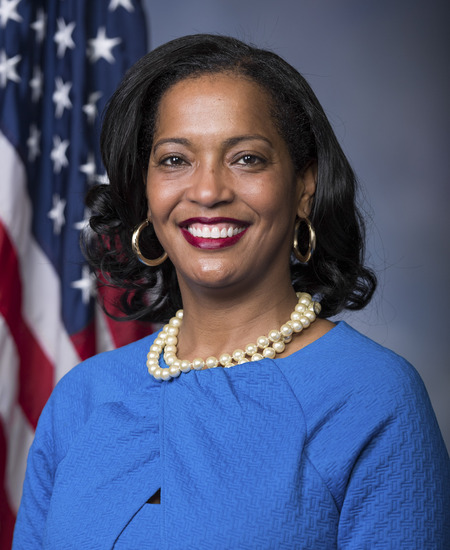
Photo of Jahana Hayes
D United States House · District 5 · Connecticut On the 2026 ballot

Rep. Jahana Hayes

Compare
Total votes
2,837
all sessions
Attendance
99%
24 missed
Near the chamber average
With party
97%
of cast votes
Near the chamber average
Bipartisan score
1%
crosses aisle rarely
Near the chamber average
Sponsored
2,286
bills & resolutions
Higher than 90% of chamber peers
Committees
6
assignments
2,286 bills and resolutions

Sponsored bills

Total
2,286
Primary
106
Co-sponsor
2,180
This page
2,286
matching current filters
Co-sponsor HR 7050
In committee · United States House · Co-sponsor
Substance Use Disorder Workforce Act

Maddy summaryThis bill adds 1,000 new medical residency positions (500 in 2024 and 500 across 2025-2028) specifically for training in addiction medicine, addiction psychiatry, or pain medicine. It directly affects hospitals that have or will establish approved residency programs in these fields. Hospitals receiving these positions must use them for addiction-related training for five years, with unused positions redistributed if requirements aren't met. The goal is to expand the healthcare workforce addressing the substance use disorder crisis by increasing specialized training opportunities.

In committee Dec 17, 2024 1 co-sponsor
Co-sponsor HR 6716
In committee · United States House · Co-sponsor
Healthy MOM Act

Maddy summaryThe Healthy MOM Act (HR 6716) would require health insurance plans to provide a special enrollment period for pregnant individuals beginning when pregnancy is reported to the insurer. It would mandate that group health plans cover maternity care for all dependents, including young women who might otherwise lack coverage due to plan exclusions. The bill would extend Medicaid coverage for pregnant individuals and infants to a full 12 months postpartum, rather than the current 60-day period. These provisions aim to improve access to comprehensive maternity care, which the bill states could prevent 3 in 5 pregnancy-related deaths by addressing coverage gaps that disproportionately affect women of color.

In committee Dec 17, 2024 1 co-sponsor
Co-sponsor HR 6515
In committee · United States House · Co-sponsor
FOREST Act of 2023

Maddy summaryThe FOREST Act of 2023 prohibits U.S. imports of products made from commodities (palm oil, soybeans, cocoa, cattle, and rubber) produced on land where illegal deforestation occurred after the law's enactment. Importers must file declarations demonstrating they've assessed supply chain risks of illegal deforestation, with stricter requirements for products from countries identified in action plans. The law establishes a process to identify countries without adequate deforestation protections and requires them to develop action plans with specific benchmarks for compliance. It creates a fund using import penalty revenue to provide foreign assistance to help countries eliminate illegal deforestation and includes procurement preferences for federal contracts with suppliers demonstrating deforestation-free supply chains.

In committee Dec 17, 2024 1 co-sponsor
Co-sponsor HR 6407
In committee · United States House · Co-sponsor
Medical Nutrition Therapy Act of 2023

Maddy summaryHR 6407, the Medical Nutrition Therapy Act of 2023, expands Medicare coverage to include medical nutrition therapy for more chronic conditions beyond current limits. It directly affects Medicare beneficiaries with conditions like obesity, hypertension, dyslipidemia, eating disorders, and others not previously covered under Part B. The bill amends Medicare rules to allow coverage for prevention, management, or treatment of these conditions by a wider range of providers, including registered dietitians and clinical psychologists. This change would make medically necessary nutrition services available for conditions listed in the bill, such as diabetes, cardiovascular disease, and HIV, as determined by the Secretary.

In committee Dec 17, 2024 1 co-sponsor
Co-sponsor HR 6377
In committee · United States House · Co-sponsor
ARCC Act

Maddy summaryThe ARCC Act provides $100 million in federal funding to help apprentices and pre-apprentices in job training programs cover childcare costs. It authorizes competitive grants to 10 states, which must distribute monthly stipends of at least $500 per dependent child directly to eligible childcare providers on behalf of participants in these programs. The bill prioritizes individuals from historically underrepresented groups (based on race, ethnicity, or gender) and ensures stipends are tax-free while not affecting eligibility for other federal benefits. States must report on participation, program completion rates, and demographic data, with the Secretary later summarizing program impacts for Congress.

In committee Dec 17, 2024 1 co-sponsor
Co-sponsor HR 6394
Passed · United States House · Co-sponsor
Semiquincentennial Congressional Time Capsule Act

Maddy summaryThis bill directs the Architect of the Capitol to create a time capsule for the U.S. Semiquincentennial (250th anniversary of independence). Congressional leadership will determine its contents, including representative materials about the Semiquincentennial, copies of key legislative milestones, and a message to future Congress. The capsule will be sealed on the Capitol's West Lawn by July 4, 2026, and remain unopened until July 4, 2276, when it will be presented to the 244th Congress for their consideration. The bill is procedural and does not affect citizens or change existing laws.

Passed Dec 17, 2024 1 co-sponsor
Co-sponsor HR 6063
In committee · United States House · Co-sponsor
Empowering Striking Workers Act of 2023

Maddy summaryHR 6063, the Empowering Striking Workers Act of 2023, modifies unemployment insurance rules to provide benefits for workers unable to work due to strikes or lockouts. It directs that unemployment compensation begins 14 days after a strike starts, or earlier if permanent replacements are hired, a lockout begins, or the dispute ends. The bill directly affects workers participating in labor disputes by making them eligible for benefits under these specific conditions, rather than requiring them to meet standard job search requirements. This change is implemented through amendments to the Internal Revenue Code and Social Security Act.

In committee Dec 17, 2024 1 co-sponsor
Co-sponsor HR 5744
In committee · United States House · Co-sponsor
Energy Innovation and Carbon Dividend Act of 2023

Maddy summaryHR 5744, the Energy Innovation and Carbon Dividend Act of 2023, would impose a carbon fee on fossil fuels (crude oil, coal, and natural gas) based on their greenhouse gas emissions, starting at $15 per metric ton of CO2 equivalent in 2023 and increasing by $10 annually. The revenue from this fee would be distributed directly to American citizens as monthly "carbon dividends" through a new trust fund, with adults receiving full payments and children under 19 receiving half payments. The bill also establishes a border fee adjustment on imported carbon-intensive products to prevent companies from moving operations to countries with weaker environmental regulations. It sets specific emissions reduction targets: 8% annual reductions from 2025-2030 and 2.5% annual reductions from 2031-2050 relative to 2005 levels. The carbon fee would be phased out once emissions drop to 10% of 2005 levels and monthly dividends fall below $20 for three consecutive years.

In committee Dec 17, 2024 1 co-sponsor
Co-sponsor HR 5644
In committee · United States House · Co-sponsor
End Diaper Need Act of 2023

Maddy summaryThe End Diaper Need Act of 2023 creates a federal program that will provide free diapers and incontinence supplies to low-income families with infants, toddlers, medically complex children (3+ years old with chronic health conditions), and low-income adults with disabilities. It allocates $200 million annually from 2024-2027 to fund this assistance through states and community organizations, making medically necessary diapers eligible for reimbursement through health savings accounts and other health benefit programs. The legislation requires integration with existing services like Medicaid, WIC, and TANF, and includes annual reporting requirements and an evaluation of the program's effectiveness within two years.

In committee Dec 17, 2024 1 co-sponsor
Co-sponsor HR 5601
In committee · United States House · Co-sponsor
MORE Act

Maddy summaryThe MORE Act (HR 5601) would federally decriminalize cannabis by removing it from the Schedule I list of controlled substances under the Controlled Substances Act. It requires federal courts to expunge non-violent cannabis convictions and associated arrests, with a focus on addressing racial disparities in cannabis enforcement. The bill creates an Opportunity Trust Fund that would allocate 50% of funds to criminal justice programs, 20% to small business assistance for minority cannabis entrepreneurs, and 20% to community reinvestment grants for individuals impacted by the War on Drugs. It also prohibits federal agencies from denying benefits or security clearances based on cannabis use or past cannabis convictions, and establishes a Cannabis Justice Office to administer these programs.

In committee Dec 17, 2024 1 co-sponsor
Showing 631 to 640 of 2,286 bills
Previous 1 … 63 64 65 … 229 Next