

Restoring Establishment Deductions and Uplifting Competition to Ease Food Prices Act or the REDUCE Food Prices Act This bill establishes a new tax credit for certain food retail businesses. The bill also increases bonus depreciation, the qualified business income (QBI) tax deduction, the rehabilitation tax credit (also known as the historic preservation tax credit), and the work opportunity tax credit (WOTC) for the businesses. The bill establishes a new tax credit (as part of the general business tax credit) in the amount of 15% of certain capital investments by a qualified small food retail business in the first three years of operation. The bill defines a qualified small food retail business as a private or closely-held company, a partnership, or a sole proprietorship (1) with annual average gross receipts of $200 million or less for the three tax years preceding the current tax year, (2) with at least 70% of its annual average gross receipts attributable to the retail sale of food or produce, and (3) located in a low-competition area. The bill also increases bonus depreciation percentages for certain property placed into service by a qualified small food retail business, the QBI tax deduction for qualified small food retail business, the rehabilitation tax credit for qualified rehabilitation expenses incurred by a qualified small food retail business, and the WOTC for wages paid by a qualified small food retail business to eligible workers.
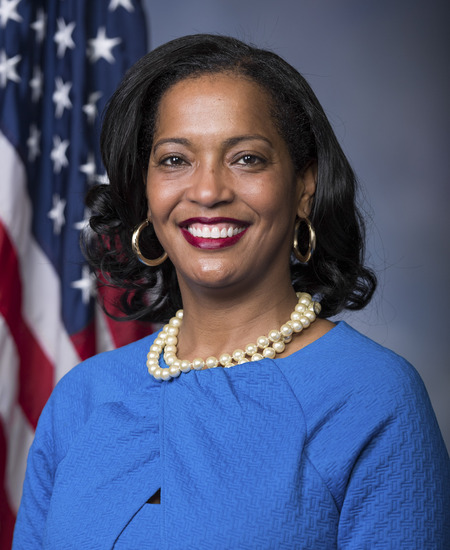
Rep. Jahana Hayes
Sponsored bills
Maddy summaryHR 646, the Build Housing with Care Act of 2025, establishes a HUD grant program to fund the co-location of affordable housing developments with child care facilities. It directly affects housing developers, child care providers, and residents of affordable housing by requiring grants to support projects in "child care deserts" (areas with severe child care shortages), prioritizing low-income, rural, or Head Start-serving providers. Key provisions mandate that projects must not evict residents, include resident engagement plans, and ensure child care providers serve low-income families or dual-language learners. The bill authorizes $100 million annually (2025-2030) and requires annual reports tracking child care slots created, resident usage, and demographic data.
Maddy summaryHR 612, the Health Care Providers Safety Act of 2025, provides federal funding to help health care facilities improve safety. It authorizes the Secretary to award grants to hospitals, clinics, and other health care providers to cover costs for physical security (like structural improvements) and cyber security (such as data privacy tools and video surveillance systems). These grants directly help health care providers protect their facilities, staff, and patients from security threats. The bill creates a new funding mechanism under the Public Health Service Act, making specific security upgrades eligible for federal support.
Neighbors Not Enemies Act This bill repeals provisions authorizing the President to apprehend and remove from the United States the citizens of a particular nation, if the United States has declared war against that nation or that nation has threatened an invasion against the United States.
Maddy summaryThe Close the Medigap Act of 2025 would prohibit Medigap insurance issuers from denying coverage or charging higher premiums based on health status, pre-existing conditions, genetic information, or other factors. It requires insurers to spend a minimum percentage of premiums on health care claims and improves the Medicare Plan Finder website to provide clearer information about coverage options, out-of-pocket costs, and guaranteed issue requirements. The bill applies to Medigap policies effective January 1, 2026, with full implementation by 2031, and requires Medigap brokers to disclose payments they receive from insurers. These changes would directly affect Medicare beneficiaries, particularly those with pre-existing conditions who have historically faced barriers to obtaining affordable supplemental coverage.
Supporting Accurate Views of Emergency Services Act of 2025 or the 911 SAVES Act This bill requires the Office of Management and Budget to categorize public safety telecommunicators as a protective service occupation under the Standard Occupational Classification system no later than 30 days after the enactment of this bill. (The Standard Occupational Classification system is a federal statistical standard used by federal agencies to classify workers into occupational categories for the purpose of collecting, calculating, or disseminating data.)
Beaches Environmental Assessment and Coastal Health Act of 2025 or the BEACH Act of 2025 This bill reauthorizes through FY2029 and expands an existing program of the Environmental Protection Agency (EPA) that awards grants to states and local governments to (1) monitor the water quality of coastal recreational waters adjacent to beaches or similar points of access that are used by the public; and (2) notify the public, local governments, and the EPA when the water is not safe for recreational activities. Specifically, the bill expands the program to allow the EPA to award grants for identifying sources of contamination (i.e., pathogens) for coastal recreation waters. It also allows grants to be used for monitoring and notification of contamination in (1) shallow waters upstream from recreational waters, and (2) recreational waters on beaches.
Maddy summaryThis bill increases the required representation of labor organizations on state and local workforce development boards from 20% to 30% under the Workforce Innovation and Opportunity Act. It also expands the definition of "labor organization" to include groups representing federal/state employees, railroad workers, and agricultural laborers - previously excluded under the National Labor Relations Act. These changes directly affect workforce boards that design job training programs and connect workers to employment services. The key mechanism is raising the mandated labor representation percentage and clarifying which worker groups qualify as labor organizations for this purpose. The policy aims to broaden worker input in workforce planning without altering existing labor protections.
Maddy summaryHRES 48 is a ceremonial resolution honoring Dr. Martin Luther King, Jr., by commemorating his 96th birthday on January 20, 2025. The resolution affirms his teachings on diversity, equality, and nonviolence, and specifically condemns hate, discrimination, and harassment targeting Black Americans, Indigenous peoples, Jewish communities, Asian-American/Pacific Islander groups, Muslim communities, Hispanic/Latino communities, LGBTQ+ individuals, and others. It calls on all people to uphold Dr. King’s values of justice, tolerance, and peace. As a symbolic gesture, this resolution has no legal effect but expresses the House’s commitment to these principles.
Maddy summaryHRES 52 is a symbolic resolution recognizing community organizations and individuals who create and maintain services and educational programs for LGBTQIA+ communities. It does not establish new laws, funding, or policy changes, but formally honors their work in fostering safe spaces and resilience. The resolution cites historical examples like Stonewall and ACT UP, along with statistics on declining LGBTQIA+ venues and hate violence, to underscore the importance of these efforts. It calls for Congress to acknowledge this work through non-binding statements of support.