

Maddy summaryThis resolution (HRES 72) expresses the House of Representatives' support for designating January 30, 2025, as "CTE and RHI Awareness Day." It aims to raise public awareness about chronic traumatic encephalopathy (CTE) and repeated head impacts (RHI), which are linked to brain damage from head injuries - commonly affecting athletes, military veterans, and others with exposure to repeated head trauma. The resolution encourages the CDC and NIH to share information on CTE/RHI in public education materials and recognizes researchers, patients, and families impacted by these conditions. As a symbolic resolution, it does not create new laws or policies but promotes public education and reflection on these health issues.
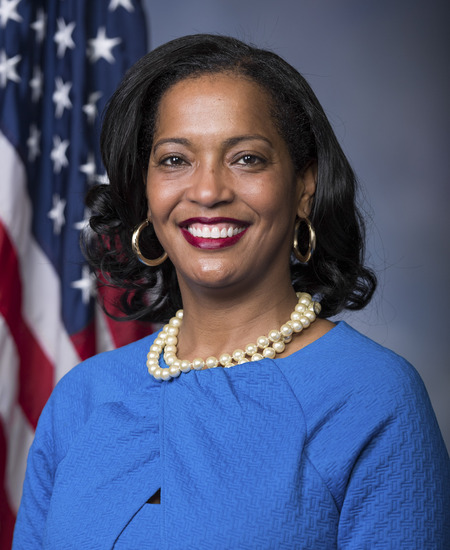
Rep. Jahana Hayes
Sponsored bills
Maddy summaryThis resolution expresses the House of Representatives' position that Congress should take steps to prevent the privatization of the United States Postal Service (USPS), ensuring it remains a federal independent agency. It highlights USPS’s constitutional role, self-sustaining nature (relying on service revenue, not taxpayer funds), and critical functions - serving 168 million addresses daily, supporting rural communities, and underpinning e-commerce. The resolution opposes privatization, noting it would raise prices, reduce services, and harm the $1.9 trillion mailing industry. As a non-binding resolution, it reflects the House’s stance but does not create new law or policy.
Maddy summaryHR 768, the Holocaust Education and Antisemitism Lessons Act, requires the U.S. Holocaust Memorial Museum Director to study how states and school districts currently teach about the Holocaust and antisemitism in K-12 schools. The study will examine curriculum requirements, teacher training, educational materials used, and assessment methods across all states and a representative sample of school districts and schools. It specifically aims to identify gaps, resources needed, and how schools address antisemitism and genocide prevention in their teaching. The Museum must submit a report to Congress within three years of the bill's enactment, detailing findings on current practices and challenges. This bill does not mandate new teaching requirements but seeks to understand existing approaches to Holocaust education.
Maddy summaryHR 764, the Global Health, Empowerment and Rights Act, removes two barriers for foreign nongovernmental organizations (NGOs) seeking U.S. foreign assistance. It ensures these organizations cannot be denied funding solely because they provide health services (like counseling and referrals) using non-U.S. government funds, as long as those services comply with local laws. The bill also requires that foreign NGOs face the same rules on using non-U.S. funds for advocacy and lobbying as U.S. NGOs receiving similar aid. This directly affects international health-focused NGOs working in countries where U.S. aid is provided.
Maddy summaryHR 815 extends a tax incentive allowing businesses to deduct costs for cleaning up contaminated "brownfield" properties (like old factories or gas stations) from their taxes. It directly affects developers and property owners who remediate these sites, reducing their tax burden for cleanup work. The bill updates the tax code to let these deductions apply to costs paid or incurred between 2012-2024 and again after 2028, with the new period starting January 1, 2025. This provides continued financial support for redeveloping underutilized, polluted land.
Maddy summaryHR 801, the Charitable Act, creates a new tax deduction for individuals who do not itemize deductions on their federal tax returns. It allows these taxpayers to deduct up to one-third of their standard deduction amount for charitable contributions in 2026 and 2027. The bill directly affects non-itemizing individual taxpayers by providing a limited, direct deduction for charitable giving without requiring them to itemize. The deduction is capped at 1/3 of the standard deduction amount for those tax years, effective for returns filed in 2027 and 2028.
Maddy summaryThis bill requires the U.S. Department of Education to proactively notify eligible college students about potential access to SNAP (food stamp) benefits. It targets students with a negative or zero student aid index (SAI) who file the Free Application for Federal Student Aid (FAFSA). The Department must send annual written and electronic notices explaining SNAP eligibility and providing state contact information for applying. The bill also mandates consultation between the Education and Agriculture Departments to design these notifications. This is a policy change focused on improving access to nutrition assistance for low-income students already enrolled in college.
Maddy summaryHRES 66 is a non-binding resolution affirming the U.S. government's leadership in global education. It calls on the State Department and USAID to prioritize quality, inclusive public education for girls, children with disabilities, and children in crisis settings, while integrating education into humanitarian responses. The resolution urges these agencies to meet existing commitments to international education programs and advance learning outcomes for marginalized youth worldwide. It does not create new laws or funding but emphasizes coordination across U.S. government agencies to support global education efforts.
Maddy summaryHRES 68 is a non-binding House resolution expressing strong disapproval of the President’s announcement to withdraw the U.S. from the Paris Agreement. It commends states, businesses, and citizens supporting the Agreement, urges the President to reverse the withdrawal decision, and calls for Congress to prioritize U.S. climate leadership. The resolution does not create new laws or affect specific groups but formally states the House’s position against withdrawing from the international climate accord. It was introduced by 115 co-sponsors and reflects broad congressional concern about reversing U.S. climate commitments.
Maddy summaryHR 728, the Expanding Head Start Eligibility Act of 2025, would amend the Head Start Act to broaden eligibility criteria. It adds a new definition of "public assistance" to include benefits from programs like SNAP (food stamps), housing assistance under Section 8, and state-funded food programs with similar income standards. This change directly affects low-income families seeking Head Start enrollment, as children in households receiving these benefits would now qualify under the expanded definition. The bill modifies the Head Start Act’s eligibility rules to count these additional benefits, making it easier for more children to access early childhood education programs.