Maddy summaryThis bill increases federal student loan limits for graduate and professional students. Starting July 1, 2026, it sets a $50,000 annual limit and a $200,000 total aggregate limit (beyond undergraduate borrowing) for unsubsidized Federal Direct Stafford loans. These changes directly affect graduate and professional students pursuing advanced degrees who rely on federal loans for education costs. The provisions aim to provide higher borrowing capacity for these students' educational expenses under the Higher Education Act.
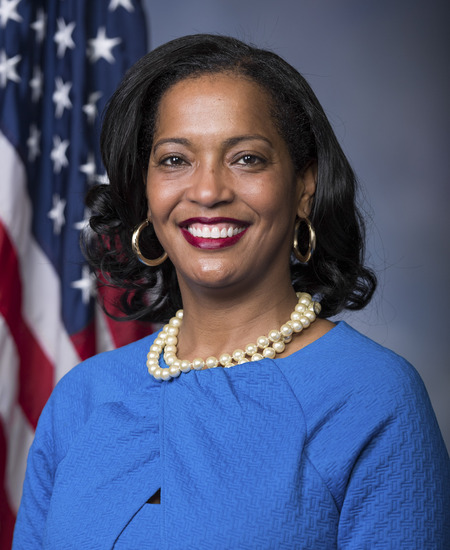
Rep. Jahana Hayes
Sponsored bills
Maddy summaryHR 6597, the LET’S Protect Workers Act, increases civil penalties for employers violating key labor laws to strengthen worker protections. It raises fines for child labor violations to up to $700,000 per incident causing death or serious injury, and doubles penalties for repeated wage/hour violations (up to $50,000 per violation). The bill also significantly boosts OSHA penalties (e.g., up to $800,000 for serious violations), adds new retaliation penalties for mine safety violations (up to $200,000 for repeat offenses), and clarifies that recordkeeping violations continue until corrected. These changes apply to employers across sectors, including manufacturing, agriculture, and mining, under the Fair Labor Standards Act, Occupational Safety and Health Act, and Mine Safety Act.
Maddy summaryThis bill authorizes the placement of a memorial honoring women who supported the U.S. war effort during World War II (including those working as pilots, engineers, and in factories) on federal land in Washington, D.C. It specifies two locations: Area I on the National Mall map or the National Mall Reserve, as defined in existing law. The memorial was previously authorized by Section 702 of the 2023 Consolidated Appropriations Act (Public Law 117-328), and this bill clarifies its permitted locations.
Maddy summaryThe Expanding Cybersecurity Workforce Act of 2025 establishes a new program under CISA to promote cybersecurity careers to underrepresented groups, including racial and ethnic minorities, veterans, formerly incarcerated individuals, people with disabilities, older adults (40+), and those from low-income or nontraditional educational backgrounds (like community colleges or HBCUs). The program requires CISA to tailor outreach to regional needs, partner with schools, unions, and community organizations, and report annually on workforce impact. It authorizes $20 million annually for fiscal years 2026-2031 to support these efforts, aiming to diversify the cybersecurity workforce through targeted recruitment and training.
Maddy summaryThe Closing the Meal Gap Act of 2025 amends the Food and Nutrition Act to replace the "thrifty food plan" with a new "low-cost food plan" for calculating SNAP benefits. This plan defines a specific 4-person household diet (two adults aged 19-50, two children aged 6-11) and requires the Secretary to reevaluate and update food costs every five years starting in 2029. The bill also adjusts benefits for Hawaii and Alaska’s urban/rural areas, updates medical deduction standards, and eliminates time limits on certain benefits. These changes directly affect SNAP recipients by making benefit calculations more reflective of actual food costs and dietary needs.
Right to Read Act of 2025 This bill expands access to school libraries and literacy skills support for elementary and secondary school students. It also outlines certain constitutional rights and liability protections related to school libraries. Specifically, the bill reauthorizes through FY2030 (1) the Comprehensive Literacy State Development Program, which provides grants to ensure high-quality instruction and effective strategies in reading and writing for children through 12th grade; and (2) the Innovative Approaches to Literacy Program, which provides grants to support the development of literacy skills in low-income communities. Additionally, the bill allows Supporting Effective Instruction State Grants to be used to assist local educational agencies (LEAs) and schools in recruiting, hiring, and retaining state-certified school librarians. Further, the bill authorizes states and LEAs to use Student Support and Academic Enrichment grants for programs and activities that promote the development of digital literacy and information literacy skills. The Department of Education (ED) must direct the National Center for Education Statistics to biennially collect data on school libraries. ED must require an assurance from each state and LEA receiving certain funds confirming that it will (1) protect the First Amendment rights of students in school libraries, and (2) provide equal protection in the conduct of school libraries in compliance with the requirements of the Fourteenth Amendment and nondiscrimination laws. The bill also provides liability protection to teachers, school librarians, school leaders, paraprofessionals, and other staff for actions that conform with state or local policies regarding the right to read.

Maddy summaryHR 6423, the HELP Copays Act, requires health insurance plans and coverage to count financial assistance from non-profits or drug manufacturers toward patient cost-sharing limits like deductibles and copayments. This directly affects patients enrolled in health insurance who receive such assistance for prescription drugs, ensuring the help they get reduces their out-of-pocket costs faster. The bill amends key health laws to mandate that these payments are included when calculating whether a patient has met their deductible or copayment threshold. The change applies to all prescription drugs, including specialty drugs and those subject to prior authorization, but does not alter how insurers manage drug access through tools like step therapy. It takes effect for plan years starting in 2026.
Maddy summaryThe Dignity for Detained Immigrants Act establishes minimum standards for detention facilities operated by the Department of Homeland Security, requiring them to follow the American Bar Association's Civil Immigration Detention Standards. It mandates annual unannounced inspections by the DHS Inspector General, with penalties including fines for noncompliant private facilities and transfers of detainees from noncompliant facilities. The bill requires DHS to publicly report on facility compliance, phase out private detention facilities over three years, and prohibit solitary confinement. It also ensures detainees have access to legal orientation, counsel, and more frequent custody review hearings. The bill directly affects all individuals detained in DHS custody, including immigrants, asylum seekers, and refugees held in facilities operated by or contracted to DHS.
Maddy summaryThis bill would protect unaccompanied children by repealing fee requirements and other provisions in the "One Big Beautiful Bill Act" that have created barriers to their access to humanitarian protections. It specifically exempts unaccompanied children from paying fees for asylum applications, employment authorization, and immigration court proceedings, and requires the government to refund fees already paid under the repealed provisions. The bill also repeals provisions allowing for summary removal of children without due process, intrusive body examinations without safeguards, and sharing of sponsor information with immigration enforcement that has led to family separations. These changes would directly affect unaccompanied children seeking asylum or other protections in the United States, ensuring they can access legal processes without financial barriers or heightened risks of exploitation. The bill aims to uphold protections for unaccompanied children established under the William Wilberforce Trafficking Victims Protection Reauthorization Act of 2008 (TVPRA).
Maddy summaryThis bill amends the SUPPORT for Patients and Communities Act to expand substance abuse and suicide prevention services for children, adolescents, and young adults (up to age 25). It requires eligible providers - like pediatric specialists, emergency departments, and children’s hospitals - to offer parents or guardians counseling on preventing overdose/suicide and provide supplies to reduce access to lethal means (e.g., safe storage containers). The bill allocates at least $2 million annually in grants to fund these prevention programs through eligible entities, with funding authorized for fiscal years 2026-2030. It directly affects young people at risk of substance misuse or self-harm and their caregivers.