

Small Farm to School Act of 2021 This bill directs the Department of Agriculture (USDA) to award three-year grants to eight states or tribal organizations to provide school food authorities with an increased reimbursement for free and reduced price lunches that include at least one component that is comprised entirely of locally-produced and unprocessed foods procured directly from certain agricultural producers. USDA must select at least one state or tribal organization located in each of the following regions: (1) the Mid-Atlantic Region, (2) the Midwest Region, (3) the Mountain Plains Region, (4) the Northeast Region, (5) the Southern Region, (6) the Southwest Region, and (7) the Western Region. USDA must give the highest priority to applications that propose to carry out certain projects, including projects that (1) serve a high proportion of children from socially disadvantaged backgrounds, and (2) increase the availability of locally-produced foods to children. Additionally, priority must be given to states or tribal organizations with a high quantity and variety of growers of local fruits and vegetables on a per capita basis, and with a demonstrated commitment to farm-to-school activities. Each state or tribal organization that receives a grant must provide, from nonfederal sources, an amount equal to 100% of the awarded grant amount.
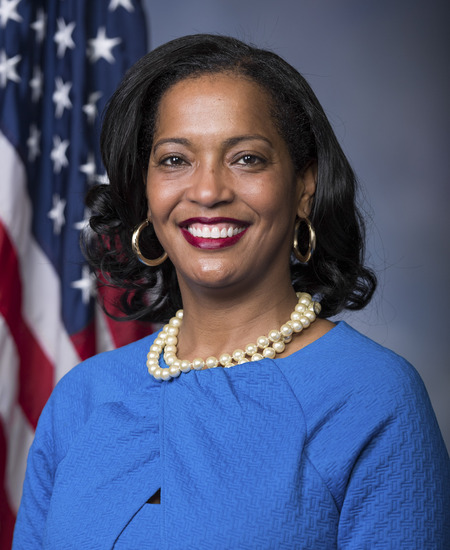
Rep. Jahana Hayes
Sponsored bills
John R. Lewis Voting Rights Advancement Act of 2021 This bill establishes new criteria for determining which states and political subdivisions must obtain preclearance before changes to voting practices may take effect. Preclearance is the process of receiving preapproval from the Department of Justice (DOJ) or the U.S. District Court for the District of Columbia before making legal changes that would affect voting rights. A state and all of its political subdivisions shall be subject to preclearance of voting practice changes for a 10-year period if 15 or more voting rights violations occurred in the state during the previous 25 years; 10 or more violations occurred during the previous 25 years, at least 1 of which was committed by the state itself; or 3 or more violations occurred during the previous 25 years and the state administers the elections. A political subdivision as a separate unit shall also be subject to preclearance for a 10-year period if three or more voting rights violations occurred there during the previous 25 years. States and political subdivisions that meet certain thresholds regarding minority groups must preclear covered practices before implementation, such as changes to methods of election and redistricting. Further, states and political subdivisions must notify the public of changes to voting practices. Next, the bill authorizes DOJ to require states or political subdivisions to provide certain documents or answers to questions for enforcing voting rights. The bill also outlines factors courts must consider when hearing challenges to voting practices, such as the extent of any history of official voting discrimination in the state or political subdivision.
This resolution expresses the sense of the House of Representatives that the United States shall recognize kind actions in our country, encourage kindness, spread love, and foster a culture of being kind to one another.
This resolution calls on all Americans to observe the 20th anniversary of the September 11 attacks and honor those who lost their lives.
Closing the College Hunger Gap Act of 2021 This bill requires the Department of Education (ED) to collect data on the food and housing insecurity of college students. Specifically, ED must add questions that measure rates of food and housing insecurity to the National Postsecondary Student Aid Study. In addition, ED must collect data on student eligibility under the Supplemental Nutrition Assistance Program (SNAP). ED must also provide students with contact information for the state agency that administers SNAP in their state.
School Modernization and Efficient Access to Lunches for Students Act of 2021 or the School MEALS Act of 2021 This bill establishes programs and revises requirements relating to direct certification processes for the National School Lunch Program. Direct certification allows schools to use data matching procedures to approve school meals without the need for applications for children who receive assistance under other programs, such as the Supplemental Nutrition Assistance Program (SNAP, formerly known as the food stamp program). Specifically, the bill directs the Department of Agriculture to provide grants and technical assistance for states and tribal organizations to improve their direct certification processes, including with respect to children who receive assistance under a food distribution program on Indian reservations. The bill also expands the time frame for schools to elect and gather eligibility data for the Community Eligibility Provision that permits schools in high-poverty areas to serve free meals to all enrolled students without the need for applications.
Supporting Teachers with Residency Opportunities and New Grants Act of 2021 or the STRONG Act of 2021 This bill reauthorizes through FY2024 the Teacher Quality Partnership program and otherwise revises the program to allow certain undergraduate students with an academic major related to teaching to enter into teaching residency programs. (Currently, only recent graduates and certain mid-career professionals may participate in these programs.) In addition, the bill allows undergraduate students who enter into such a program to participate in the Public Service Loan Forgiveness program.
Protecting Access to Lifesaving Screenings Act of 2021 or the PALS Act This bill makes a series of changes relating to health insurance coverage of screening mammography. Specifically, the bill requires that any provision of law referring to current recommendations of the U.S. Preventive Services Task Force (USPSTF) with respect to breast cancer screening mammography be administered as if (1) the provision referred to USPSTF recommendations last issued before 2009; and (2) those recommendations applied to any screening mammography modality, including any digital modality of such a procedure. This requirement shall also apply to the Veterans Health Administration's policy on mammography screening for veterans. In addition, the bill preserves Medicare coverage for screening mammography, without a requirement for coinsurance, and expands the definition of screening mammography to include any digital modality of such a procedure. Further, the Centers for Medicare & Medicaid Services may not decrease the frequency with which screening mammography may be paid by Medicare for a woman over 39 years of age. In 2009, the USPSTF updated its guidelines to recommend against routine screening mammography for women between 40 to 49 years of age and to recommend biennial, instead of annual, screening mammography for most women between 50 to 74 years of age. In 2015, through the appropriations process, a three-year moratorium was placed on implementing the guidelines; the moratorium was subsequently renewed until January 1, 2023.
Voices for Veterans Act This bill expands the membership of the Advisory Committee on Minority Veterans to include veterans who are lesbian, gay, bisexual, transgender, gender diverse, gender non-conforming, intersex, or queer. Among other responsibilities, the committee advises the Department of Veterans Affairs on the administration of benefits and provision of health care, benefits, and services to minority veterans.
Improving Medicare Coverage Act This bill temporarily expands eligibility for Medicare. It also temporarily establishes a premium and cost-sharing assistance program for low-income beneficiaries. Specifically, the bill lowers the age of eligibility for Medicare from 65 to 60. The Centers for Medicare & Medicaid Services must establish procedures to provide for automatic enrollment of qualifying individuals. Enrollment must be completed within 11 months of the bill's enactment. The bill also establishes a program under Medicare to assist low-income Medicare beneficiaries with premiums, coinsurance, deductibles, and other costs. Currently, such assistance is provided through Medicare Savings Programs, which are administered by state Medicaid programs. The bill also establishes a related special enrollment period under Medicare, expands eligibility for assistance to beneficiaries with income up to 200% of the federal poverty line, and provides for joint eligibility determinations with respect to the bill's program and the low-income subsidy program under the Medicare prescription drug benefit. The bill's provisions generally take effect six months after the bill's enactment and terminate five years later.