

Affordable Loans for Any Student Act This bill addresses repayment options, loan disclosures, and loan counseling for student loans. The bill revises requirements concerning repayment options for student loan borrowers. For instance, the bill terminates interest capitalization and origination fees for Federal Direct Loans, provides assistance to low-income borrowers or borrowers who are delinquent on loan payments, and replaces the existing income-based repayment plans with two new plans. Under the new plans, borrowers may choose (1) a fixed repayment plan with equal monthly payments paid over a period of 10 years, or (2) an income-based repayment plan with monthly payments equal to 10% percent of their income above the poverty level. The income-based plan is capped at 20 years of payments. The bill also revises requirements concerning student loan disclosures and student loan counseling for borrowers. For instance, the bill requires the Department of Education to maintain online counseling tools that provide borrowers with entrance and exit student loan counseling.
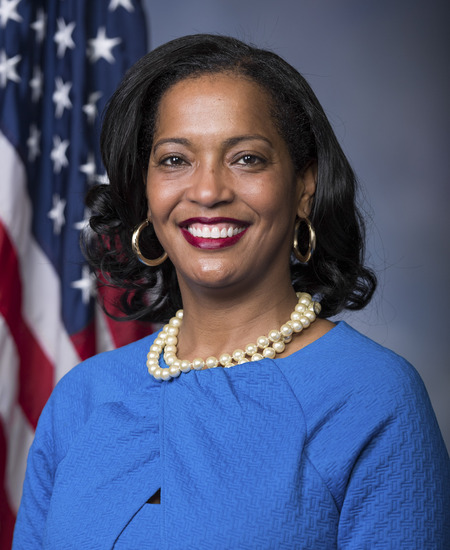
Rep. Jahana Hayes
Sponsored bills
Cabin Air Safety Act of 2022 This bill directs the Federal Aviation Administration (FAA) to implement regulations regarding smoke or fume incidents on aircraft (excluding helicopters). Specifically, the bill requires flight attendants, pilots, aircraft maintenance technicians, airport first responders, and emergency response teams to receive annual training on how to respond to incidents on aircraft; the FAA to develop a standardized form and system for reporting incidents involving smoke or fumes; the FAA to conduct an investigation after a report is submitted about incidents of smoke or fumes if anybody on the aircraft required medical attention; and air carriers to install and operate onboard detectors and other air quality monitoring equipment situated in the air supply system to enable pilots and maintenance technicians to locate the sources of air supply contamination, including carbon monoxide.
Strengthen Kids' Mental Health Now Act of 2022 This bill establishes several requirements to support the provision of behavioral health services under Medicaid and other programs, particularly for children. For example, the bill temporarily requires payment for pediatric mental, emotional, and behavioral health services under Medicaid to align with Medicare payments to providers. The bill provides for a 100% Federal Medical Assistance Percentage (i.e., federal matching rate) for any associated additional expenditures. The Centers for Medicare & Medicaid Services must issue guidance on how state Medicaid programs may expand the availability of telehealth services and mental, emotional, and behavioral health services. In addition, the Health Resources and Services Administration must award grants to support (1) pediatric behavioral health care integration in communities, (2) pediatric mental health and substance use disorder workforce training, and (3) the infrastructure of pediatric hospitals and rural health clinics with respect to behavioral health services.
Veteran Deportation Prevention and Reform Act This bill provides protections from deportation for noncitizen veterans and contains other related provisions. U.S. Immigration and Customs Enforcement (ICE) must identify each individual in removal proceedings who is a member of the Armed Forces, a veteran, or a noncitizen spouse or minor child of such an individual. That individual may not be removed until (1) ICE has transferred that individual's case files to an advisory committee created under this bill, and (2) that committee has provided recommendations as to the outcome of the case. The Department of Homeland Security (DHS) shall create a system to share information across various agencies about noncitizen veterans who may be subject to removal to ensure that such a veteran's military service is taken into consideration in immigration-related cases. DHS shall also create a system for (1) identifying noncitizens who are or may be veterans, and (2) collecting data relating to such noncitizens who are in removal proceedings or may have been removed. DHS and the Department of Defense must jointly carry out a program to naturalize a noncitizen (and the noncitizen's spouse and minor children) who serves on active duty in the Armed Forces and is not otherwise ineligible for citizenship if that noncitizen submits an application. DHS shall also establish a program for eligible noncitizen veterans (generally those not convicted for certain serious crimes) to obtain permanent resident status. Similarly, the Department of Justice shall provide permanent resident status to such an eligible veteran in removal proceedings or subject to a final order of removal.
Emmett Till Antilynching Act This bill makes lynching a federal hate crime offense. Specifically, the bill imposes criminal penalties—a fine, a prison term of up to 30 years, or both—on an individual who conspires to commit a hate crime offense that results in death or serious bodily injury or that includes kidnapping or an attempt to kidnap, aggravated sexual abuse or an attempt to commit aggravated sexual abuse, or an attempt to kill.
This resolution expresses support for the designation of National Women in Agriculture Day. It also recognizes the important role of women in agriculture as producers, educators, leaders, mentors, and more.
Growing, Recruiting, and Obtaining Workers in Specialized Instructional Support Personnel Services Act or the GROW SISPS Act This bill requires the Department of Education to award competitive grants to eligible partnerships (e.g., partnerships between institutions of higher education, local educational agencies, and organizations that provide credentialing for specialized instructional support personnel) for expanding or establishing programs to increase specialized instructional support personnel in schools.
Tracking Pathogens Act This bill requires the Centers for Disease Control and Prevention (CDC) to take specified actions related to the genomic sequencing of pathogens. Specifically, the CDC must issue guidance on sharing specimens and other activities to support collaboration in the genomic sequencing of pathogens. The CDC must also strengthen and expand activities related to the use of genomic sequencing of pathogens in public health surveillance, including by providing technical assistance to health departments. The CDC may award grants, contracts, or cooperative agreements to academic and other laboratories related to these activities. In addition, the CDC must establish through public health agencies (or partnerships of such agencies) centers of excellence to promote innovation in pathogen genomics and molecular epidemiology.
Creating a Respectful and Open World for Natural Hair Act of 2022 or the CROWN Act of 2022 This bill prohibits discrimination based on a person's hair texture or hairstyle if that style or texture is commonly associated with a particular race or national origin. Specifically, the bill prohibits this type of discrimination against those participating in federally assisted programs, housing programs, public accommodations, and employment. Persons shall not be deprived of equal rights under the law and shall not be subjected to prohibited practices based on their hair texture or style. The bill provides for enforcement procedures under the applicable laws.
Forced Arbitration Injustice Repeal Act of 2022 or the FAIR Act of 2022 This bill prohibits a predispute arbitration agreement from being valid or enforceable if it requires arbitration of an employment, consumer, antitrust, or civil rights dispute.