

Keeping Our Promise Act This bill authorizes issuing visas to certain individuals who were previously refused a diversity immigrant visa or admission into the United States because of certain executive orders or the COVID-19 public health emergency. (Diversity immigrant visas are available to eligible immigrants from countries with relatively low rates of immigration to the United States.) Specifically, this bill applies to individuals who were refused such a visa solely due to certain executive orders from 2017 to 2020, including orders which suspended the entry of individuals from certain countries. The bill also applies to diversity visa applicants who, because of the COVID-19 emergency, were (1) unable to receive a visa interview despite requesting one, or (2) unable to be admitted into the United States despite being approved for a visa. The Department of State must notify each individual covered under this bill of the individual's visa eligibility. To retain eligibility, an individual must respond to the State Department's notice within one year of the notice. An individual may also lose eligibility if the State Department determines that the applicant fails to meet certain requirements. The bill also relaxes certain annual numerical limits for individuals obtaining a visa under this bill. An individual who was a child when initially selected for a visa shall be treated as a child for the purposes of a visa application under this bill.
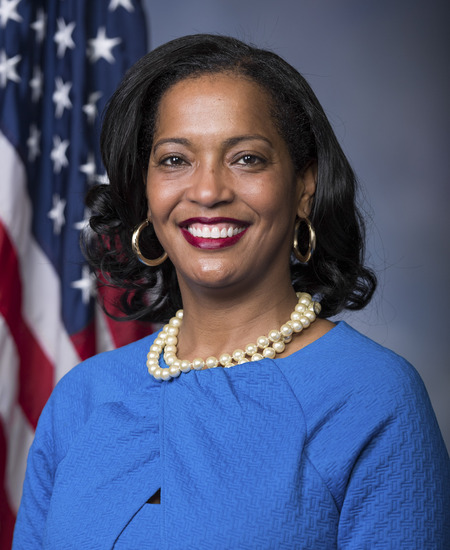
Rep. Jahana Hayes
Sponsored bills
Extreme Risk Protection Order Act of 2021 This bill establishes grants to support the implementation of extreme risk protection order laws at the state and local levels, extends federal firearms restrictions to individuals who are subject to extreme risk protection orders, and expands related data collection. Extreme risk protection order laws, or red flag laws, generally allow certain individuals (e.g., law enforcement officers or family members) to petition a court for a temporary order that prohibits an at-risk individual from purchasing and possessing firearms. Among its provisions, the bill directs the Office of Community Oriented Policing Services within the Department of Justice to establish a grant program to help states, local governments, Indian tribes, and other entities implement extreme risk protection order laws; extends federal restrictions on the receipt, possession, shipment, and transportation of firearms and ammunition to individuals who are subject to extreme risk protection orders; and requires the Federal Bureau of Investigation to compile (and later destroy) records from federal, tribal, and state courts and other agencies that identify individuals who are subject to extreme risk protection orders.
Maddy summaryHCONRES 106 designates the week of September 19-23, 2022, as "Malnutrition Awareness Week" to highlight the widespread issue of malnutrition in the U.S., which disproportionately affects vulnerable groups like children, older adults, and communities of color. The resolution recognizes that malnutrition contributes to health disparities, higher medical costs (e.g., 300% more for hospitalized patients), and is linked to poverty and food insecurity. It supports existing federal nutrition programs, such as the Older Americans Act and child nutrition initiatives, and encourages better access to malnutrition screening and nutrition services without creating new laws or funding. As a symbolic resolution, it aims to raise public awareness and promote prevention efforts rather than enact policy changes.
Original National Domestic Violence Awareness Month Resolution of 2022 This resolution supports the goals and ideals of National Domestic Violence Awareness Month. Further, it expresses the sense of the House of Representatives that Congress should continue to raise awareness of and support programs to end domestic violence.
Fire Grants and Safety Act This bill reauthorizes through FY2030 the U.S. Fire Administration, the Assistance to Firefighters Grants Program, and the Staffing for Adequate Fire and Emergency Response Grant Program.
Major Richard Star Act This bill provides that combat-disabled uniformed services retirees with fewer than 20 years of creditable service may concurrently receive, without reduction, veterans' disability compensation and retired pay or combat-related special compensation.
Global Malnutrition Prevention and Treatment Act of 2021 This act sets out programs and otherwise directs the U.S. Agency for International Development (USAID) to carry out activities to prevent and treat malnutrition globally. Specifically, USAID may leverage resources to address malnutrition through the Global Nutrition Coordination Plan (an interagency effort to strengthen the impact of U.S. investments in nutrition) and its role on the board of directors of the U.S. International Development Finance Corporation. USAID must also select countries based on specified malnutrition-related indicators for purposes of targeting malnutrition prevention and treatment programs and update the selection within five years. Additionally, USAID may establish the Nutrition Leadership Council to coordinate federal government activities to prevent and treat malnutrition; and target resources and nutrition interventions to the populations most susceptible to severe malnutrition and otherwise support efforts to prevent and treat malnutrition globally. The act also requires USAID to provide to Congress an implementation plan and annual reports concerning its programs for treating and preventing malnutrition. The act's provisions terminate seven years after its enactment.
Women Who Worked on the Home Front World War II Memorial Act This bill authorizes the Women Who Worked on the Home Front Foundation to establish a commemorative work on federal land in the District of Columbia in commemoration of the commitment and service represented by women who worked on the home front during World War II. The foundation shall be solely responsible for the acceptance of contributions for, and payment of the expenses of, establishing the commemorative work. The establishment of the commemorative work shall be in accordance with the Commemorative Works Act. The bill prohibits federal funds from being used to pay any expense for the establishment of the commemorative work.
This concurrent resolution commemorates the 50th anniversary of the enactment of the Federal Water Pollution Control Act Amendments of 1972, commonly known as the Clean Water Act.
This resolution recognizes the accomplishments of Roberto Clemente, the first Puerto Rican to be elected to the National Baseball Hall of Fame, and urges Major League Baseball to retire the number 21 in honor of his life and legacy.