

Maddy summaryThe Advancing Water Reuse Act creates a 30% tax credit for businesses investing in qualifying water recycling systems. It directly affects industrial, manufacturing, data center, and food processing facilities that replace freshwater use with recycled water from municipal sources, as well as projects building municipal water recycling infrastructure to serve these sectors. The credit covers 30% of the cost for eligible equipment, such as new onsite recycling systems or municipal infrastructure upgrades. This policy is available for projects completed by December 31, 2032, with specific rules allowing businesses to claim the credit even if equipment is later transferred to water utilities.
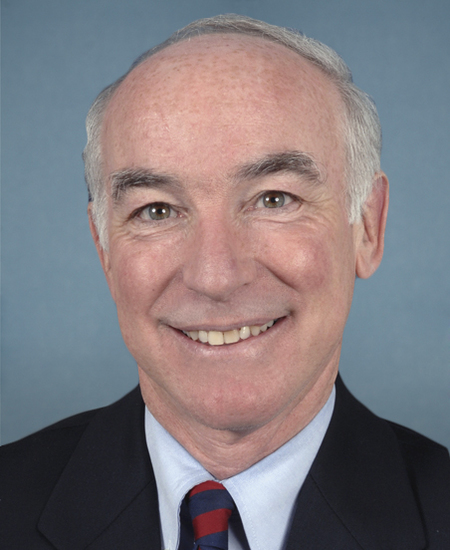
Rep. Joe Courtney
Sponsored bills
Maddy summaryThe SERVICE Act (HR 2829) modifies the Public Service Loan Forgiveness (PSLF) program to make it more accessible for borrowers. It reduces the required number of qualifying monthly payments from 120 to 96, expands what counts as a qualifying payment to include certain deferments and forbearances, and creates a "buyback" option to make up for missed payments. The bill also establishes an online portal for borrowers to track their progress toward forgiveness, clarifies that independent contractors can qualify for PSLF, and changes how consolidated loans are treated. This bill directly affects borrowers with federal student loans who work in public service jobs and are seeking loan forgiveness.
Maddy summaryThe New England Coastal Protection Act of 2025 prohibits the federal government from issuing new leases for oil and gas exploration, development, or production in offshore federal waters along the coasts of Maine, New Hampshire, Massachusetts, Rhode Island, and Connecticut. This bill directly affects the Department of the Interior (which manages offshore leasing) and any companies seeking to drill in these areas by blocking new lease permits. The key provision amends the Outer Continental Shelf Lands Act to explicitly ban the Secretary from granting such leases in the specified coastal region. As a result, the bill prevents new oil and gas drilling projects in these offshore waters, though it does not impact existing leases or activities.
Maddy summaryThe GOSAFE Act prohibits the sale, manufacture, transfer, and possession of gas-operated semi-automatic firearms and large capacity ammunition feeding devices (those holding more than 10 rounds). It defines gas-operated firearms as those that use gas from fired cartridges to cycle the action, requiring the Attorney General to publish a list of prohibited firearms within 180 days. The bill establishes a process for manufacturers to seek approval for new firearm designs before selling to civilians and creates a "Firearm Safety Trust Fund" to cover related costs. Certain firearms are exempt, including single-shot, muzzle-loading, and firearms with permanently fixed magazines holding 10 or fewer rounds. Violations could result in fines up to $5,000 or up to 12 months in prison.
Maddy summaryThe American Family Act (HR 2763) establishes a new refundable child tax credit that provides monthly payments to eligible families with children. It would pay $300 per month for each child under age 6 and $360 per month (120% of $300) for each child age 6 or older, with income limits of $150,000 for joint filers and $112,500 for other filers. The bill creates a "period of presumptive eligibility" to determine eligibility for monthly payments, allowing families to receive advance payments based on information from previous tax returns. This would directly affect millions of families with children who meet the income requirements, providing more consistent financial support throughout the year rather than an annual tax credit.
Maddy summaryHR 2799, the Closing the Bump Stock Loophole Act of 2025, prohibits the sale, possession, and modification of devices that increase the firing rate of semi-automatic firearms to mimic machine guns (commonly called "bump stocks"). It specifically bans manual, power-driven, or electronic devices designed to speed up firing, as well as modified firearms that achieve this effect. Owners of pre-existing modified firearms must register them within 120 days of the law's enactment, with exemptions for government entities and firearms already lawfully modified and registered before the bill passes. The bill does not restrict standard semi-automatic firearms or require registration of unmodified guns.
Maddy summaryHR 2753, the Hands Off Medicaid and SNAP Act of 2025, is a procedural bill that would prevent Congress from using budget reconciliation to cut Medicaid or SNAP benefits. It amends the Congressional Budget Act to block reconciliation bills or amendments that reduce Medicaid enrollment/benefits (under Social Security Act Title XIX) or SNAP eligibility/benefits (under the Food and Nutrition Act of 2008). This rule would apply until January 20, 2029, and only affects the budget reconciliation process, not the programs themselves. The bill does not change current benefit levels or eligibility rules for Medicaid or SNAP recipients.
Maddy summaryThe Raise the Wage Act of 2025 gradually increases the federal minimum wage from $9.50 to $17.00 per hour over six years, with annual adjustments based on median wage growth. It raises the base wage for tipped workers from $6.00 to $17.00 per hour, phasing out their separate minimum wage structure by 2029. The bill also eliminates special minimum wage certificates for disabled workers after 2029, requiring employers to pay the standard minimum wage. These changes apply to most covered workers, including tipped employees and those under 20, with specific transition timelines for each group.
Maddy summaryThis bill establishes federal minimum standards for collective bargaining rights for public employees and supervisors. The Federal Labor Relations Authority would determine if state laws provide these rights, and if not, would establish them for affected employees. The bill guarantees public employees the right to form unions, bargain collectively, and engage in concerted activities, while requiring public employers to recognize unions and put agreements in writing. It also prohibits strikes or lockouts that would disrupt emergency services. This would apply to public employees in states that don't meet the federal standards for collective bargaining rights.
Maddy summaryThis bill requires the Secretaries of Defense and Veterans Affairs to evaluate existing and ongoing research on menopause, perimenopause, and mid-life health for women in the military and as veterans. It directs them to identify gaps in knowledge about treatments, the impact of military service (including combat roles and exposure to toxins like burn pits), mental health effects, and healthcare provider training needs. Within 180 days of enactment, the departments must submit a report with findings and a strategic plan to address identified gaps and prioritize future research. The bill ensures this work supplements, rather than duplicates, existing efforts by the Department of Health and Human Services.