

Maddy summaryHR 3112, the Better CARE for Animals Act of 2025, strengthens enforcement of the federal Animal Welfare Act by requiring dealers and exhibitors to hold valid licenses for animal sales or transport (Section 4). It expands enforcement authority by allowing the Attorney General to sue violators for up to $10,000 per day, seize animals, and seek injunctions (Section 20), while clarifying that courts can address violations of related rules and regulations. The bill directly affects animal dealers, exhibitors, the USDA, and the Department of Justice, creating clearer pathways for holding violators accountable. Key provisions include updating definitions, broadening inspection powers to cover all regulations, and directing penalty funds toward temporary animal care costs during legal proceedings.
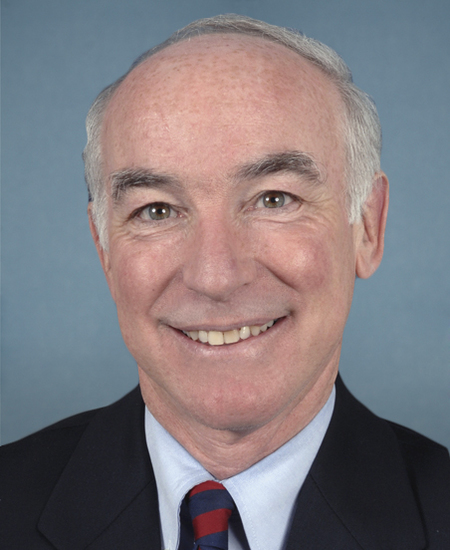
Rep. Joe Courtney
Sponsored bills
Assault Weapons Ban of 2025 This bill makes it a crime to knowingly import, sell, manufacture, transfer, or possess a semiautomatic assault weapon (SAW) or large capacity ammunition feeding device (LCAFD). The prohibition does not apply to a firearm that is (1) manually operated by bolt, pump, lever, or slide action, except for certain shotguns; (2) permanently inoperable; (3) an antique; (4) only capable of firing rimfire ammunition; or (5) a rifle or shotgun specifically identified by make and model. The bill also exempts from the prohibition the following, with respect to a SAW or LCAFD: importation, sale, manufacture, transfer, or possession related to certain law enforcement efforts, or authorized tests or experiments; importation, sale, transfer, or possession related to securing nuclear materials; and possession by a retired law enforcement officer. The bill permits continued possession, sale, or transfer of a grandfathered SAW, which must be securely stored. A licensed gun dealer must conduct a background check prior to the sale or transfer of a grandfathered SAW between private parties. The bill permits continued possession of, but prohibits sale or transfer of, a grandfathered LCAFD. Newly manufactured LCAFDs must display serial number identification. Newly manufactured SAWs and LCAFDs must display the date of manufacture. The bill also allows a state or local government to use Edward Byrne Memorial Justice Assistance Grant Program funds to compensate individuals who surrender a SAW or LCAFD under a buy-back program.
Maddy summaryThis resolution (HRES 237) is a procedural request, not a policy bill. It directs the President and Secretary of Education to hand over unredacted documents within 14 days about Department of Education downsizing, including staff reductions, closures, and actions related to the Secretary’s March 3, 2025, memo. The documents must cover compliance with key education laws like Title IX, IDEA, and the Family Educational Rights and Privacy Act. It does not change laws or affect the public but seeks transparency about executive branch decisions on the department’s structure.
Maddy summaryThe Equality Act (HR 15) amends federal civil rights laws to explicitly prohibit discrimination based on sexual orientation and gender identity in employment, housing, public accommodations, credit, and jury service. It expands existing protections under the Civil Rights Act of 1964 by adding sexual orientation and gender identity as protected characteristics under sex discrimination prohibitions. The bill clarifies that discrimination against LGBTQ people is a form of sex discrimination, consistent with the Supreme Court's Bostock decision, and adds specific definitions for gender identity and sexual orientation. This legislation directly affects businesses, employers, housing providers, financial institutions, and government entities that serve the public. The bill creates a more comprehensive legal framework to address discrimination that LGBTQ people face in multiple aspects of daily life.
Maddy summaryThe Protecting America's Workers Act (HR 3036) strengthens workplace safety protections for all employees, including public sector workers and voluntary emergency responders, by expanding coverage under the Occupational Safety and Health Act. Key provisions include enhanced whistleblower protections against retaliation for reporting safety concerns, mandatory employer reporting of work-related injuries and deaths, and increased civil penalties for violations (up to $70,000 per violation). The bill also establishes new rights for victims and families of workplace incidents, requiring employers to preserve evidence after fatalities, and creates procedures for faster resolution of safety complaints through improved inspection and enforcement mechanisms. These changes directly affect employers across all industries, employees reporting safety concerns, and families of workers injured or killed on the job.
Maddy summaryHR 3045, the West Bank Violence Prevention Act of 2025, imposes U.S. sanctions on foreign individuals and entities responsible for violence, displacement, or property destruction in the West Bank. It targets those directly involved in attacks on civilians, forced displacement, or property seizures, including settler leaders or officials of groups engaged in such activities. Key provisions require freezing assets of sanctioned individuals within U.S. jurisdiction and blocking their entry into the United States via visa restrictions. The law applies to foreign nationals meeting specific criteria outlined in the bill, not U.S. citizens or entities.
Maddy summaryHRES 344 is a congressional resolution requesting documents related to potential changes at the Administration for Community Living (ACL). It directs the President and Health and Human Services Secretary to provide unredacted records - including communications, legal opinions, and meeting notes - within 14 days about: (1) proposed ACL elimination, (2) downsizing or staff dismissals, (3) HHS’s March 2025 "Transformation" plan affecting ACL, and (4) whether reduced staff could still enforce key laws like the Older Americans Act. This resolution serves as an oversight tool for Congress to review the process, not as a policy change. It does not alter ACL’s structure or affect any constituents directly.
Maddy summaryHRES 340 is a ceremonial resolution recognizing April 2025 as "Community College Month" to celebrate the role of over 1,000 U.S. community colleges. It highlights these institutions' work in providing affordable higher education, workforce training, and economic support - serving 10.2 million students annually and contributing significantly to national economic growth (e.g., generating $898 billion in alumni income in 2020). The resolution emphasizes community colleges' accessibility (average $3,990 tuition for in-district students, 10-mile average student commute) and their role in workforce development across sectors like healthcare and manufacturing. As a non-binding recognition, it does not create new laws or funding.
Maddy summaryHR 2536, the New Producer Economic Security Act, establishes a new program within the Farm Service Agency to help new and small-scale farmers, ranchers, and forest owners access land, capital, and markets. The program provides grants and capital support to eligible community organizations (like tribal governments, cooperatives, or local nonprofits) to directly assist "qualified beneficiaries" - defined as individuals new to farming, operating on rented land, with low income, or facing economic hardship. Key provisions include funding for land acquisition, down payment assistance, succession planning, technical support (including translation services), and conservation practices. The program aims to strengthen food system security by increasing land access and supporting long-term business viability for underserved agricultural producers.
Maddy summaryThe Save Our Small Farms Act of 2025 amends crop insurance and disaster assistance programs to better support small and diversified farms. It creates a streamlined application process for small-scale producers, including those using urban production systems, direct-to-consumer models, and diversified farming operations. The bill establishes a revenue-based coverage option using IRS Schedule F tax forms, provides premium discounts (25% for first year, 50% for subsequent years) for farmers transitioning to whole farm insurance plans, and creates a new single index insurance policy to protect against weather-related income losses. The bill specifically targets support for beginning farmers, socially disadvantaged producers, veteran farmers, and those participating in the revenue-based option, with special considerations for farms with less than $350,000 in adjusted gross income.