

Choose Medicare Act This bill requires the Department of Health and Human Services (HHS) to establish public health insurance plans and addresses health insurance costs. Such public plans must be offered on health insurance exchanges and (1) meet the requirements of a qualified health plan; (2) cover benefits at the gold plan level; and (3) cover reproductive services, including abortions. Additionally, the bill makes a series of changes related to health insurance costs, including requiring employers to refer employees to health care navigators to assist with enrollment, establishing an annual limit on out-of-pocket costs for services under Medicare, providing HHS with the authority to negotiate prices under the Medicare prescription drug benefit program, expanding the premium-assistance credit by benchmarking the credit amount to the second-lowest cost gold plan and increasing the income threshold for eligibility, requiring qualified health plans to reduce cost sharing for low-income plan holders, providing funding for states to provide reinsurance to health insurance issuers and to assist individuals with out-of-pocket costs for plans offered through health insurance exchanges, applying the premium rate-setting requirements to large group health plans, and requiring HHS or states to take corrective actions to address unreasonable premium rates set by insurance issuers.
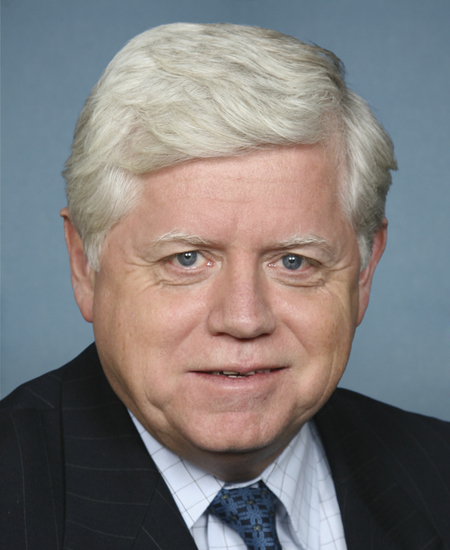
Rep. John B. Larson
Sponsored bills
Diversifying Investigations Via Equitable Research Studies for Everyone Trials Act or the DIVERSE Trials Act This bill requires activities to increase diversity in clinical trials. It also expands reporting by laboratories that test for and diagnose COVID-19 and requires a study on data collection and data sharing during public health emergencies. Specifically, the Food and Drug Administration (FDA) must issue guidance on decentralized clinical trials to promote meaningful demographic and geographic diversity in patient engagement, enrollment, and participation. Decentralized clinical trials include those executed through telemedicine or other digital technologies to allow for the remote collection and assessment of clinical trial data. The FDA may also work with foreign regulators to harmonize international regulations governing decentralized clinical trials and the use of digital health technology. In addition, the Department of Health and Human Services (HHS) may support community education, outreach, and recruitment activities for clinical trials of treatments for conditions that disproportionately impact populations underrepresented in clinical trials. The bill also specifies that drug or device manufacturers may provide, subject to some limits, free digital health technologies and other remuneration to patients in approved clinical trials without violating laws that address fraud and abuse in federal programs. Furthermore, laboratories that test for and diagnose COVID-19 must report additional demographic data, including information about social determinants of health. HHS must also contract with the National Academy of Medicine to study and propose a design for an interoperable platform to facilitate data sharing during public health emergencies.
This resolution supports (1) fair and equitable access to COVID-19 vaccines, and (2) investments in the vaccine supply chain and other efforts to meet global needs for vaccines.
Territory Economic Development Tax Credit Act This bill establishes a new tax credit for wages and tangible investments made by U.S. domestic corporations with branches operating in U.S. territories. It requires that 80% of credible income must be derived from a territory during a 3-year period, and 75% must come from an active trade or business in a territory. The credit is equal to 40% of eligible wages and benefits paid or provided to employees in the territory, subject to certain limitations.
Twenty-First Century Dams Act This bill addresses dam infrastructure and safety. First, the bill provides resources for programs related to state dam safety, the rehabilitation of high hazard potential dams, and the inspection of dams. In particular, the bill reauthorizes through FY2026 the National Dam Safety Program. In addition, the bill reauthorizes through FY2026 a program related to the rehabilitation of structural measures and a program related to water infrastructure. Next, the bill allows a new tax credit for maintaining and enhancing hydroelectric dams that is equal to 30% of the basis of any qualified dam safety, environmental, and grid resilience enhancement property placed in service in a taxable year. It also allows a 30% credit for qualified obsolete river obstruction removal expenditures for demolishing and removing certain nonpowered or hydroelectric dams. The bill directs the Department of the Army to establish a program to carry out dam removal projects. Further, the bill establishes the Dam Removal Council to (1) coordinate with participating federal agencies to annually notify all known dam owners of the availability of dam removal funding and provide guidance on the existing programs of participating agencies; (2) evaluate and submit to Army recommendations for dam removal projects, technical assistance programs, and funding allocations; and (3) develop a dam removal strategy. The bill requires certain dam assessments, including a joint assessment by the U.S. Geological Survey and the Department of Energy. The bill also authorizes specified federal agencies to undertake certain activities related to federal dam infrastructure.
9/11 Responder and Survivor Health Funding Correction Act This bill increases funding for and otherwise modifies a federal program that provides medical monitoring and treatment to responders and survivors who suffer from health conditions related to the September 11, 2001, attacks on the World Trade Center. Among the changes, the bill allows certain health care providers other than physicians to determine whether an individual's health condition is related to the attacks, and it establishes a research program to study the impacts of the attacks on health and educational outcomes of individuals who were 21 years of age or younger when the attacks occurred.
Children's Mental Health Infrastructure Act of 2021 This bill provides funding through FY2026 to the Health Resources and Services Administration for grants to improve the capacity of children's hospitals to provide pediatric behavioral health services, including by modernizing sites of care and enhancing telehealth capabilities.
Helping Kids Cope Act of 2021 This bill provides funding through FY2026 to the Health Resources and Services Administration (HRSA) for grants to enhance access to and provider training in pediatric behavioral health care. Specifically, HRSA must award grants to pediatricians, children's hospitals, and other providers to support pediatric behavioral health integration and coordination within communities. Grant-funded activities may include hiring community navigators to assist families in accessing appropriate services, incorporating behavioral health services in pediatric practices, and delivering services via telehealth. In addition, HRSA must award grants to children's hospitals to expand training for providers in the pediatric behavioral health workforce.
Elder Justice Reauthorization and Modernization Act of 2021 This bill reauthorizes, provides funding through FY2025 for, and otherwise makes changes to programs for preventing, detecting, and treating abuse, neglect, and exploitation of older adults. Specifically, the bill provides funding for states and localities to enhance adult protective services and long-term care ombudsman programs. Additionally, the bill modifies an existing long-term care workforce grant program, including by requiring that grant recipients use funds to provide employees with wage subsidies, educational assistance, and access to affordable child care and transportation. Furthermore, the bill establishes new grant programs for states to (1) link health care and social services for older adults, including through medical-legal partnerships and legal services hotlines; and (2) prevent and address social isolation among older adults and individuals with disabilities. The bill also provides funding for reporting by the Department of Health and Human Services on the effectiveness of various programs and activities in addressing abuse, neglect, and exploitation of older adults.
Share Holder Allocation for Rewards to Employees Plan Act or the SHARE Plan Act This bill requires certain corporations (i.e., publicly traded domestic corporations and domestic corporations with more than 500 employees) to maintain a SHARE plan for their employees as a condition of eligibility for capital gains rates. The bill defines a SHARE plan as a plan requiring such corporations to make periodic distributions of their common stock to participating employees. The bill excludes from the gross income of employees participating in a SHARE plan, for income tax purposes, SHARE plan stock received by such employees.