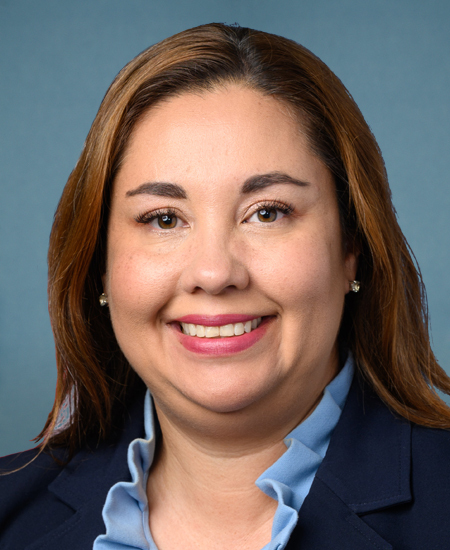
Photo of Yadira Caraveo
D United States House · District 8 · Colorado

Rep. Yadira Caraveo

Compare
Total votes
1,210
all sessions
Attendance
97%
35 missed
Near the chamber average
With party
89%
of cast votes
Lower than 83% of chamber peers
Bipartisan score
6%
crosses aisle rarely
Higher than 79% of chamber peers
Sponsored
659
bills & resolutions
Higher than 90% of chamber peers
Committees
0
assignments
659 bills and resolutions

Sponsored bills

Total
659
Primary
41
Co-sponsor
618
This page
659
matching current filters
Co-sponsor HR 1587
In committee · United States House · Co-sponsor
Making Insulin Affordable for All Children Act

Maddy summaryThis bill requires private health insurance plans and Medicaid to cover selected insulin products for individuals under 26 years old without deductibles and with cost-sharing capped at $35 per 30-day supply or 25% of the negotiated price (whichever is lower). It defines "selected insulin products" as at least one of each type (e.g., rapid-acting, long-acting) and form (e.g., vial, pump) of insulin that plans select. The cost-sharing for these products counts toward the plan’s annual out-of-pocket maximum, and the requirement applies to all private plans and Medicaid starting January 1, 2024. Plans are not required to cover insulin from out-of-network providers at the same cost-sharing level.

In committee Dec 17, 2024 1 co-sponsor
Co-sponsor HR 1536
In committee · United States House · Co-sponsor
LEAP Act

Maddy summaryThe LEAP Act creates a new tax credit for employers with registered apprenticeship programs, offering $1,500 per qualifying apprentice employee above a threshold based on the employer's average apprenticeship hires over the previous three years, limited to two years per employee. It excludes most construction industry employers (NAICS 23) unless they hire pre-apprenticeship graduates and sponsor apprenticeships. The bill also requires federal agencies to develop a plan to reduce printing costs by increasing online document availability and to disclose printing costs for government publications. This applies to apprenticeship programs registered with the Department of Labor.

In committee Dec 17, 2024 1 co-sponsor
Co-sponsor HR 1488
In committee · United States House · Co-sponsor
Affordable Insulin Now Act

Maddy summaryThe Affordable Insulin Now Act (HR 1488) requires health insurance plans and issuers to cover specific insulin products with cost-sharing capped at $35 per 30-day supply or 25% of the negotiated price, whichever is lower, starting in 2024. It directly affects people with diabetes who rely on insulin by limiting out-of-pocket costs for covered products. The bill mandates coverage of all insulin types (rapid-acting, long-acting, etc.) and dosage forms (vials, pumps, etc.) as selected by the plan. This applies to both group and individual health insurance plans under the Public Health Service Act, Internal Revenue Code, and ERISA, with cost-sharing counting toward annual deductibles.

In committee Dec 17, 2024 1 co-sponsor
Co-sponsor HR 1526
In committee · United States House · Co-sponsor
Reducing Hereditary Cancer Act

Maddy summaryThis bill expands Medicare coverage for hereditary cancer prevention and management. It requires Medicare to cover genetic testing for individuals with a personal or family history of hereditary cancer mutations, as defined by evidence-based guidelines from organizations like the National Comprehensive Cancer Network. The bill also mandates coverage for risk-reducing surgeries (like mastectomies or oophorectomies) when medically appropriate, and increases the frequency of recommended cancer screenings (such as mammograms, colonoscopies, and breast MRI) to at least annually for those with confirmed hereditary cancer gene mutations. These changes apply to Medicare beneficiaries with specific hereditary cancer risk factors, effective upon the bill's enactment.

In committee Dec 17, 2024 1 co-sponsor
Co-sponsor HR 1401
In committee · United States House · Co-sponsor
END FENTANYL Act

Maddy summaryHR 1401, the END FENTANYL Act, requires U.S. Customs and Border Protection (CBP) to review and update its field inspection manuals at least every three years. This ensures CBP's border inspection practices consistently address new smuggling methods used to hide drugs like fentanyl and human trafficking. The bill mandates that CBP submit reports to specific congressional committees after each update, detailing the changes made to inspection policies. This directly affects CBP officers and border security operations by standardizing how they detect and respond to evolving smuggling tactics.

In committee Dec 17, 2024 1 co-sponsor
Co-sponsor HR 1406
In committee · United States House · Co-sponsor
Sustainable Cardiopulmonary Rehabilitation Services in the Home Act

Maddy summaryThis bill makes permanent Medicare coverage for cardiac and pulmonary rehabilitation services delivered via telehealth in patients' homes, which were temporarily allowed during the pandemic. It removes geographic restrictions that previously required in-person visits or limited services to specific locations like clinics. The change directly affects Medicare beneficiaries needing heart or lung rehabilitation and healthcare providers offering these programs. It ensures home-based telehealth visits for cardiac, intensive cardiac, and pulmonary rehabilitation receive the same coverage as in-clinic services under Medicare.

In committee Dec 17, 2024 1 co-sponsor
Co-sponsor HR 834
In committee · United States House · Co-sponsor
Rural Physician Workforce Production Act of 2023

Maddy summaryThe Rural Physician Workforce Production Act of 2023 creates a new payment system to support medical residency training in rural areas. It allows hospitals, critical access hospitals, and rural emergency hospitals to receive additional payments for residents who train at least 8 weeks in rural locations, with payments based on national medical training costs adjusted annually. The bill requires hospitals to pay residents' salaries during rural training and defines "rural training location" using census data (rural areas, rural-urban commuting area codes, or locations near sole community hospitals). This program is designed to increase rural physician training without affecting existing residency program limits or Medicare funding for medical education. Payments are budget-neutral, meaning they won't increase overall Medicare spending on medical education.

In committee Dec 17, 2024 1 co-sponsor
Co-sponsor HR 11
In committee · United States House · Co-sponsor
Freedom to Vote Act

Maddy summary# Summary of Proposed Election Reform Legislation This document outlines a comprehensive federal election reform bill with multiple titles addressing various aspects of voting rights, election administration, and election integrity. ## Key Provisions: ### 1. Democracy Restoration (Title I) - Restores voting rights to citizens with felony convictions who are not serving a felony sentence in a correctional institution - Requires states to notify individuals of restored voting rights upon release from prison, completion of probation, or sentencing - Prohibits states from conditioning voting rights on payment of fines or fees - Requires states to provide notification of voting rights to citizens with criminal convictions ### 2. Voter Identification Requirements (Title II) - Establishes a broad definition of acceptable identification documents (including utility bills, bank statements, student IDs, etc.) - Requires states to provide free identification to voters who lack one - Authorizes $5 million annually for 5 years to cover costs of providing identification - Sets procedures for provisional voting when identification is not presented ### 3. Voter List Maintenance (Title III) - Prohibits "voter caging" (using undeliverable mail to challenge voter registration) - Bans use of unverified match lists to remove voters from registration lists - Sets strict conditions for removing voters from registration lists - Requires states to provide notice to voters removed from registration lists ### 4. Election Integrity Measures (Title V) - Prohibits hindering or interfering with voter registration (Section 2001) - Restricts removal of local election administrators (Section 3001) - Prohibits harassment of election workers (Section 3101) - Bans deceptive practices in elections (Section 3201), including false statements about voting locations, eligibility, or endorsements ### 5. Additional Provisions - Requires states to provide notice of voting rights restoration to citizens - Establishes private rights of action for violations of the law - Sets criminal penalties for violations (up to $100,000 fines and 5 years imprisonment) - Includes provisions for federal funding to be contingent on compliance with voting rights restoration This legislation represents a significant overhaul of voting rights and election administration procedures across the United States, with a focus on expanding voting access, protecting voter rights, and ensuring fair election administration.


In committee Dec 17, 2024 1 co-sponsor
Co-sponsor HR 549
In committee · United States House · Co-sponsor
Metastatic Breast Cancer Access to Care Act

Maddy summaryHR 549, the Metastatic Breast Cancer Access to Care Act, removes waiting periods for disability and Medicare coverage for people diagnosed with metastatic breast cancer. Specifically, it amends Social Security Act sections to allow immediate eligibility for disability insurance benefits (eliminating the standard waiting period) and immediate Medicare coverage (waiving the 24-month waiting period) for these patients. The bill directly affects individuals with metastatic breast cancer who would otherwise face delays in accessing critical benefits. These changes apply to applications filed or benefits beginning after the bill's enactment date. The law makes no other policy changes beyond these specific eligibility adjustments.

In committee Dec 17, 2024 1 co-sponsor
Co-sponsor HR 561
In committee · United States House · Co-sponsor
EACH Act of 2023

Maddy summaryThe EACH Act of 2023 would require federal health programs - including Medicaid, Medicare, the Indian Health Service, and TRICARE - to cover abortion services without restrictions. It repeals a provision in the Affordable Care Act that allowed states to limit abortion coverage in health insurance plans sold through state marketplaces. The bill also prohibits the federal government from restricting abortion coverage in private health insurance plans. This would directly affect millions of people, particularly low-income individuals and people of color, who are disproportionately enrolled in Medicaid and currently face barriers to abortion care due to coverage restrictions.

In committee Dec 17, 2024 1 co-sponsor
Showing 61 to 70 of 659 bills
Previous 1 … 6 7 8 … 66 Next