

Maddy summaryHR 1831 would award Billie Jean King a Congressional Gold Medal to honor her lifelong advocacy for equal rights in sports and society. The bill directs the Secretary of the Treasury to strike the medal and have it presented by congressional leaders, recognizing her pivotal role in advancing women's equality through tennis (including founding the Women’s Tennis Association and securing equal prize money) and her broader impact on society through initiatives like Title IX advocacy.
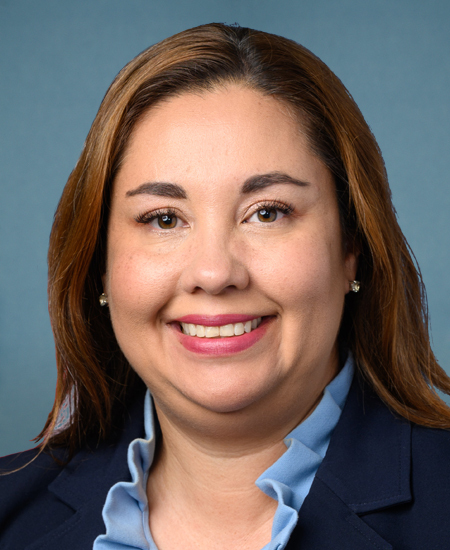
Rep. Yadira Caraveo
Sponsored bills
Maddy summaryThis bill changes how U.S. foreign aid is provided to international health organizations. It prevents U.S. agencies from denying aid to foreign non-governmental organizations (NGOs) solely because they offer health services (like counseling or referrals) using their own funds, as long as those services follow local laws. It also stops applying stricter rules about how foreign NGOs can use their own funds for advocacy compared to U.S. NGOs receiving similar aid. The bill directly affects foreign health-focused NGOs that rely on U.S. foreign assistance funding.
Maddy summaryHR 1777 establishes a $50 million annual fund (2024-2028) for collaborative defense research between the U.S. and Israel in emerging technologies like artificial intelligence, cybersecurity, directed energy, and automation. The bill directly supports U.S. and Israeli military forces by enabling joint development of new warfare capabilities to address current and future defense challenges. Key provisions include authorizing $50 million per year for collaborative projects, building on existing U.S.-Israel defense partnerships like counter-tunnel and counter-drone systems. This funding aims to strengthen bilateral defense innovation without altering existing military aid structures.
Maddy summaryHR 1637 establishes a Medicare pilot program called the Dementia Care Management Model to improve care for beneficiaries with Alzheimer's disease or related dementia. It requires participating providers to offer comprehensive services - including continuous monitoring, personalized care plans, medication management, and caregiver support - while excluding hospice care. Payments are made monthly based on patient needs (with pathways for uncomplicated vs. complex cases) and include quality-based bonuses, with no cost-sharing for beneficiaries. The model tests whether this approach improves health outcomes, care quality, and caregiver support while reducing Medicare spending, targeting Medicare beneficiaries not in nursing homes or hospice who meet specific diagnosis and enrollment criteria.
This resolution expresses support for the designation of Clela Rorex Day to recognize Clela Rorex for issuing the first same-sex marriage license in the United States and becoming a pioneer for civil rights and same-sex marriage.
Maddy summaryThe Pell Grant Sustainability Act adjusts Federal Pell Grants to keep pace with rising college costs by indexing them annually to inflation. It directly affects low-income undergraduate students who receive Pell Grants, ensuring the maximum award amount increases each academic year based on the Consumer Price Index. The bill replaces previous fixed amounts with a new formula: starting in 2023-2024, grants will be set at $6,895 (or the prior year's amount if higher), then adjusted yearly by the inflation rate. This change aims to restore the grant's purchasing power, which covered 80% of costs in 1974-75 but only 30% by 2020-21.
Maddy summaryThe Loan Forgiveness for Educators Act would provide full student loan forgiveness to educators who work in high-need schools or early childhood education programs. After completing 5 years of qualifying service, educators would have 100% of their outstanding student loans forgiven, with the option for monthly loan forgiveness during their service period. The bill defines "high-need schools" as those with over 30% of students in poverty or identified for improvement, and includes special provisions for educators working in Native American, Tribal, and Bureau of Indian Education schools. Educators could count service completed before the law's enactment toward their 5-year requirement, and the program would cover both FFEL and Direct Loan programs.
Maddy summaryThe Outdoors for All Act establishes a federal grant program to fund outdoor recreation projects in underserved communities. It authorizes the Secretary of the Interior to award grants to eligible entities (like states, cities, tribal organizations, or nonprofits) for acquiring land, developing parks, or renovating outdoor facilities in qualifying urban areas (population 25,000+ or tribal lands) or low-income communities (where 30%+ of residents have incomes at or below 80% of local median income or 200% of the federal poverty line). Grants require a 100% cash or in-kind match (with limited waivers), prohibit funding for indoor facilities or maintenance, and prioritize projects enhancing park access, engaging youth, creating jobs, or improving environmental benefits like reducing urban heat islands. The program mandates annual reporting and focuses on concrete community outcomes rather than speculative results.
Maddy summaryThis resolution expresses congressional support for designating March 21, 2023, as "National Agriculture Day." It symbolically recognizes agriculture's economic importance as a major U.S. industry, celebrating its impact on jobs and communities. The bill does not create new laws, funding, or regulations - it is a non-binding statement of support. It directly affects the agricultural sector by highlighting its contributions through a formal congressional acknowledgment.
Correcting Guam's History in the PACT Act This bill expands eligibility for a presumption of service-connection for specified diseases associated with exposure to certain herbicide agents. Under a presumption of service-connection, specific conditions diagnosed in certain veterans are presumed to have been caused by the circumstances of their military service. Health care benefits and disability compensation may then be awarded. Under the bill, service performed in Guam or its territorial waters between August 15, 1958, and July 31, 1980, provides a veteran who has a specified disease that is associated with exposure to certain herbicide agents with eligibility for a presumption of service-connection. (Under current law, the eligible time frame for service in Guam is between January 9, 1962, and July 31, 1980.)