

Providing for Unhoused People with Pets Act of 2023 or the PUPP Act of 2023 This bill permits the Department of Agriculture to award grants for interim and permanent housing that accommodates individuals (or families) who are homeless and have pets. Entities eligible for the grant include local governments, nonprofits, and entities that house or shelter homeless individuals. Additionally, grant recipients must make available supportive services and basic veterinary care.
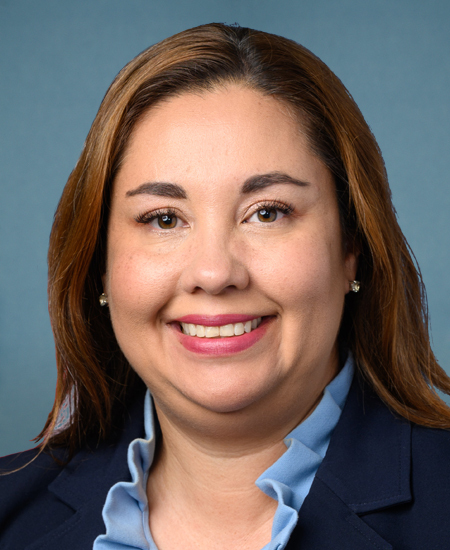
Rep. Yadira Caraveo
Sponsored bills
Maddy summaryHR 3904, the "Crop Insurance for Future Farmers Act," increases federal crop insurance subsidies for beginning farmers and ranchers. It revises the definition of a "beginning farmer" from 5 to 10 crop years of experience, allowing more new operators to qualify. The bill also establishes a tiered subsidy system: new farmers receive 15 percentage points higher subsidies for their first two years, 13 points for the third year, 11 points for the fourth year, and 10 points for years five through ten. This directly affects new agricultural producers by making crop insurance more affordable during their early years of operation.
Maddy summaryThis bill prohibits federal involvement in commercial greyhound racing, live lure training, and open field coursing by banning interstate activities related to these practices. It makes it unlawful to conduct betting on greyhound races (including remote gambling), use live animals as bait, or transport animals for these purposes. The law specifically targets the declining greyhound racing industry (now operating at only two tracks in West Virginia), banning federal facilitation of betting, live bait use, and interstate transport of animals for racing or training. It does not affect horse racing or state laws already prohibiting these activities in most states.
Maddy summaryThis bill establishes a USDA initiative (2024-2028) to prioritize funding for childcare improvements in rural and agricultural communities. It directs existing USDA programs - like the Essential Community Facilities program and RISE grants - to give priority to projects addressing childcare availability, quality, or cost in farming-dependent counties (using 2015 ERS county codes). Qualified applicants must be licensed childcare providers meeting state health/safety standards. The USDA must evaluate funded projects and report on impacts within three years.
Maddy summaryThis bill establishes a federal pilot program to help homeless individuals access SNAP (Supplemental Nutrition Assistance Program) benefits. It authorizes $12.5 million annually (2024-2029) to fund grants for community organizations, homeless service providers, and public housing agencies to provide direct outreach, application assistance, transportation to SNAP offices, and staff training. The program specifically targets barriers like lack of documentation and awareness, focusing on helping homeless households enroll in SNAP by connecting them with existing resources. Grantees must report annually on outcomes, including the number of homeless individuals served and enrollment impacts. The pilot runs for up to 5 years, with funds supplementing (not replacing) existing state/local programs.
This concurrent resolution opposes actions that undermine Israel's future as a Jewish, democratic state. The resolution expresses that democracy is at the core of the special relationship between the United States and Israel, and that Congress stands with all Israelis seeking to defend liberal democracy, judicial review, and independent political institutions.
Maddy summaryHR 5050, the Cryptocurrency Accountability Act, requires Members of Congress (and their spouses or dependent children) to report cryptocurrency transactions exceeding $1,000 and annual holdings. It mandates annual disclosure of purchases, sales, or exchanges in cryptocurrency, along with the value of holdings, with reports due within 45 days of transactions. Penalties include fines of at least $500 or 5% of the transaction value for late reporting, and up to $66,000 for intentional false reporting or omissions. The bill focuses solely on transparency for lawmakers’ cryptocurrency activities, not on regulating the cryptocurrency market itself.
Maddy summaryHR 4963, the Tax Fairness for Workers Act, would restore tax deductions for certain employee expenses. It creates an above-the-line deduction for union dues and expenses paid by wage-earning employees, and allows miscellaneous itemized deductions for other work-related expenses (like uniforms or supplies) that were previously disallowed after 2017 tax law changes. These provisions directly affect employees who pay union dues or incur qualifying job-related costs. The bill amends specific sections of the Internal Revenue Code to make these deductions available for taxable years beginning after December 31, 2022. It does not change tax rates or provide new benefits, only reinstating previously eliminated deductions for eligible workers.
Protect Innocent Victims Of Taxation After Fire Act This bill excludes from gross income, for income tax purposes, any amount received after 2019 and before 2026 by an individual taxpayer as a qualified wildfire relief payment. The bill defines such payment as compensation for expenses or losses incurred as a result of a federally declared forest or range fire disaster.
Maddy summaryThe Break the Cycle of Violence Act establishes federal grants to fund community-based violence intervention programs in areas disproportionately affected by gun violence, particularly communities of color. It authorizes $300 million for 2024, increasing to $700 million annually through 2031, for evidence-informed strategies including trauma-responsive care, violence interruption, and economic opportunities for opportunity youth (ages 16-25 not in school or employment). The bill requires grantees to implement culturally competent services targeting individuals at high risk of violence or victimization, with a focus on reducing gun violence without contributing to mass incarceration. It creates a National Community Violence Response Center to coordinate data collection, research, and best practices for community violence prevention. The legislation also includes provisions for job training and workforce development programs through the Department of Labor to connect opportunity youth with in-demand occupations.