

Maddy summaryHR 5246, the National Agricultural Crisis Hotline Act of 2023, creates a federally funded 24/7 crisis hotline specifically for farmers, ranchers, farm workers, and their families facing mental health or substance use challenges. The hotline must provide real-time voice and texting support, staffed by licensed professionals trained in agricultural mental health stress, with 24-hour follow-up calls and translation services. It requires collecting detailed call data and partnering with existing farm helplines, the 988 Suicide Lifeline, and USDA programs to connect callers to resources. The bill appropriates $19 million annually (starting 2024) for the hotline's operation, including $4 million yearly for the hotline itself, and mandates an annual effectiveness report to Congress. This directly addresses the documented crisis of elevated suicide rates among agricultural workers by expanding accessible, specialized mental health support.
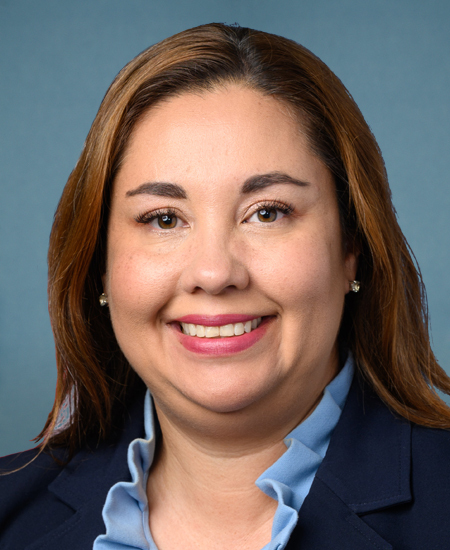
Rep. Yadira Caraveo
Sponsored bills
Maddy summaryHRES 700 is a non-binding congressional resolution expressing support for designating September 2023 as "National Prostate Cancer Awareness Month." It highlights that prostate cancer affects 1 in 8 U.S. men and has significantly higher mortality rates among African-American men, while urging increased public awareness, early screening promotion, and research funding. The resolution does not create new laws or allocate funds but encourages the public, healthcare providers, and organizations to promote awareness and support efforts to improve detection and treatment. It aligns with existing federal cancer research investments, such as the $7.1 billion allocated to the National Cancer Institute in 2023.
Maddy summaryThis bill amends the Higher Education Act to require all U.S. colleges and universities receiving federal financial aid to create detailed anti-harassment policies covering physical, online, and institution-sponsored settings. It mandates policies prohibiting harassment based on race, sex (including sexual orientation and gender identity), disability, religion, and other protected characteristics, including harassment via institutional email, computers, or electronic messaging. The bill also establishes a $50 million annual grant program to fund colleges developing prevention programs, victim support services, and training for students and staff on recognizing and addressing harassment. These policies and grants must comply with existing civil rights laws like Title IX but add specific requirements for reporting and prevention.
Maddy summaryThe FACTS Act (HR 5625) creates a pilot program to fund partnerships between schools and public health agencies to prevent synthetic opioid misuse among students. It authorizes $50 million annually to support evidence-based prevention programs, including professional development for school staff, student workshops, and community outreach. The bill requires schools to collect data on synthetic opioid prevalence and mandates that school health centers stock naloxone. It also amends national surveys to track youth opioid use patterns and establishes an interagency task force to coordinate prevention efforts. These provisions aim to address the growing crisis of synthetic opioid misuse among young people through education, data collection, and prevention programs.
Maddy summaryHR 5652, the Stop Overdose in Schools Act, establishes a federal pilot program to help schools respond to opioid overdoses. It provides grants to school districts to train staff (like resource officers and nurses) in administering opioid reversal medications, purchase necessary kits, and raise awareness about opioid use disorder. The bill prioritizes rural schools (50% of grants) and districts in areas with high youth overdose rates (the other 50%). It also sets aside $5 million annually for fiscal years 2024 and 2025 to fund this program, requiring grant recipients to train designated school personnel in opioid reversal agent use.
Maddy summaryHR 5604, the Agricultural Right to Repair Act, requires farm equipment manufacturers (OEMs) to provide farmers and independent repair shops with necessary repair materials - including documentation, parts, software, tools, and farm equipment data - on "fair and reasonable terms." This directly affects farmers who own equipment and independent repair providers who fix it, ensuring they can access the same resources as authorized repair shops without restrictive conditions like mandatory registration or exclusive partnerships. Key provisions mandate that manufacturers cannot impose unreasonable costs, restrict how materials are used, or hinder access to diagnostic tools, while also allowing limited circumvention of security features for repair purposes under copyright law. The bill is enforced by the Federal Trade Commission (FTC) and explicitly protects safety systems and emissions compliance, prohibiting modifications that would deactivate safety features or violate environmental laws.
Maddy summaryHRES 714 is a formal recognition resolution celebrating Hispanic Restaurant Week (September 22-October 3, 2023) and acknowledging the economic contributions of Hispanic restaurant owners and employees to the U.S. restaurant industry. It highlights statistics showing Hispanic individuals own a significant share of restaurants and workforce participation in the sector, but does not create new policies, funding, or regulations. This resolution is purely ceremonial, expressing congressional appreciation without any legislative impact.
Maddy summaryThe Earn to Learn Act establishes a federal grant program to help low-income students save for college or career training through matched savings accounts. Students must save $100 initially, then for every additional dollar they save, the program adds $8 to their account, while requiring mandatory financial education and coaching on budgeting, debt management, and savings habits. Administered by states or nonprofits using federal grants, the program directly affects low-income students admitted to eligible colleges or career schools, aiming to reduce reliance on student loans by promoting early savings and financial literacy. The initiative includes evaluation requirements to assess its impact over five years with $100 million in funding.
Maddy summaryHR 5354, the Small Farm Conservation Act, creates a dedicated subprogram within the Environmental Quality Incentives Program (EQIP) to provide targeted conservation support for small-scale farms. It allocates $100 million annually (2024-2028) specifically for farms under 50 acres or meeting median state farm size limits, with 35% of funds for tailored technical assistance (including hiring specialized staff) and 65% for direct financial payments. Key provisions include a minimum $2,500 payment per producer, a 50% payment increase for soil health systems, and a streamlined, continuous enrollment process to reduce administrative barriers. The bill prioritizes historically underserved farmers - such as veterans, beginning farmers, and those in high-poverty areas - while requiring annual reporting on program outcomes.
Maddy summaryHR 5359, the Rural Development Modernization Act, raises population thresholds for rural communities to qualify for USDA programs like broadband, water infrastructure, and housing assistance. It increases limits from 20,000 to 50,000 residents for broadband/telemedicine, from 5,000 to 50,000 for telephone loans, and adjusts water/wastewater thresholds to 30,000-50,000. The bill expands eligibility for rural communities previously excluded due to population size, while clarifying that military bases and incarcerated populations are excluded from rural designations. It also updates program rules to explicitly include U.S. territories and freely associated states like the Marshall Islands and Palau.