

America's Cultivation of Hope and Inclusion for Long-term Dependents Raised and Educated Natively Act of 2021 or the America's CHILDREN Act of 2021 This bill provides lawful permanent resident status to certain college graduates who entered the United States as children and addresses other immigration-related issues. Specifically, this bill allows an alien to apply for lawful permanent resident status if the alien (1) was lawfully admitted into the United States as a dependent child of an alien on a temporary worker visa, (2) was in the United States with such status for at least four years, (3) has graduated from an institution of higher education in the United States, and (4) is not deportable or otherwise inadmissible. In addition, the alien must have been lawfully present in the United States for at least 10 years at the time of the application. The bill also modifies various provisions related to the calculation of an alien's age for immigration purposes and the priority date of certain immigration-related applications.
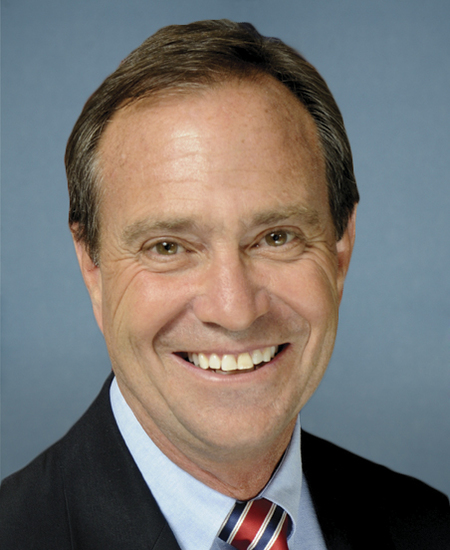
Rep. Ed Perlmutter
Sponsored bills
Bankruptcy Venue Reform Act of 2021 This bill limits where a non-individual debtor (e.g., a corporate debtor) may file for bankruptcy. Specifically, these debtors must file in the district court for the district in which the principal place of business or principal assets of the debtor are located. Such a debtor may also file in a district where there is a pending bankruptcy case concerning an affiliate that has a certain level of control or ownership of the debtor (e.g., if the affiliate is a controlling shareholder of the debtor), if that pending case is in a proper venue under this bill. Under current law, these debtors may also file where they are domiciled (i.e., incorporated) or where there is a bankruptcy case pending concerning an affiliate, general partner, or partnership. For certain debtors who are issuers of securities, their principal place of business is defined in the bill as the address of the entity's principal executive office as provided in specified Securities and Exchange Commission filings.
Disarm Hate Act The bill expands the categories of persons who are prohibited from receiving or possessing a firearm. Specifically, it prohibits firearm sale or transfer to and receipt, possession, shipment, or transport by a person (1) who has been convicted of a misdemeanor hate crime, or (2) who has received an enhanced hate crime misdemeanor sentence.
H-2B Returning Worker Exception Act of 2021 This bill modifies the H-2B (temporary nonagricultural workers) nonimmigrant visa program, including by exempting certain workers from an annual numerical limit on such visas and requiring civil penalties for program violations. Under this bill, if a worker seeking a H-2B visa has been counted toward the 66,000 annual cap on such visas in one of the three preceding fiscal years, that worker shall not be counted against the cap again. Furthermore, the Department of Homeland Security (DHS) must impose a civil monetary penalty on an employer for (1) failing to meet requirements related to an H-2B visa petition, or (2) making a willful misrepresentation of material fact in such a petition. DHS must also ensure the establishment of an electronic platform (1) for employers to submit and request approval of an H-2B petition, and (2) to act as a single point of access for applicants and the relevant government agencies. The Department of Labor must maintain a publicly available online database of all job orders by H-2B employers. Furthermore, Labor may take certain actions to enforce program requirements, such as imposing penalties and seeking injunctions. The bill provides statutory authority for the current practice of limiting the program to workers who are nationals of countries approved by DHS. DHS may make exceptions to this limitation in individual cases if it is in the U.S. interest to do so. DHS shall select approved countries based on various factors, such as the rate of overstay by H-2B visa holders from each country.
Conrad State 30 and Physician Access Reauthorization Act This bill modifies the Conrad 30 Waiver program, which incentivizes qualified foreign physicians to serve in underserved communities. It also extends statutory authority for the program for three years from this bill's enactment. Aliens coming to the United States under a J-1 nonimmigrant visa to receive medical training typically must leave the country and reside for two years abroad before being eligible to apply for an immigrant visa or permanent residence. The Conrad program waives this requirement for individuals who meet certain qualifications, including serving for a number of years at a health care facility in an underserved area. The bill increases the number of waivers that a state may obtain each fiscal year from 30 to 35 if a certain number of waivers were used the previous year, and provides for further adjustments depending on demand. An alien physician may be employed at an academic medical center to meet the Conrad program's employment requirements if the alien's work is in the public interest, even if the medical center is not in an underserved area. Employment contracts for alien physicians under the Conrad program shall contain certain information, such as the maximum number of on-call hours per week the physician shall have to work. Certain alien physicians (along with the physician's spouse and children) shall be exempt from the direct annual numerical limits on immigration, including those physicians that have met certain requirements related to visas for physicians to serve in underserved areas.
Extreme Risk Protection Order Act of 2021 This bill establishes grants to support the implementation of extreme risk protection order laws at the state and local levels, extends federal firearms restrictions to individuals who are subject to extreme risk protection orders, and expands related data collection. Extreme risk protection order laws, or red flag laws, generally allow certain individuals (e.g., law enforcement officers or family members) to petition a court for a temporary order that prohibits an at-risk individual from purchasing and possessing firearms. Among its provisions, the bill directs the Office of Community Oriented Policing Services within the Department of Justice to establish a grant program to help states, local governments, Indian tribes, and other entities implement extreme risk protection order laws; extends federal restrictions on the receipt, possession, shipment, and transportation of firearms and ammunition to individuals who are subject to extreme risk protection orders; and requires the Federal Bureau of Investigation to compile (and later destroy) records from federal, tribal, and state courts and other agencies that identify individuals who are subject to extreme risk protection orders.
Major Richard Star Act This bill provides that combat-disabled uniformed services retirees with fewer than 20 years of creditable service may concurrently receive, without reduction, veterans' disability compensation and retired pay or combat-related special compensation.
Keep Americans Safe Act This bill establishes a new criminal offense for the import, sale, manufacture, transfer, or possession of a large capacity ammunition feeding device (LCAFD). The bill does not prohibit certain conduct with respect to an LCAFD, including the following: importation, sale, manufacture, transfer, or possession related to certain law enforcement efforts, or authorized tests or experiments; importation, sale, transfer, or possession related to securing nuclear materials; and possession by a retired law enforcement officer. The bill permits continued possession of, but prohibits sale or transfer of, a grandfathered LCAFD. Newly manufactured LCAFDs must display serial number identification and the date of manufacture. Additionally, the bill allows a state or local government to use Edward Byrne Memorial Justice Assistance Grant Program funds to compensate individuals who surrender an LCAFD under a buy-back program.
This bill designates the facility of the United States Postal Service located at 3900 Crown Road Southwest in Atlanta, Georgia, as the John R. Lewis Post Office Building.
Maximizing Outcomes through Better Investments in Lifesaving Equipment for (MOBILE) Health Care Act This bill allows a health center that currently receives funding through a Health Resources & Services Administration Health Center Program grant to use a New Access Point grant to set up a mobile unit regardless of whether the health center also establishes a permanent health care delivery site. New Access Point grants help health centers establish new delivery sites to provide comprehensive primary care to medically underserved populations. Under current law, health centers may only use the grants to set up a mobile unit if they also establish a permanent site.