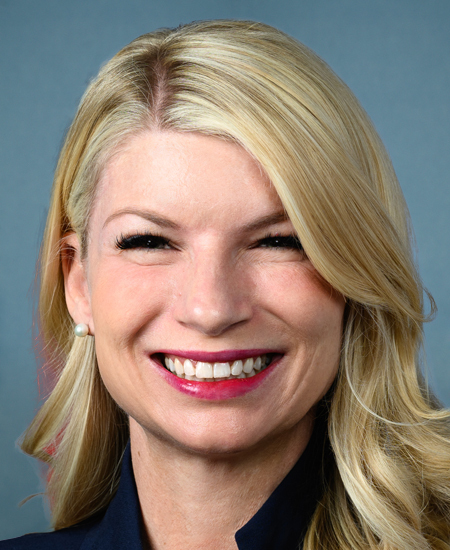
Photo of Brittany Pettersen
D United States House · District 7 · Colorado On the 2026 ballot

Rep. Brittany Pettersen

Compare
Total votes
1,879
all sessions
Attendance
94%
110 missed
Lower than 96% of chamber peers
With party
96%
of cast votes
Near the chamber average
Bipartisan score
2%
crosses aisle rarely
Near the chamber average
Sponsored
1,002
bills & resolutions
Higher than 79% of chamber peers
Committees
3
assignments
1,002 bills and resolutions

Sponsored bills

Total
1,002
Primary
71
Co-sponsor
931
This page
1,002
matching current filters
Co-sponsor HR 537
Passed · United States House · Co-sponsor
Forgotten Heroes of the Holocaust Congressional Gold Medal Act

Maddy summaryHR 537 authorizes a Congressional Gold Medal to honor 60 diplomats who saved Jewish lives during the Holocaust by issuing visas and passports against their governments' orders, risking expulsion and personal danger. The medal will be presented to the next of kin of these diplomats, alongside representatives from their home countries, and permanently displayed at the United States Holocaust Memorial Museum. The bill also permits the sale of bronze duplicates to cover production costs, with proceeds going to the U.S. Mint. This legislation recognizes the diplomats' humanitarian actions without creating new government programs or altering existing laws.

Passed Jun 12, 2024 1 co-sponsor
Co-sponsor HRES 1283
In committee · United States House · Co-sponsor
Supporting the designation of June 6, 2024, as National Naloxone Awareness Day.

Maddy summaryHRES 1283 is a symbolic resolution designating June 6, 2024, as National Naloxone Awareness Day. It does not create new laws or funding but formally recognizes naloxone's role in reversing opioid overdoses and saving lives. The resolution encourages federal, state, local, and private organizations to collaborate on increasing naloxone access, education, and distribution efforts. It specifically urges agencies like the CDC and SAMHSA to continue public awareness and harm reduction initiatives. This designation directly affects public awareness efforts, not individuals or policies.

In committee Jun 7, 2024 1 co-sponsor
Co-sponsor HR 620
In committee · United States House · Co-sponsor
Alzheimer’s Accountability and Investment Act

Maddy summaryThe Alzheimer’s Accountability and Investment Act (HR 620) requires the National Institutes of Health (NIH) Director to annually submit a budget estimate for Alzheimer’s-related initiatives - including personnel needs - directly to the President for review and then to Congress. This budget must be prepared after public comment and submitted without changes by the Secretary of Health and Human Services or the Advisory Council. The bill directly affects the NIH’s budget reporting process for Alzheimer’s research and programs, mandating transparency in how funds are allocated. It does not change funding levels but establishes a specific annual reporting mechanism to improve accountability.

In committee May 31, 2024 1 co-sponsor
Co-sponsor HRES 1252
In committee · United States House · Co-sponsor
Honoring the commitment and care of emergency medical services personnel.

Maddy summaryThis resolution (HRES 1252) honors emergency medical services (EMS) personnel across the United States for their critical work. It recognizes their 24/7 service in rural and underserved areas, their role in stabilizing and transporting patients during emergencies, and their dedication to public health care. The resolution specifically expresses appreciation for EMS workers during Emergency Medical Services Week (May 19-25, 2024). As a ceremonial resolution, it contains no new policies, funding, or legal requirements - only symbolic recognition of their contributions.

In committee May 24, 2024 1 co-sponsor
Co-sponsor HR 619
In committee · United States House · Co-sponsor
NAPA Reauthorization Act

Maddy summaryThis bill reauthorizes the National Alzheimer's Project Act through 2035 (extending the previous deadline of 2025) and adds new requirements to promote healthy aging and reduce Alzheimer’s risk factors. It mandates the program to provide information on healthy behaviors that may lower cognitive decline risk and expands the advisory group to include representatives from agencies like the Department of Justice, FEMA, and Social Security Administration, plus experts with diverse clinical trial experience. The bill directly affects Alzheimer’s research, care programs, and the federal advisory group overseeing national efforts. Key changes include requiring annual evaluations instead of initial ones and adding a focus on reducing health disparities in Alzheimer’s initiatives.

In committee May 24, 2024 1 co-sponsor
Co-sponsor HRES 1255
In committee · United States House · Co-sponsor
Calling upon all Americans on this Memorial Day, 2024, to honor the men and women of the Armed Forces who have died in the pursuit of freedom and peace.

Maddy summaryHRES 1255 is a non-binding House resolution introduced on May 23, 2024, that calls on all Americans to observe Memorial Day 2024 as a day of remembrance for military personnel who died in service. The resolution specifically honors "the men and women of the Armed Forces who have died in the pursuit of freedom and peace" and urges the public to demonstrate appreciation for their sacrifices. It does not create new laws or policies but serves as a symbolic expression of national gratitude, emphasizing respect for those who died while defending democratic values. The resolution was co-sponsored by multiple House members and aligns with the traditional observance of Memorial Day.

In committee May 23, 2024 1 co-sponsor
Co-sponsor HR 895
In committee · United States House · Co-sponsor
Combating Organized Retail Crime Act of 2023

Maddy summaryHR 895, the Combating Organized Retail Crime Act of 2023, expands federal law to better prosecute organized retail theft by amending sections 2314 and 2315 of Title 18. It clarifies that crimes involving stolen goods valued at $5,000 or more over 12 months - including retail theft - can be prosecuted under existing federal statutes, and broadens definitions to include goods taken via "any facility of interstate or foreign commerce." The bill also creates a new Organized Retail Crime Coordination Center within Homeland Security, requiring it to coordinate federal, state, and local law enforcement efforts, share threat information with retailers, and produce annual public reports on trends. This directly affects law enforcement agencies, retailers, and criminal justice systems by standardizing prosecution thresholds and enhancing interagency collaboration.

In committee May 23, 2024 1 co-sponsor
Co-sponsor HR 8376
In committee · United States House · Co-sponsor
Latino Youth Mental Health Empowerment Act

Maddy summaryHR 8376, the Latino Youth Mental Health Empowerment Act, aims to address mental health disparities affecting Hispanic and Latino youth by requiring a national awareness campaign and two key studies. The bill mandates a $5 million campaign (2025-2029) to combat stigma and increase access to culturally competent mental health resources for youth, parents, and school staff through materials, workshops, and screenings. It also requires a study on mental health barriers and suicide rates (with a report to Congress within one year) and a separate study on the shortage of Hispanic/Latino mental health professionals, both requiring disaggregated data by race, ethnicity, and other factors. The bill directly targets Hispanic and Latino youth - facing higher rates of depression, suicide contemplation, and lower treatment access - by focusing on outreach, service improvements, and workforce development.

In committee May 17, 2024 1 co-sponsor
Co-sponsor HR 8375
In committee · United States House · Co-sponsor
Strengthening Our Pediatric Mental Health Workforce Act

Maddy summaryThis bill directs the U.S. Department of Health and Human Services to issue guidance to states within one year on using Medicaid and CHIP programs to boost the pediatric mental health workforce. It requires states to implement strategies focused on recruiting and retaining pediatric mental health providers (including in rural/underserved areas and for racial/ethnic minorities), improving care for limited English proficiency patients, expanding telehealth services, and offering incentives like better reimbursement or student loan repayment. The guidance must cover specific approaches such as integrated care models and training for providers. States must report on implementing these strategies to Congress within two years. The bill directly affects states administering Medicaid/CHIP and pediatric mental health providers serving children.

In committee May 17, 2024 1 co-sponsor
Co-sponsor HR 8323
In committee · United States House · Co-sponsor
Comprehensive Addiction Resources Emergency Act of 2024

Maddy summary# Summary of Legislative Text This is a comprehensive legislative proposal focused on addressing substance use disorder through public health approaches, with significant funding and program requirements. Key elements include: 1. **Major Funding Programs:** - **Subtitle A (Local Grants):** $3.0 billion annually (2024-2033) for local entities to provide prevention, treatment, and recovery services - **Subtitle B (State/Regional Grants):** $4.6 billion annually (2024-2033) for state-level programs - **Subtitle C (Other Grants):** $1.0 billion annually (2024-2033) for specific entities and underserved populations - **Subtitle D (Innovation/Training):** $1.5 billion annually (2024-2033) for training, research, and capacity building 2. **Key Program Requirements:** - Mandates for evidence-based treatment services across multiple levels of care - Requirements for cultural competency, particularly for Native American communities - Specific focus on harm reduction, prevention, and recovery support - Provisions for naloxone distribution and overdose reversal programs 3. **Regulatory Changes:** - New certification requirements for covered manufacturers, distributors, and dispensers of Schedule II controlled substances - Penalties for failure to submit certifications or submitting false certifications - Creation of a "Comprehensive Addiction Resources Fund" for penalty revenues 4. **Focus Areas:** - Prevention services (including trauma-informed approaches) - Early intervention services - Recovery support services - Harm reduction programs - Workforce development for treatment providers - Special attention to underserved populations (rural communities, racial minorities, formerly incarcerated individuals) 5. **Funding Priorities:** - 10% of funds for Native American communities - Specific requirements for cultural competency and language access - Mandated data collection and reporting systems This legislation represents a significant shift toward public health approaches to substance use disorder, emphasizing prevention, treatment, and recovery support rather than punitive measures, with substantial funding commitments over a decade.


In committee May 17, 2024 1 co-sponsor
Showing 611 to 620 of 1,002 bills
Previous 1 … 61 62 63 … 101 Next