

This resolution expresses the sense of the House of Representatives that (1) lesbian, gay, bisexual, transgender, queer, intersex, and asexual (LGBTQIA+) rights are human rights and protected by the U.S. Constitution; (2) LGBTQIA+ Pride Month should be celebrated; and (3) all Americans should be treated equally regardless of sexual orientation, sex characteristics, or gender identity.
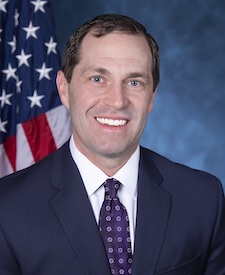
Rep. Jason Crow
Sponsored bills
Maddy summaryHRES 561 is a non-binding House resolution opposing state laws that criminalize access to essential health care. It specifically condemns using criminal penalties against people for pregnancy outcomes (such as miscarriages), seeking abortion or contraception, or receiving gender-affirming care, and disapproves of punishing health care providers or supporters for facilitating such care. The resolution affirms that patients deserve access to reproductive and gender-affirming health services without fear of prosecution or discrimination. It emphasizes that criminalizing these health care decisions violates patient rights and ethical provider obligations, without creating new legal requirements.
Maddy summaryHR 4400, the Veteran Overmedication and Suicide Prevention Act of 2023, requires the Department of Veterans Affairs (VA) to commission the National Academies of Sciences, Engineering, and Medicine to review all veteran suicides and related deaths from 2018-2023. This review analyzes medication use (including drugs with serious safety warnings or off-label prescriptions), treatment approaches (comparing medication-only vs. non-medication therapies like therapy), staffing levels for mental health providers, and data-sharing practices. It specifically examines veterans who died by suicide, violent death, or accidental death during the five-year period, focusing on medication histories, treatment protocols, and facility-specific patterns. The VA must submit the findings to Congress and the public within 30 days of the review's completion.
Maddy summaryThis bill creates a new pilot program allowing rural law enforcement agencies to apply for federal grants to purchase naloxone (a medication that reverses opioid overdoses) for officers to carry during patrols. It requires that at least 50% of funds under the Comprehensive Opioid Abuse Grant Program be awarded to rural communities, as defined by existing agricultural law. The bill specifically targets opioid overdose response by equipping rural police with life-saving tools during emergency calls. This policy change directly affects rural law enforcement agencies and communities with limited access to overdose reversal resources.
Maddy summaryHR 4422 (Global Respect Act) requires the President to publicly identify foreign officials responsible for violence, torture, or arbitrary detention against LGBTQI individuals and block their entry to the U.S., including revoking visas for them and their immediate families. It mandates annual reporting to Congress on the list of sanctioned individuals, the reasons for additions/removals, and efforts to coordinate with other countries on similar sanctions. The bill also updates U.S. human rights reporting requirements to explicitly include data on violence and discrimination against LGBTQI people worldwide. These measures aim to increase accountability for human rights violations against LGBTQI individuals without advocating for specific policy outcomes.
Maddy summaryHR 4340, the Therapeutic Fraud Prevention Act of 2023, prohibits paid providers from offering conversion therapy - defined as any commercial service attempting to change a person's sexual orientation or gender identity - and bans advertising that claims such therapy is effective or harmless. It directly affects therapists, counselors, or organizations offering paid conversion therapy services, including those advertising such services. Key provisions make it unlawful to provide, advertise, or facilitate paid conversion therapy, with enforcement led by the Federal Trade Commission (FTC) under consumer protection laws and allowing states to pursue civil actions. The bill explicitly excludes supportive care for gender transition or identity exploration from its definition of prohibited therapy.
Transparency in Taxpayer-Funded Travel Act This resolution requires Members of Congress who use their Representational Allowance to pay for official travel expenses to disclose the purpose of, and other information about, the travel. The Representational Allowance provides funds to Members for operating their offices and carrying out their official and representational duties.
Maddy summaryHRES 545 is a symbolic resolution expressing the House's commitment to achieving zero traffic fatalities by 2050. It calls on Congress and the Department of Transportation to collaborate on policies, improve data collection on traffic safety disparities, and implement proven safety measures. The resolution also urges federal agencies to use "crash" instead of "accident" when describing traffic incidents and addresses inequities in traffic safety outcomes. As a non-binding resolution, it does not create new laws or allocate funds but sets a policy direction for future action.
Maddy summaryHR 4335, the VA Loan Informed Disclosure Act of 2023, requires mortgage lenders to include specific information about VA home loan programs in standard mortgage disclosures. The bill amends the National Housing Act to mandate that lenders provide details on VA loans (guaranteed under Title 38) alongside other loan options, including assumptions about prevailing interest rates. This change directly affects lenders processing VA-guaranteed mortgages, ensuring borrowers receive clearer comparisons between VA loans and other financing. The law does not require lenders to verify borrower eligibility for VA loans, only to include the specified disclosure language.
Maddy summaryHR 4241, the Horse Transportation Safety Act of 2023, prohibits transporting horses between states or territories in multi-level motor vehicles (like certain livestock trailers with stacked levels). This directly affects commercial horse transporters moving animals across state lines. The bill adds a civil penalty of $100-$500 per horse per violation for knowingly violating this rule, with separate penalties for each horse transported. It amends the Horse Protection Act to address safety concerns related to transporting horses in vehicles not designed for such travel.