

Credit Union Board Modernization Act This bill revises the frequency of meetings required to be held by a credit union's board of directors. Specifically, the bill requires monthly meetings for new credit unions during their first five years and for credit unions with a low soundness rating. All other credit unions must hold at least six meetings annually, with at least one meeting held during each fiscal quarter. Currently, all credit union boards must meet at least once a month.
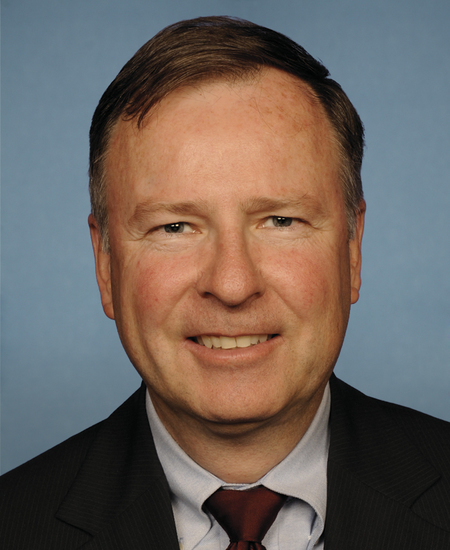
Rep. Doug Lamborn
Sponsored bills
Combating the Persecution of Religious Groups in China Act This bill expresses the sense of Congress that the United States should promote religious freedom in China and makes statements of policy related to such freedom. In particular, the bill states that it is U.S. policy to consider senior Chinese government officials who are responsible for the persecution of Christians or other religious minorities in China to have committed (1) a gross violation of internationally recognized human rights for the purpose of imposing certain sanctions, and (2) a particularly severe violation of religious freedom for the purpose of determining whether such an individual is admissible into the United States.
Healthcare Freedom Act of 2022 This bill expands the availability of health savings accounts. It renames such accounts as health freedom accounts and allows all individuals to receive increased tax deductions for contributions to such accounts. The term qualified medical expenses is expanded to include costs associated with direct primary care, health care sharing ministries, and medical cost sharing organizations. The bill also excludes employer contributions to health freedom accounts from employee gross income for income tax purposes.
Heroes of the Warsaw Ghetto Congressional Gold Medal Act This bill provides for the award of a Congressional Gold Medal posthumously to commemorate the participants in the Warsaw Ghetto Uprising who led an armed resistance against Nazi occupiers.
Endangered Species Transparency and Reasonableness Act of 2022 This bill revises requirements concerning determinations on whether a species is a threatened or endangered species under the Endangered Species Act of 1973 (ESA) and caps attorney's fees to prevailing parties in ESA citizen suits. The U.S. Fish and Wildlife Service (USFWS) and the National Marine Fisheries Service (NMFS) must publish online, subject to privacy or administrative limitations, the best scientific and commercial data available that are the basis for each determination. The bill states that the term best scientific and commercial data available includes all data submitted by a state, tribal, or county government. Thus, the USFWS and NMFS would no longer consider whether data from those sources are the best scientific and commercial data available. Instead, the data would be automatically deemed the best scientific and commercial data available regardless of the quality of the data. Before making a determination on whether a species is an endangered or threatened species, the USFWS and NMFS must provide affected states with all of the data that is the basis of the determination. The Department of the Interior must also publish and maintain an online searchable database that discloses federal expenditures related to litigation under the ESA.
Protect Farmers from the SEC Act This bill prohibits the Securities and Exchange Commission from requiring the disclosure of greenhouse gas emissions related to agricultural products.
Taiwan Policy Act of 2022 This bill provides support to Taiwan and addresses related issues. For example, the bill (1) establishes a comprehensive training program with Taiwan's government to familiarize the U.S. military and Taiwan's military with each other and achieve interoperability, and (2) authorizes the Department of State to take actions to help Taiwan become a non-borrowing member of the Inter-American Development Bank.
Diverting IRS Resources to the Exigent Crisis Through Funds for Border Security Act or the DIRECT Funds for Border Security Act This bill rescinds unobligated amounts for Internal Revenue Service enforcement activities enacted by the Inflation Reduction Act of 2022 and redirects such amounts to the U.S. Customs and Border Protection for the hiring of new agents and officers for the security of the southern border of the United States.
Educational Choice for Children Act This bill allows individuals and corporations a new tax credit after 2022 for charitable contributions to tax-exempt organizations that provide scholarships to elementary and secondary school students. Such students must be members of a household with incomes not greater 300% of the area median gross income and be eligible to enroll in a public elementary or secondary school. The bill excludes from the gross income of taxpayer dependents any scholarship amount for the elementary or secondary education expenses of eligible students. It also prohibits governmental control over scholarship granting organizations.
Protecting Kids from Fentanyl Act This bill allows states and local educational agencies to use unexpended COVID-19 elementary and secondary school emergency relief funds for additional purposes. In particular, these funds may be used for (1) purchasing naloxone or other opioid antagonists; (2) providing training to school nurses, teachers, school administrators, and school resource officers on how to administer naloxone or other opioid antagonists; and (3) providing fentanyl awareness classes or materials to students.