

World Deserves To Know Act This bill requires sanctions on certain members of the Chinese Communist Party (CCP) and officials of Chinese health agencies. It also addresses related issues. The President must impose visa- and property-blocking sanctions on any foreign person who is a CCP official and who is knowingly responsible for or complicit in (1) the disappearances of whistleblowers and citizen journalists in China relating to COVID-19, or (2) limiting free speech and academic freedom in China relating to COVID-19. The President must also impose such sanctions on specified individuals who have leadership positions in China's Center for Disease Control and Prevention and China's National Health Commission (NHC). The authority to impose such sanctions shall end when the President certifies to Congress that an independent and unimpeded investigation into the potential origin of COVID-19 from the Wuhan Institute of Virology has taken place. The bill also bars federal funds and certain federal student assistance from going to institutions of higher education that enter into a contract with any element or China-based affiliate of the NHC. Federal funding to the National Academy of Sciences may not be used to enter into a contract with any element or China-based affiliate of the NHC. The Government Accountability Office must report to Congress a review of all funds that the National Institutes of Health have made available to the NHC since FY2010. This report must also be publicly available.
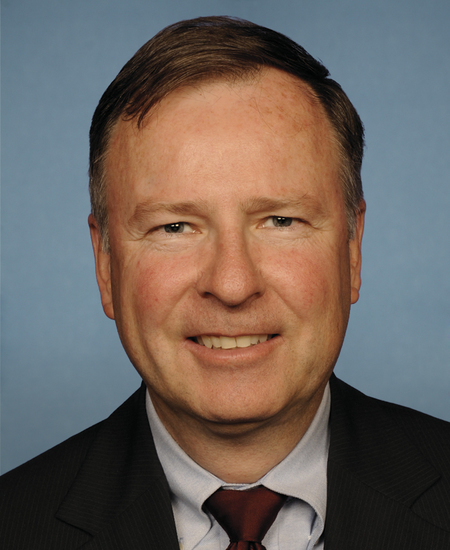
Rep. Doug Lamborn
Sponsored bills
H-2B Returning Worker Exception Act of 2021 This bill modifies the H-2B (temporary nonagricultural workers) nonimmigrant visa program, including by exempting certain workers from an annual numerical limit on such visas and requiring civil penalties for program violations. Under this bill, if a worker seeking a H-2B visa has been counted toward the 66,000 annual cap on such visas in one of the three preceding fiscal years, that worker shall not be counted against the cap again. Furthermore, the Department of Homeland Security (DHS) must impose a civil monetary penalty on an employer for (1) failing to meet requirements related to an H-2B visa petition, or (2) making a willful misrepresentation of material fact in such a petition. DHS must also ensure the establishment of an electronic platform (1) for employers to submit and request approval of an H-2B petition, and (2) to act as a single point of access for applicants and the relevant government agencies. The Department of Labor must maintain a publicly available online database of all job orders by H-2B employers. Furthermore, Labor may take certain actions to enforce program requirements, such as imposing penalties and seeking injunctions. The bill provides statutory authority for the current practice of limiting the program to workers who are nationals of countries approved by DHS. DHS may make exceptions to this limitation in individual cases if it is in the U.S. interest to do so. DHS shall select approved countries based on various factors, such as the rate of overstay by H-2B visa holders from each country.
Preventing Anti-Semitic Hate Crimes Act This bill requires a designated officer or employee of the Department of Justice (DOJ) to facilitate the expedited review of anti-Semitic hate crimes and reports of anti-Semitic hate crimes. Further, the bill requires DOJ to issue guidance for state, local, and tribal law enforcement agencies on expanding public education campaigns to raise awareness of anti-Semitic hate crimes. Finally, the bill increases the statutory maximum prison term for an individual who is convicted of a federal hate crime offense after a prior conviction for a hate crime offense under federal law or a hate crime felony under state law.
Separation of Powers Restoration Act of 202 1 This bill modifies the scope of judicial review of agency actions to authorize courts reviewing agency actions to decide de novo (i.e., without giving deference to the agency's interpretation) all relevant questions of law, including the interpretation of (1) constitutional and statutory provisions, and (2) rules made by agencies. No law may exempt a civil action from the standard of review required by this bill except by specific reference to such provision.
Protecting Access for Hunters and Anglers Act of 2022 This bill bars the Department of the Interior and the Department of Agriculture from prohibiting or regulating the use of lead ammunition or tackle on federal land or water that is under the jurisdiction of such departments and made available for hunting or fishing. The bill makes exceptions for specified existing regulations and where the applicable department determines that a decline in wildlife population at the specific unit of federal land or water is primarily caused by the use of lead in ammunition or tackle, based on the field data from such unit, and the state approves the regulations.
Caring for Mothers Act of 2022 This bill permits an individual enrolled in a group or individual health insurance plan and who intends to adopt a child to enroll the pregnant mother of the child in the adoptive individual's coverage for the purpose of providing (1) pregnancy-related and postpartum care, and (2) mental health and substance use disorder services.
Bruce's Law This bill reauthorizes certain grants through FY2027 and sets out other activities to address drug overdoses, with a particular focus on contamination with fentanyl or other synthetic opioids. Specifically, the bill (1) reauthorizes grants that are available through the White House Office of National Drug Control Policy (ONDCP) for community-based coalitions to address local drug crises, and (2) authorizes new grants for coalitions to implement education and prevention strategies in communities that face significant levels of drug overdoses related to fentanyl and other synthetic opioids. The ONDCP may delegate authority to execute the new grants to the Centers for Disease Control and Prevention. Additionally, the Department of Health and Human Services (HHS) must carry out a campaign to increase public awareness of the dangers of fentanyl and other synthetic opioids, including the risks of such substances contaminating counterfeit drugs. The bill also establishes an interagency work group to coordinate and improve federal efforts to reduce and prevent overdoses caused by illegal drugs contaminated with fentanyl or other synthetic opioids. Work group members include the ONDCP, HHS, the Department of Justice, and the Department of State.
Mahsa Amini Human rights and Security Accountability Act or the MAHSA Act This bill requires the President to impose property- and visa-blocking sanctions on certain persons (individuals and entities) affiliated with Iran. The President must make determinations about whether certain existing sanctions apply to specified persons and impose the applicable sanctions, including determinations concerning (1) the Supreme Leader of Iran and any official in the Office of the Supreme Leader of Iran, (2) the President of Iran and any official in the Office of the President of Iran, and (3) any entity overseen by the Office of the Supreme Leader of Iran which is complicit in supporting human rights abuses or terrorism.
Stop the Sexualization of Children Act This bill prohibits the presentation of sexually oriented materials to children under the age of 10. The bill defines sexually oriented material as any (1) depiction or description of sexual activity; (2) lewd or lascivious depiction or description of human genitals; or (3) topic involving gender identity, gender dysphoria, transgenderism, sexual orientation, or related subjects. Specifically, the bill prohibits (1) the use of federal funds to develop, implement, facilitate, or fund any sexually oriented program, event, or literature for children under the age of 10; and (2) the use of federal facilities or properties to host or promote such programs, events, or literature. The bill grants a parent or guardian a private right of action against a government official, government agency, or private entity that violates this bill. Additionally, the bill prohibits federal agencies from disbursing federal funds to a government agency or private entity for three fiscal years if the agency or entity has received two or more injunctions for violations of the bill in a five-year period.
This resolution expresses the sense of the House of Representatives that the courts should find New York's Concealed Carry Improvement Act unconstitutional and that all states should pass legislation supporting Second Amendment rights.