

Maddy summaryHR 5475, the Prohibiting Adversarial Patents Act of 2023, requires patent applicants to disclose if they or their invention received funding from state-affiliated research funds or talent programs of specific foreign adversaries (including China, Russia, Iran, North Korea, Cuba, and Venezuela under Maduro) within five years of filing. It also prohibits U.S. patents for individuals or entities identified on certain national security lists (like the OFAC CMIC List or Chinese military company designations) and makes existing patents from such entities unenforceable. The bill directly affects patent applicants with ties to these nations and patent holders later added to designated lists. Small businesses subject to existing disclosure rules under the Small Business Act are exempt from the new disclosure requirement.
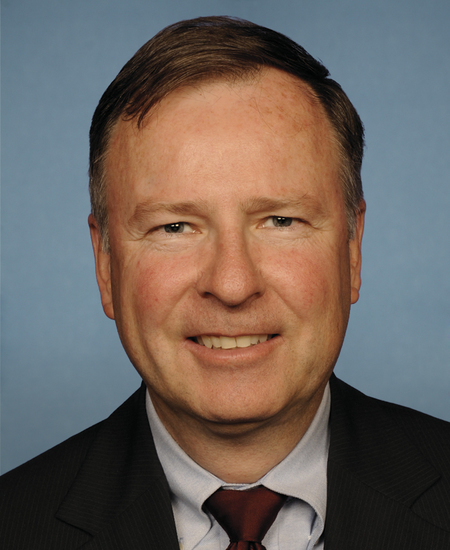
Rep. Doug Lamborn
Sponsored bills
Maddy summaryHR 3389, the Emergency Wildfire Fighting Technology Act of 2023, requires the Secretaries of Agriculture and Interior, along with key aviation committees, to evaluate the use of container aerial firefighting systems (CAFFS) for wildfire suppression within 60 days of enactment. The bill mandates that agencies update their deployment protocols for CAFFS based on this evaluation within 90 days, and submit reports to specific congressional committees detailing both the evaluation results and protocol changes. This bill directly affects federal wildfire management agencies and their operational procedures, focusing on assessing and refining the use of an existing aerial firefighting technology. It does not create new funding or alter wildfire policy, but establishes a timeline for evaluating and implementing CAFFS protocols.
Maddy summaryHR 3152, the "Fight CRIME Act," aims to maintain international restrictions on Iran's missile-related activities by requiring diplomatic efforts to extend these restrictions before they expire in October 2023. The bill mandates annual reports detailing U.S. diplomatic strategies, potential impacts of expiration, and measures to deter missile technology transfers to Iran. It establishes sanctions against foreign individuals or entities that knowingly support Iran's missile or drone programs, including asset freezes and visa restrictions. These sanctions apply regardless of whether UN restrictions remain in effect after their expiration, directly affecting foreign entities involved in these activities.
This resolution urges the House of Representatives to recognize Robert Aitken's Bible (the first known English-language Bible to be printed in North America) as a historical document of Congress.
Maddy summaryThis bill requires federal agencies to acquire and maintain opioid overdose reversal kits (like naloxone) and train employees annually on their use, effective within 270 days of enactment. It mandates these actions for all federal agencies - including the Veterans Health Administration - while providing non-mandatory guidance to private employers on similar practices. The law directly affects federal workplaces by making kits and training a requirement, and indirectly encourages private employers to adopt similar safety measures. Key provisions include a 270-day deadline for the Labor Department to issue regulations for federal agencies and non-binding guidance for other employers. The bill focuses on practical workplace safety measures without altering existing federal health or safety laws.
Safeguarding Endangered Children, Unaccompanied and at Risk of Exploitation Act of 2023 or SECURE Act of 2023 This bill requires regular reports to Congress detailing the status of unaccompanied non-U.S. national ( alien under federal law) children. The bill also rescinds certain funding for the agencies responsible for the report for each day that a report is late. Specifically, the Department of Health and Human Services (HHS), the Department of Homeland Security (DHS), and the Federal Bureau of Investigation must jointly report to Congress every 60 days on such children that have been in the custody of the Office of Refugee Resettlement (ORR) since January 1, 2021, and have been released to a parent, family member, or sponsor within the United States. This report must provide each child’s age, sex, location, and detail the child’s health and well-being. Additionally, the report must provide specified information about adults living in the child’s home, such as whether adults in the home have been subject to a fingerprint-based check of national crime information databases. The report must also specify the number of children that ORR has tried to contact without success on at least three separate attempts. The report must be provided for up to three years or until all of the specified children have been accounted for. The bill also rescinds certain funding from HHS, DHS, and the FBI for each day that a report is late. Up to $10 million may be rescinded from each agency for each fiscal year.
Defending Students' Civil Rights Act of 2023 This bill prohibits federally funded programs or activities from being premised on certain principles relating to race or sex. Specifically, the bill prohibits the use of federal funds for programs or activities that are premised on principles such as that (1) one race or sex is inherently superior to another, (2) the United States is fundamentally racist or sexist, and (3) an individual bears responsibility for the past actions of others of the same race or sex. The bill includes the use of these principles as a violation of Title VI of the Civil Rights Act of 1964, which prohibits discrimination based on race, color, or national origin in federally funded programs or activities.
Maddy summaryHR 5326, the Empowering Local Curriculum Act, prohibits federally funded schools from being required to teach or promote specific concepts related to race and gender. It explicitly blocks the mandatory teaching of ideas such as the U.S. being "fundamentally racist," individuals being inherently racist based on race, or meritocracy being racist. The bill applies to institutions receiving federal funds under the Higher Education Act (for colleges) and the Elementary and Secondary Education Act (for K-12 schools). It does not ban these topics but prevents federal requirements from mandating their inclusion in curricula.
Maddy summaryThis bill requires the Bureau of Prisons to develop and implement a strategy for scanning all incoming mail at federal prisons to stop fentanyl and other synthetic drugs from entering facilities. It directs the Bureau to evaluate existing scanning technology within 180 days and submit a detailed plan to Congress within 90 days, including how to provide digital copies of mail to inmates within 24 hours and physical copies within 30 days (if safe). The strategy must achieve 100% mail scanning capacity at all federal prisons, prioritize high-security facilities, and include a budget proposal for fiscal years 2024-2026. This directly affects federal prisons, inmates, and Bureau employees by changing mail processing procedures to enhance safety and reduce staffing burdens from manual mail checks.
Maddy summaryThis bill requires the Comptroller General to submit a comprehensive report to Congress within one year of enactment, detailing the economic and social impacts of the fentanyl crisis. The report must cover effects on labor markets (by race/gender), industry sectors, federal tax revenue, healthcare programs (Medicare/Medicaid), housing instability, and state finances. It also mandates data on federally assisted rental housing access for people with drug convictions, underage fentanyl overdose deaths, and federal actions to support states. The bill does not create new policies or funding but directs data collection for congressional review.